
10 Simple Home Modifications That Prevent Falls (and When They're Not Enough)
10 Simple Home Modifications That Prevent Falls (and When They're Not Enough)
Key Takeaways
- Falls are the leading cause of injury for older adults, but most are preventable with simple home modifications that cost under $500 total
- Over half of all falls happen at home in familiar spaces like bathrooms, bedrooms, and stairs—not on hiking trails or icy sidewalks
- Research shows that proper home modifications can reduce fall risks by up to 40% when combined with other interventions like physical therapy
- The most effective modifications focus on four key areas: bathroom safety (grab bars, non-slip surfaces), lighting improvements, clear pathways, and secure handrails
- Sage Senior Support helps DFW families navigate both home safety improvements and care transitions when aging in place becomes unsustainable
Before We Talk Solutions, Let's Name What You're Carrying
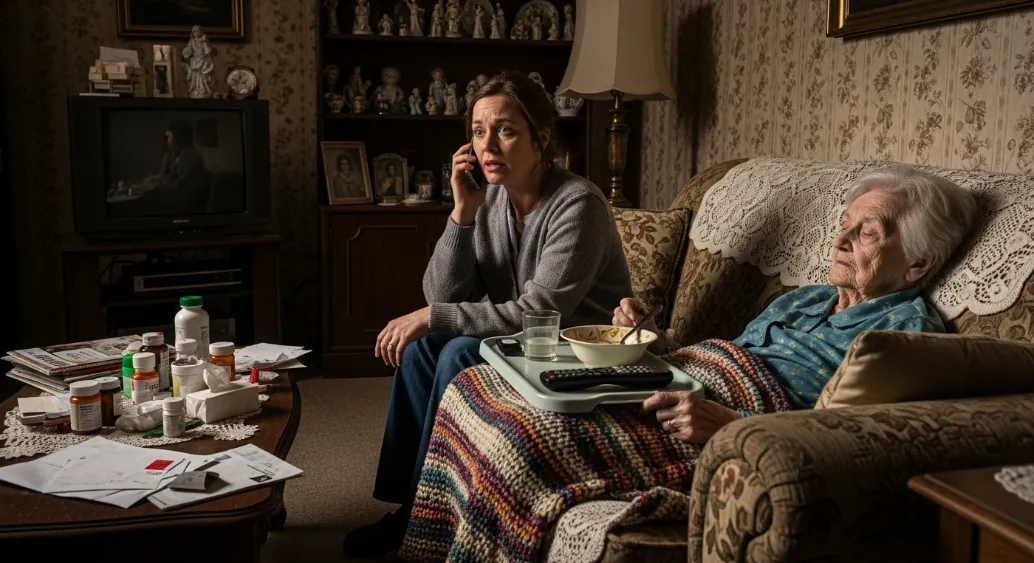
You're watching your mother navigate the same hallway she's walked for 30 years, but now she's touching the wall every few steps.
Your father insists he's "fine" while you notice he's stopped using the upstairs bathroom entirely.
Every phone call has you wondering: is this the one where they tell me about the fall?
You've already had the conversation about grab bars. They said no. "I don't need those yet," or "This is my home—I'm not turning it into a hospital."
Here's what the statistics won't tell you, but I will: you're not overreacting.
One in four adults age 65 and older falls each year. That's over 14 million falls annually. Three million of those people end up in emergency rooms. Over 800,000 are hospitalized. These aren't strangers in nursing homes—these are people living independently in their own homes.
The fear you're carrying is real. And so is the resistance you're facing.
But here's something that matters more than any statistic: it's easier to install grab bars than it is to explain why you didn't.
Let's talk about what actually works.
Why Home Modifications Matter More Than You Think
Falls aren't just about broken bones, though hip fractures and head injuries are serious enough. Falls threaten the two things most seniors value above all else: independence and staying in their own home.
Here's what happens after a fall, even when there's no injury:
The cascade effect begins. Your parent becomes afraid of falling again. That fear leads them to move less, do less, go out less. When they're less active, they get weaker. When they're weaker, they're more likely to fall. The cycle feeds itself.
Research from Washington University School of Medicine found that a community-based program helping older adults make home modifications reduced falls by nearly 40%. That's not a small improvement—that's the difference between maintaining independence and a premature nursing home placement.
Most falls happen in "safe" spaces—the home, where we let our guard down and move without thinking. Your parent has walked from their bedroom to the bathroom thousands of times. That familiarity creates complacency. They're not being careful because they don't think they need to be.
The cost of not modifying? Hospitalization averages $30,000 per fall-related injury. Nursing home placement can cost $7,000-$9,000 per month in Dallas-Fort Worth. Loss of independence? That doesn't have a price tag, but your parent feels it every single day.
The modifications we're about to discuss aren't expensive. Most cost less than a single emergency room visit. Some cost nothing at all.
The 10 Essential Home Modifications: A Room-by-Room Safety Guide
Bathroom Modifications (The #1 Priority)
If you only have time and budget for one room, make it the bathroom. The combination of hard surfaces, water, and getting undressed creates the perfect storm for falls.
1. Install Grab Bars (Not Towel Racks)
Let's be clear about something important: towel racks are not grab bars, but grab bars can be towel racks.
A towel rack is screwed into drywall and designed to hold a towel weighing a few ounces. A grab bar is anchored into wall studs and designed to support someone's full body weight—potentially during a fall.
Where you need them:
- Next to the toilet (both sides if possible, at minimum one vertical bar)
- Inside the tub or shower (one horizontal bar for balance, one vertical for entering/exiting)
- On the wall next to the tub for getting in and out
Professional installation is not negotiable here. Improperly installed grab bars can give a false sense of security and fail when needed most. Many Area Agencies on Aging offer installation assistance programs—check with your local office at 800-677-1116.
Cost: $100-$300 per bar installed (or $30-$60 per bar if you're experienced with finding studs and using toggle bolts correctly)
2. Add Non-Slip Surfaces Everywhere Water Goes
Wet tile and porcelain are essentially ice rinks. You need:
- Non-slip mats inside the tub or shower (suction-backed, replaced when suction weakens)
- Non-slip bath mat outside the tub or shower
- Textured adhesive strips on the tub edge and floor
- For long-term planning: consider a walk-in tub or curbless shower (zero-threshold shower)
Replace bath mats regularly. That decorative rug that slides when you step on it? It needs to go.
Cost: $10-$50 for mats and strips (walk-in tubs start around $3,000-$10,000 installed)
3. Install a Shower Seat and Handheld Showerhead
Bathing while standing requires balance, strength, and the ability to reach your feet while staying stable. That's asking a lot from someone who's already at fall risk.
A shower seat or bath bench allows your parent to sit while bathing. Combined with a handheld showerhead on an adjustable slider bar, they can bathe independently without the fall risk of standing in a wet tub.
Look for seats with:
- Rubber-tipped legs that won't slide
- Drainage holes to prevent water pooling
- Adjustable height
- Weight capacity appropriate for your parent (most support 250-400 pounds)
Cost: $50-$200 for bench and handheld showerhead
Lighting Improvements (Often Overlooked, Incredibly Effective)
Aging eyes need three times more light than younger eyes to see the same detail. What looks "bright enough" to you might leave your parent navigating shadows.
4. Increase Lighting Throughout the Entire Home
This means more than changing a few bulbs. You need:
- Brighter bulbs in every room (LED bulbs provide more light using less energy—60-75 watt equivalent for general areas, 100 watt equivalent for task lighting)
- Non-glare bulbs (avoid harsh lighting that creates shadows or spots)
- Lights at the top AND bottom of stairs with switches at both ends
- Light switches accessible at both ends of long hallways
- Under-cabinet lighting in the kitchen
The National Institute on Aging specifically recommends ensuring light switches are accessible without having to walk through darkness to reach them.
Cost: $20-$100 for bulbs and basic fixtures
5. Install Motion-Sensor Night Lights
Middle-of-the-night bathroom trips are when many falls happen. Your parent is half-asleep, possibly without glasses, fumbling for light switches in the dark.
Motion-sensor night lights eliminate that risk. Place them:
- In the bedroom (so they light up when your parent swings their legs out of bed)
- Along the path from bedroom to bathroom
- In the bathroom itself
- In hallways and near any stairs
- At entryways
Modern LED motion-sensor lights are affordable, energy-efficient, and can last for years. Some plug directly into outlets, others are battery-operated for placement anywhere.
Cost: $15-$50 for a multi-pack
Stairway Safety (Zero Room for Shortcuts)
Stairs are where minor missteps become major injuries. The combination of multiple steps, momentum, and hard edges creates serious fall risks.
6. Install Secure Handrails on BOTH Sides
This is not a suggestion—this is essential. Your parent should never have to choose which side to use. They need support on both sides.
Requirements for safe handrails:
- Properly anchored into wall studs (not just drywall)
- Full length of the stairway, not stopping a few steps short
- Comfortable gripping diameter (1.25 to 2 inches)
- Extending beyond the top and bottom steps for stability when starting/stopping
- Secure—if you can shake it, it's not installed correctly
Many homes have a handrail on one side only. Adding a second rail is one of the most effective fall prevention modifications you can make.
Cost: $100-$300 per rail professionally installed
7. Add High-Visibility Stair Markers
Age-related vision changes make depth perception difficult. Stairs can blend together, especially in low light. Your parent might not see where one step ends and the next begins.
High-contrast tape or paint on stair edges solves this problem immediately. Use bright colors (yellow, orange, white) that contrast sharply with the stair color.
Apply to:
- The edge of every step (both interior and exterior stairs)
- The top and bottom steps (double marking for extra visibility)
- Threshold transitions between rooms where the floor height changes
Cost: $10-$30 for anti-slip stair tread tape with high-visibility edges
Living Spaces (The Hidden Hazards)
8. Clear All Pathways and Remove Tripping Hazards
This modification costs nothing but attention. Walk through your parent's home and identify every obstacle in common walking paths.
Remove or secure immediately:
- Throw rugs—these are fall traps. If your parent insists on keeping them, use heavy-duty non-slip rug pads underneath and secure edges with carpet tape. Better solution: remove them entirely.
- Electrical cords—route along walls, never across walkways. Use cord covers if they must cross paths.
- Low furniture—coffee tables, footstools, magazine racks in the middle of rooms create obstacles, especially at night.
- Pet bowls, toys, and beds—beloved pets cause many falls. Keep feeding areas out of main pathways.
- Clutter—newspapers, shoes, boxes on the floor. If it's on the floor, it's a tripping hazard.
Create clear, wide pathways from room to room. Your parent should be able to walk from the bedroom to the kitchen to the bathroom without navigating an obstacle course.
Cost: $0-$50 for cord covers and non-slip rug pads
9. Adjust Furniture Heights
Furniture that's too low makes getting up difficult and increases fall risk. Furniture that's too high means your parent's feet don't touch the floor, affecting balance.
Check these items:
- Chairs and sofas—when seated, your parent's feet should be flat on the floor with knees at a 90-degree angle. Consider adding firm cushions or furniture risers if seats are too low.
- Bed height—your parent should be able to sit on the edge with feet flat on the floor and stand up without pushing off with their hands (or with minimal assistance).
- Toilet height—standard toilets are often too low for seniors. Consider a raised toilet seat (2-4 inches) or a comfort-height toilet (17-19 inches vs. standard 15 inches).
Place a sturdy chair in the bedroom specifically for sitting while dressing. Getting dressed while balancing on one foot is a common cause of falls.
Cost: Varies—$0 if rearranging existing furniture, $30-$100 for furniture risers or raised toilet seats, $200-$400 for a new comfort-height toilet
Emergency Preparedness (The Safety Net)
10. Install a Medical Alert System
Even with every modification in place, falls can still happen. What matters then is getting help quickly.
Medical alert systems provide:
- 24/7 monitoring—pressing a button connects to emergency response
- Wearable devices—necklace, bracelet, or clip-on that goes everywhere with your parent
- Fall detection technology—newer models automatically detect a fall and call for help even if your parent is unconscious or unable to press the button
- Two-way communication—your parent can talk to the operator through the base unit without reaching a phone
- Peace of mind for everyone—you sleep better knowing they can get help
Many systems now include GPS tracking for seniors who still drive or walk outside. Some integrate with smart home devices.
Popular options include Life Alert, Medical Guardian, Bay Alarm Medical, and MobileHelp. Compare features, monthly costs, and contract requirements.
Cost: $25-$50 per month (some systems require equipment purchase $100-$300, others include it in monthly fee)
Making It Happen: Overcoming Resistance and Getting Started
When Your Parent Says No
Here's the conversation you're probably avoiding:
"Mom, we need to install grab bars in your bathroom."
"I don't need those. I'm not that old. This is my home, not a nursing home."
Your parent sees modifications as admitting defeat. They've lived in this home for 40 years without grab bars—why would they need them now?
Because the alternative is worse. And deep down, they know it.
Try these approaches:
"These aren't for you—they're for me." Explain that YOU use the grab bars when you visit. YOU want better lighting so you can see when you're there. Sometimes reframing removes the sting.
"We're making your home work better, not admitting anything." Use language like "updates" and "improvements" rather than "safety modifications" and "fall prevention."
"Start with one thing." Don't propose overhauling the entire house. Start with the easiest, least invasive change. "Let's try these motion-sensor night lights—if you hate them, we'll take them out."
"The doctor recommended it." If your parent's physician can frame modifications as part of their care plan, they might be more receptive.
"I can't help you from 30 miles away." Be honest about your fear. "Every time the phone rings, I wonder if you've fallen. I need to know you're safe."
For more strategies on this conversation, read our guide: Helping Parents Accept Help: From Conflict to Compassion.
Who Can Help
You don't have to figure this out alone. Several professionals and programs can help:
Occupational Therapists (OTs) specialize in home safety assessments. They'll walk through your parent's home, identify specific risks based on your parent's mobility and vision, and recommend targeted modifications. Many insurance plans cover OT home visits when prescribed by a physician.
Certified Aging-in-Place Specialists (CAPS) are contractors trained specifically in home modifications for seniors. Find one through the National Association of Home Builders.
Area Agencies on Aging often have home modification programs, handyman services, or funding assistance for low-income seniors. Call the Eldercare Locator at 800-677-1116 to find your local agency.
Rebuilding Together (800-473-4229) provides free home repair and modification services for low-income homeowners in many communities.
Your local Independent Living Center may offer assessments and modification assistance.
Some modifications may be covered by:
- Medicare (if prescribed and provided through occupational therapy)
- Medicaid Home and Community Based Services waivers (varies by state)
- Veterans Administration (VA) programs for veterans and surviving spouses
- Long-term care insurance policies
- Reverse mortgage proceeds
DIY vs. Professional Installation
Some modifications you can safely do yourself. Others absolutely require professional installation.
Safe for DIY if you're handy:
- Replacing light bulbs and adding lamps
- Installing plug-in motion-sensor night lights
- Removing throw rugs and securing cords
- Adding high-visibility tape to stairs
- Rearranging furniture
Requires professional installation:
- Grab bars—must be anchored into studs or use proper blocking
- Handrails—must support full body weight plus force during a fall
- Walk-in tubs or curbless showers—major plumbing and waterproofing work
- Permanent ramps—must meet specific slope and railing requirements
Lives literally depend on grab bars staying attached to the wall. This is not the place to save money with questionable installation.
When Home Modifications Aren't Enough
This is the conversation no one wants to have.
You've installed the grab bars. You've changed every light bulb. You've removed every rug and secured every cord.
And you're still holding your breath every time the phone rings.
Because sometimes—and this is the hardest truth about caregiving—safety can't be modified in.
Signs That the Home Is No Longer Safe
You need to consider other options when:
Multiple falls are happening despite modifications. If your parent is falling regularly even with safety improvements in place, the home environment isn't the only issue. Strength, balance, or cognitive decline may have progressed beyond what modifications can address.
The modifications themselves become overwhelming to maintain. Your parent needs to remember to use the grab bars, turn on lights, avoid obstacles. If cognitive changes mean they forget these safety measures exist, they're not being protected.
Physical decline makes even modified spaces difficult. Grab bars help with balance, but they can't compensate for severe mobility limitations. If your parent can't transfer safely even with assistive devices, the bathroom modifications won't prevent falls.
Isolation creates additional risk. All the safety modifications in the world won't help if your parent falls and no one finds them for hours—or days. If they live alone with no nearby neighbors or family checking in regularly, a fall becomes a life-threatening emergency.
You're spending every weekend doing "safety checks." If you're driving across town multiple times a week to make sure your parent is okay, change light bulbs, clear clutter, and watch for hazards—your parent isn't living independently anymore. Neither are you.
You're not sleeping because you're waiting for the call. This isn't sustainable for your parent or for you.
For more on recognizing these signs, read: When Home Is No Longer Safe: A DFW Guide to Assisted Living Decisions.
The Honest Truth About Aging in Place
Everyone wants to age in place. Your parent wants to stay in the home where they raised their family, hosted holidays, built their life. You want that for them too.
But here's what the "age in place" movement doesn't always acknowledge: sometimes the most loving thing you can do is recognize that home isn't safe anymore.
Home modifications buy time. They extend independence. They delay the inevitable. But they don't stop time, and they can't reverse decline.
Assisted living isn't giving up. It's a different kind of care—one where:
- Someone is there if they fall
- Meals arrive three times a day whether your parent feels like cooking or not
- Medication management happens correctly
- Social activities combat isolation
- You can be their child again instead of their anxious safety monitor
The guilt you feel about considering this option? That guilt means you care deeply about your parent's wellbeing. Let it inform your decision, but don't let it paralyze you into inaction while the situation becomes more dangerous.
Learn more about making this difficult decision: When Home Is No Longer Safe: A DFW Guide to Assisted Living Decisions.
The Home Sale Question
When your parent moves to assisted living or memory care, one of the biggest questions families face is: what do we do with the house?
You have a few options:
Keep it—maintain an empty house while paying the mortgage, taxes, insurance, and utilities on top of monthly care costs. Some families do this initially, hoping their parent might return home (though statistically, that rarely happens).
Rent it—generate income to help pay for care, but take on landlord responsibilities during an already stressful time. Read more: 7 Steps: Transform Parent's Home into Care-Funding Rental Income.
Sell it—use the proceeds to fund care and eliminate the burden of maintaining an empty property. For many families in Dallas-Fort Worth, this is the most practical choice.
If selling makes sense for your family, you'll face another decision: traditional listing or direct sale?
Traditional listing can bring top dollar if the home is in good condition and you have time for the process (typically 60-90 days or more). But it requires preparing the home for showings, making repairs, coordinating with agents, and managing the sale while simultaneously settling your parent into their new living arrangement.
Direct sale to a company like Sage Senior Support eliminates the preparation, repairs, and waiting. You get a fair offer based on the home's as-is condition, close on your timeline, and move forward with your parent's care transition. No staging, no showings, no inspector's repair demands.
We've helped hundreds of Dallas-Fort Worth families navigate this transition. We understand that selling your parent's home isn't just a real estate transaction—it's an emotional milestone during an already difficult time.
Learn more about your options: What to Do With Mom's House: 3 Options When She's Moving to Care.
You're Not a Bad Child for Worrying
The mental load you're carrying is exhausting.
You're fielding phone calls during work meetings. You're lying awake at 2 a.m. wondering if your mother remembered to turn on the bathroom light. You're calculating how quickly you could get there if she fell.
You're researching grab bars and fall statistics and assisted living costs when you should be watching your own kid's soccer game.
You feel guilty for even considering that your parent might need more help than you can provide from 30 miles away.
Let me tell you something: prioritizing safety over your parent's preferences doesn't make you a bad child. It makes you a responsible one.
Your parent raised you to make hard decisions. To do what's right even when it's uncomfortable. To protect the people you love.
That's what you're doing now.
There's no perfect answer here. But there is a moment when you trust your gut about safety concerns instead of dismissing them because your parent says "I'm fine."
You know your parent better than anyone. If something feels wrong, something probably is wrong.
Build your support network:
- Join a caregiver support group (many Area Agencies on Aging facilitate these)
- Talk to other adult children in similar situations—you'll find them at every assisted living tour
- Consider a few sessions with a therapist who specializes in family caregiving
- Don't isolate yourself in this stress
For more on managing the caregiver burden, read: Caregiver Burnout Check-In: How to Know You're at the Breaking Point.
Frequently Asked Questions
What are the most important home modifications to prevent falls in elderly parents?
The top three priorities are: (1) Bathroom safety—properly installed grab bars next to the toilet and in the shower/tub, non-slip mats, and a shower seat; (2) Lighting improvements—increasing brightness throughout the home and adding motion-sensor night lights on the path from bedroom to bathroom; (3) Securing stairs—handrails on both sides and high-visibility stair edge markers. These three areas address the most common fall locations and are relatively affordable to implement.
How much does it cost to make a home safe for elderly parents?
Basic fall prevention modifications typically cost $500-$1,500 total for an entire home. This includes professionally installed grab bars ($300-$600), motion-sensor night lights ($50-$100), non-slip mats and stair markers ($50-$100), and removing tripping hazards (free). More extensive modifications like walk-in tubs ($3,000-$10,000), stair lifts ($3,000-$5,000), or wheelchair ramps ($1,000-$3,000) cost significantly more. Many families start with the essentials and add more expensive modifications only if needed.
Will Medicare or insurance pay for home modifications?
Traditional Medicare does not cover most home modifications. However, Medicare may cover home safety assessments and some modifications if they're prescribed by a doctor and provided as part of occupational therapy. Medicare Advantage plans sometimes offer additional home modification benefits. Medicaid Home and Community Based Services waivers (available in some states) may cover modifications. VA programs provide home modification assistance for veterans and surviving spouses. Check your specific plan—benefits vary widely.
How do you convince an elderly parent to accept home modifications?
Start with the least invasive changes first—lighting and removing clutter rather than permanent installations. Frame modifications as "improvements" rather than "safety equipment." Let them choose the style of grab bars or color of night lights to maintain some control. Have their doctor recommend modifications as part of their care plan. Share statistics: 1 in 4 seniors fall annually, and falls are preventable. Most importantly, be honest about your own fear and worry—"I need to know you're safe" often resonates more than statistics. For more strategies, read our guide: Helping Parents Accept Help: From Conflict to Compassion.
What is the difference between grab bars and towel racks?
Grab bars are safety devices anchored into wall studs (or with proper backing) designed to support a person's full body weight—250 to 500 pounds depending on the model. They meet ADA requirements for diameter (1.25-1.5 inches) and are tested for stability. Towel racks are decorative bathroom accessories screwed into drywall with basic anchors, designed to hold towels weighing a few ounces. Using a towel rack as a grab bar is extremely dangerous—it will pull out of the wall during a fall, potentially causing serious injury. The rule: towel racks are not grab bars, but grab bars can function as towel racks.
When should elderly parents stop living alone?
Warning signs include: multiple falls (especially if injuries occurred), significant cognitive decline affecting judgment or memory, inability to manage medications safely, severe mobility limitations making daily tasks dangerous, social isolation with no regular contact, neglecting personal hygiene or home maintenance, and getting lost in familiar places. If you're constantly worried about safety or spending most weekends providing care and doing safety checks, it may be time to explore other living arrangements. No single factor determines the timing—it's the combination of risks and your parent's declining ability to manage them safely. Learn more: When Home Is No Longer Safe: A DFW Guide to Assisted Living Decisions.
What if my parent falls and still won't accept help or modifications?
This is one of the most frustrating situations caregivers face. A fall should be a wake-up call, but denial is powerful. Document the fall—date, time, circumstances, injuries, and medical treatment. Make the modifications anyway if you can (start with motion-sensor night lights, removing throw rugs, increasing lighting—changes they might not even notice). Involve their physician—hearing concerns from a doctor carries more weight. Consider whether cognitive decline is affecting judgment; if so, you may need to explore power of attorney or guardianship options. If the falls continue and your parent refuses all help, you may eventually face the difficult decision of reporting the situation as an unsafe living environment to Adult Protective Services. This is heart-wrenching, but sometimes necessary to protect your parent from serious injury or death.
Exhausted from the What-Ifs?
You've read 4,000 words about fall prevention. Maybe you've already made some of these modifications. Maybe you're planning which ones to tackle first.
But if you're still here, reading this final section, I'm guessing you're dealing with something deeper than grab bar installation.
You're wondering if modifications are enough.
You're exhausted from the constant vigilance, the weekly calls, the mental math of "how fast could I get there if something happened."
You love your parent. You want them safe. And sometimes those two things feel like they're in conflict.
Here's what we know after helping hundreds of Dallas-Fort Worth families through these transitions: the hardest decisions often lead to the safest outcomes.
If you're struggling with what your parent needs next—whether that's more modifications, in-home care, or a move to assisted living—you don't have to figure it out alone.
Our Care Plan Assessment walks you through your parent's current situation, their care needs, and your realistic options. It's free, there's no pressure, and you'll leave with clarity about your next steps.
And if the conversation eventually includes what to do with your parent's home—whether to keep it, rent it, or sell it to fund their care—we can help with that part too. Download our free guide: Paying For Long-Term Care: Your Family's Financial Planning Guide.
You're doing the best you can with an impossible situation. That's not nothing.
Sage Senior Support serves families throughout the Dallas-Fort Worth metroplex, helping families navigate both senior care decisions and home transitions. We're here when you need us.