
Opendoor Pricing for Service Fees with Repair Deductions and Hidden Costs
Opendoor Pricing for Service Fees, Repair Deductions, and Hidden Costs: What Families Selling a Parent's Home Actually Need to Know
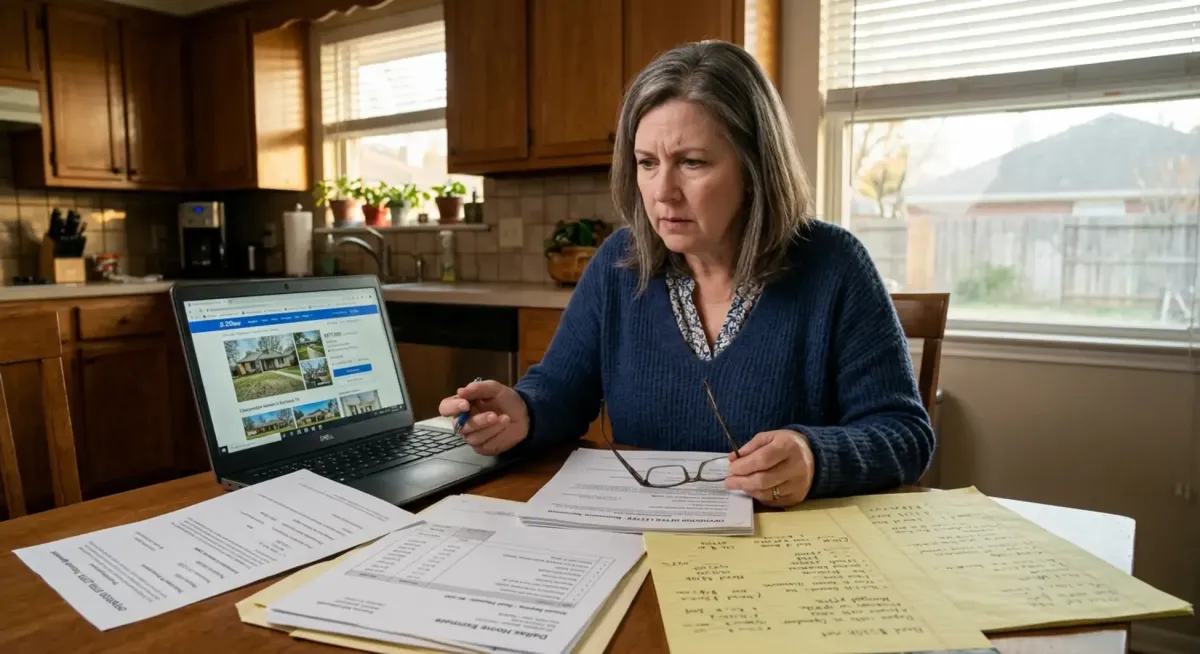
You're already carrying a lot. Maybe Mom just moved into memory care, or Dad had a fall and the family has finally accepted that the house needs to go. Someone in the family mentioned Opendoor — "just get an offer, it's fast, it's easy." So you look it up, request a quote, and then the number comes back. And something doesn't feel quite right. The offer seems lower than you expected, there are fees you didn't anticipate, and suddenly what looked like a simple solution has turned into another thing you have to research at 11pm after a long day of managing care logistics.
You're not imagining it. Opendoor's pricing structure — with its layered service fees, repair deductions, and costs that don't always surface until you're deep in the process — can be genuinely confusing, especially when you're already emotionally stretched thin. This guide is here to break all of it down in plain language, so you can make an informed decision about whether an iBuyer like Opendoor is the right path for your family's situation, or whether there's a better option you haven't considered yet.
Key Takeaways
- Opendoor charges a service fee typically ranging from 5% to 8% of the home's sale price — on top of other deductions.
- Repair deductions are assessed after an in-person inspection and can reduce your net proceeds significantly, often by thousands of dollars.
- The "convenience" of an iBuyer offer comes at a real cost — studies show sellers net 5% to 13% less than they would on the open market.
- Hidden costs like closing cost contributions, holding fees, and the gap between offer price and assessed value add up fast.
- For families selling a parent's home in the Dallas-Fort Worth area, there are compassionate alternatives that offer speed, transparency, and fair pricing without the layered fee structure.
- Understanding every line item before you accept any offer is the single most important thing you can do to protect your family's financial outcome.
What Opendoor Actually Is — And Why Families in Transition Are Drawn to It
Opendoor is what's known as an iBuyer — a technology-driven company that makes instant cash offers on homes, typically closes quickly, and then resells the property on the open market. The pitch is simple and genuinely appealing: skip the showings, skip the repairs, skip the uncertainty of waiting for a buyer. Just get an offer, accept it, and move on.
For a family managing a parent's care transition, that pitch hits differently. You're not just selling a house. You're managing care decisions, sorting through decades of belongings, coordinating with siblings who may live across the country, and trying to figure out how to pay for assisted living or memory care that can cost $4,000 to $8,000 a month or more. The idea of a fast, no-hassle home sale sounds like one less thing to worry about.
And that's exactly why it's worth slowing down for just a moment before you click "request an offer." Because the convenience Opendoor offers is real — but it comes with a price structure that isn't always obvious upfront, and when you're selling a parent's home to fund their care, every dollar matters.
Opendoor operates in the Dallas-Fort Worth market and many other major metros. They use an algorithmic pricing model to generate offers, which means the offer you receive is based on data — comparable sales, market trends, property characteristics — not on a human being who has walked through the home and understands what it means to your family. That distinction matters more than it might seem.
If this feels overwhelming, you're not alone. Every family we work with starts from the same place — exhausted, uncertain, and just trying to find the path of least resistance. Wanting a fast sale isn't greedy or lazy. It's a completely reasonable response to an impossible situation. The goal here isn't to talk you out of anything — it's to make sure you understand what you're agreeing to before you sign.
Breaking Down Opendoor's Service Fee: What It Is and What It Actually Costs You
The most prominent cost in Opendoor's pricing model is the service fee. This is the fee Opendoor charges for the convenience of buying your home directly — think of it as the premium you pay to skip the traditional listing process. According to Opendoor's own disclosures, this fee typically ranges from 5% to 8% of the home's sale price, though it can vary based on market conditions and the specific property.
Let's put that in real numbers. If your parent's home in the Dallas-Fort Worth area is worth $350,000, a 5% service fee means $17,500 coming off the top. At 8%, that's $28,000. For context, a traditional real estate agent typically charges 5% to 6% total commission — split between the buyer's and seller's agents. So Opendoor's service fee alone can match or exceed what you'd pay in total commissions on a traditional sale, before any other costs are factored in.
What's important to understand is that the service fee is just the beginning of the cost structure, not the whole picture. It's the most visible line item, but it sits on top of several other deductions that can significantly reduce what you actually walk away with.
It's also worth noting that Opendoor's service fee is not fixed — it fluctuates based on what Opendoor perceives as the risk of holding and reselling your specific property. Homes in slower-moving neighborhoods, homes with unusual characteristics, or homes in markets with higher volatility may be assessed higher fees. You won't know exactly where your home lands until you receive the offer, and even then, the fee structure can feel opaque if you're not reading the fine print carefully.
For families who are already skeptical of cash buyers — worried about being lowballed or taken advantage of — this variability can feel unsettling. And honestly? That skepticism is healthy. It doesn't mean every direct buyer is out to take advantage of you, but it does mean you should understand exactly what you're paying for before you commit.
Trying to figure out how much your parent's home is actually worth before you compare offers? Understanding the real value — not just the iBuyer estimate — is the first step to protecting your family's proceeds.
Get Options With Selling Our HomeOpendoor's Repair Deductions: The Cost That Surprises Families Most
Here's where many families get caught off guard. When Opendoor makes an initial offer, it's based on their algorithmic assessment of the property — not an in-person inspection. The offer looks good on paper. But after you accept the preliminary offer and Opendoor conducts their home assessment (which is essentially an inspection), they come back with a revised number that reflects repair deductions.
These deductions cover the cost of repairs Opendoor says they'll need to make before reselling the home. And here's the critical thing: you don't get to negotiate these costs the way you would in a traditional sale. You either accept the revised offer with the deductions baked in, or you walk away. There's no back-and-forth, no getting your own contractor to provide a competing estimate, no splitting the difference.
For a parent's home that hasn't been updated in 20 or 30 years — which is extremely common in the senior transition market — repair deductions can be substantial. We're talking about things like outdated HVAC systems, older roofing, dated kitchens and bathrooms, deferred maintenance items, and anything flagged during the inspection. Opendoor uses their own assessment process to value these repairs, and their estimates tend to run on the higher end of what the work would actually cost.
Watch out for the "preliminary offer vs. final offer" gap. The number Opendoor shows you when you first request a quote is not the number you'll receive after their inspection. Families frequently report a significant difference between the two — sometimes $10,000 to $30,000 or more on older homes. If you're comparing Opendoor's offer to other options, make sure you're comparing the post-inspection, post-deduction number — not the initial estimate.
This matters enormously for families selling a parent's home because the home is often in exactly the condition that triggers the largest repair deductions. Mom didn't update the kitchen in 2010. Dad never got around to replacing the roof. The HVAC is original to the house. These are incredibly common situations, and they're also the situations where Opendoor's repair deduction model hits hardest.
There's also a transparency issue worth naming. Opendoor provides a breakdown of the repair deductions, but families often report that the line items feel vague or inflated. Without the ability to get independent estimates or negotiate individual items, you're essentially trusting Opendoor's assessment of what the repairs will cost — and their incentive is to price those repairs in a way that protects their margin when they resell the home.
This doesn't mean Opendoor is acting in bad faith. It's just how the model works. But for a family that's already emotionally exhausted and financially stretched, discovering that the offer dropped by $20,000 after the inspection can feel like a gut punch — especially if you've already started making plans based on the preliminary number.
The Hidden Costs Beyond the Service Fee and Repair Deductions
The service fee and repair deductions are the two biggest line items in Opendoor's cost structure, but they're not the only ones. There are several additional costs that can chip away at your net proceeds, and they're not always prominently disclosed in the initial offer presentation.
Closing Costs: In a traditional sale, closing costs are typically split between buyer and seller, with the seller paying somewhere in the range of 1% to 3% of the sale price. With Opendoor, sellers are still responsible for closing costs, which can include title insurance, escrow fees, and other transaction-related expenses. These costs are sometimes rolled into the offer structure in a way that makes them less visible, but they're still coming out of your proceeds.
The Offer Price Gap: Independent research has consistently found that iBuyer offers come in below what a home would sell for on the open market. A study by researchers at Stanford, Cedars-Sinai, and Columbia found that iBuyers paid approximately 2% to 3% below market value on average — and that gap widens for homes that need work. When you add the service fee on top of an already-below-market offer, the total cost of selling to Opendoor versus listing traditionally can be substantial.
Cancellation Fees and Timing Penalties: Opendoor's contracts include provisions that can penalize sellers who back out after accepting an offer. If your family's situation changes — a different care option becomes available, a sibling changes their mind, or you receive a better offer from another buyer — exiting the Opendoor contract can come with financial consequences.
The Cost of Convenience Itself: This one is harder to quantify, but it's real. When you sell to Opendoor, you're paying for the certainty of a fast close and the elimination of showings and negotiations. For some families, that convenience is genuinely worth a premium. For others — especially those who have a few extra weeks and want to maximize proceeds to fund care — it may not be the best trade-off.
A note on how to read an Opendoor offer: When you receive an offer from Opendoor, look for the "net proceeds" figure — not the offer price. The net proceeds number reflects what you'll actually receive after all fees, deductions, and costs are subtracted. That's the number you should be comparing to other options, not the headline offer price.
How Opendoor's Total Cost Compares to Other Selling Options
To make this concrete, let's walk through a realistic comparison. Imagine your parent's home in the Dallas-Fort Worth area has a market value of $320,000. It's in decent but dated condition — original kitchen, older HVAC, carpet that needs replacing, a few deferred maintenance items. Here's roughly how the numbers might look across three different selling approaches.
| Selling Approach | Estimated Gross Proceeds | Estimated Costs | Estimated Net Proceeds |
|---|---|---|---|
| Traditional Listing (with agent) | $310,000–$325,000 | $18,000–$20,000 (commissions + closing) | $290,000–$307,000 |
| Opendoor (iBuyer) | $295,000–$305,000 (post-deductions) | $20,000–$26,000 (service fee + closing) | $269,000–$285,000 |
| Transparent Direct Buyer (like Sage) | $280,000–$300,000 | Minimal (no commissions, flexible closing) | $280,000–$300,000 |
These are illustrative estimates, not guarantees — every home and situation is different. But the pattern holds up: Opendoor's convenience premium, when you add up the service fee, repair deductions, and below-market offer price, often results in net proceeds that are meaningfully lower than what you'd receive through other channels. The question is whether the speed and simplicity are worth that gap for your specific situation.
For some families, the answer is genuinely yes. If you're in a crisis situation, if the home needs extensive work that would be difficult to manage from a distance, or if the emotional cost of a prolonged sale process is simply too high, the premium you pay for Opendoor's convenience might be the right trade-off. There's no shame in that calculation.
But for many families, there are alternatives that offer comparable speed and simplicity — without the layered fee structure. And those alternatives deserve to be part of the conversation before you make a decision.
Wondering how to cover the cost of assisted living or memory care while the home sale is in process? There are more options than most families realize — and some don't require selling the house at all.
Get The Guide To Pay For Long-Term CareWhy Families Selling a Parent's Home Face Unique Challenges in the iBuyer Model
Most of the coverage of Opendoor and iBuyers focuses on homeowners selling their own primary residence — people who are downsizing, relocating for work, or moving up to a larger home. That's not the situation most families reading this are in. You're selling someone else's home. And that changes everything.
When you're selling your own home, you have intimate knowledge of its condition, its history, and its value. You've lived there. You know what's been updated and what hasn't. You have a baseline sense of what the home is worth and what repairs are actually needed. When you're selling a parent's home — especially if you don't live in the Dallas-Fort Worth area — you may be working with incomplete information about the property's condition, and that puts you at a disadvantage in any negotiation.
There's also the emotional dimension. Selling a parent's home isn't a transaction — it's a milestone. It's the house where you grew up, or the home your parents built their life in. The guilt of selling it, the grief of clearing it out, the weight of making decisions that feel permanent — these are real, and they affect how families process offers and make decisions. An algorithm doesn't account for any of that.
A story that might sound familiar: Linda and her husband had lived in their home for 30 years. She was in cancer treatment, he was losing mobility, and they needed to move quickly into assisted living. Their home was cluttered and outdated, and they were embarrassed to let anyone see it. They were afraid no one would want it the way it was.
They didn't need someone to run their home through an algorithm. They needed someone to sit with them, understand their situation, and walk them through their options with honesty and patience. Within 30 days, they sold directly, closed early to help with care costs, and moved into a senior apartment without packing, cleaning, or making a single repair. The sale gave them both peace of mind during one of the hardest seasons of their lives.
That's not a transaction. That's a transition. And the difference matters.
The iBuyer model is designed for efficiency, not empathy. That's not a criticism — it's just what it is. Opendoor's process is optimized for speed and scale, not for the nuanced, emotionally complex situation that families navigating a parent's care transition are actually in. Understanding that distinction helps you choose the right tool for the job.
What to Ask Before Accepting Any Cash Offer — Opendoor or Otherwise
Whether you're evaluating an Opendoor offer, an offer from another iBuyer, or a direct purchase offer from a local buyer, there are specific questions you should be able to answer before you sign anything. These aren't complicated questions — but they're the ones that protect your family's financial outcome.
Questions to Ask Before Accepting Any Cash Offer
- What is the net proceeds figure after all fees, deductions, and closing costs?
- Is this offer based on an in-person assessment, or is it a preliminary algorithmic estimate?
- What is the repair deduction process, and can I get independent estimates for comparison?
- Are there any cancellation fees or penalties if I need to back out?
- What is the timeline to close, and is there flexibility if our care situation changes?
- Can I see a clear breakdown of every cost being deducted from the offer price?
- What happens to the contents of the home — do I need to clear it out before closing?
- Is there a contingency period, and what triggers it?
A buyer who is operating with transparency and genuine respect for your situation should be able to answer every one of these questions clearly and without hesitation. If the answers feel vague, if you're being pressured to decide quickly, or if the numbers keep changing without clear explanation, those are signals worth paying attention to.
One thing we've seen consistently in working with families in the Dallas-Fort Worth area: the families who feel best about their home sale — regardless of which path they chose — are the ones who understood their options before they committed. Not the ones who got the highest offer, necessarily, but the ones who made an informed decision with full information. That clarity is what turns a stressful transaction into something that actually feels like relief.
You don't have to choose between fast and fair. This is one of the most persistent myths in the home-selling world — that a quick sale means a low offer, and a fair price means months of showings and uncertainty. Neither is true. The right buyer, with the right approach, can offer both speed and transparency. The key is knowing what questions to ask and what red flags to watch for.
Alternatives to Opendoor for Families Navigating a Senior Care Transition in DFW
If you're in the Dallas-Fort Worth area and you're selling a parent's home as part of a care transition, Opendoor is one option — but it's not the only one, and for many families, it's not the best one. Here's a realistic look at the landscape.
Traditional Listing with a Senior-Focused Agent: A real estate agent who specializes in senior transitions understands the emotional complexity of what you're going through and can help you prepare the home for market without overwhelming you. The trade-off is time — a traditional listing typically takes 30 to 90 days from list to close, and it requires some level of preparation, showings, and negotiation. For families who have a bit of runway and want to maximize proceeds, this can be the right path.
Direct Purchase from a Mission-Aligned Buyer: Not all direct buyers are the same. Some operate with the same algorithmic, volume-driven approach as Opendoor. Others — particularly those who specialize in senior transitions — start with the family's situation, not the numbers. A transparent direct purchase can close in as little as two to three weeks, requires no repairs or cleaning, and can be structured to align with the care timeline. The key differentiator is whether the buyer is willing to show you exactly how the offer was calculated and give you time to compare it to other options.
Bridge Financing: In some situations, families can access bridge financing to cover the cost of care while the home is being sold through traditional channels. This allows you to move a parent into care immediately without being forced into a fast sale. Elder law attorneys and senior placement agents in the DFW area can often connect families with these resources.
Renting the Property: In some cases — particularly when the market is favorable and the home is in good condition — renting the property can generate income to help cover care costs while the family takes more time to decide on a sale. This isn't the right option for everyone, but it's worth knowing it exists.
The point isn't to steer you toward any one of these paths. It's to make sure you know all of them exist before you default to the first option that presents itself. Our family made the mistake of not knowing all our options when we were navigating our own parent's care transition — and we've spent years making sure other families don't have to make the same mistake.
If you're not sure where to start — with the home, the care, or the finances — a Care Plan Assessment can help you see the full picture and figure out the right sequence of steps for your family's situation.
Get Clarity With A Care AssessmentThe Transparency Test: How to Tell If a Buyer Is Being Straight With You
One of the most common fears families have when selling a parent's home — especially to a cash buyer — is being taken advantage of. It's a legitimate concern. There are buyers in every market who use high-pressure tactics, opaque pricing, and fast deadlines to push families into decisions that aren't in their best interest. Knowing how to tell the difference between a trustworthy buyer and one who isn't is one of the most valuable things you can take away from this article.
Transparency about the offer calculation: A trustworthy buyer should be able to explain exactly how they arrived at their offer number. What comparable sales did they use? What adjustments did they make for the home's condition? What's their expected resale value, and how does that inform what they can offer? You don't need a spreadsheet — but you should be able to understand the logic.
No artificial urgency: Legitimate buyers don't need you to decide today. If someone is telling you the offer expires in 24 hours or that you need to sign before the weekend, that's a pressure tactic — not a reflection of market reality. A buyer who respects your situation will give you time to think, compare, and consult with family members or advisors.
Willingness to discuss other options: A buyer who genuinely has your best interest at heart will acknowledge that a direct sale might not be the right option for your family. They should be willing to discuss alternatives — including listing with an agent — and help you understand the trade-offs. If a buyer is only interested in closing the deal and not in helping you make the best decision, that tells you something important.
They start with the person, not the property: This might sound soft, but it matters. A buyer who leads with "how's your mom doing?" before they ever ask about the house is operating from a fundamentally different place than one who leads with "what's the address?" The home is part of someone's life story. A buyer who understands that — and treats it that way — is more likely to treat you fairly throughout the entire process.
What Families in DFW Need to Know About Selling a Senior's Home in the Current Market
The Dallas-Fort Worth real estate market has been one of the most active in the country over the past several years, though like all markets it has experienced shifts in pace and pricing. For families selling a parent's home in DFW, the current environment has some specific implications worth understanding.
First, the good news: DFW remains a strong market with consistent demand, which means well-priced homes in good condition sell relatively quickly. If your parent's home is in a desirable neighborhood and in reasonable condition, you likely have more options than you think — including the option to list traditionally and still close within 30 to 45 days.
Second, the nuance: homes that need significant work — outdated systems, deferred maintenance, cosmetic updates — face a different calculus. Buyers in the current market are more selective than they were during the peak of the pandemic-era frenzy, and homes that need work tend to sit longer or require price reductions. This is exactly the scenario where iBuyers and direct buyers become more appealing — and also where understanding the full cost of their fee structures becomes most important.
Third, the resource landscape: DFW has a robust network of senior living professionals, elder law attorneys, placement agents, and care coordinators who can help families navigate the full transition — not just the home sale. If you're managing a parent's move into assisted living or memory care in the DFW area, you don't have to figure out all of this alone. There are people who do this every day and who can connect you with the right resources for your specific situation.
You Don't Have to Navigate This Alone
Families going through a senior care transition in the Dallas-Fort Worth area have access to a network of trusted professionals — from senior placement agents who can help find the right care community, to elder law attorneys who can advise on Medicaid planning and estate matters, to financial advisors who specialize in long-term care funding. The home sale is one piece of a larger puzzle, and connecting with the right people can make every piece feel more manageable.
Frequently Asked Questions About Opendoor Pricing, Fees, and Selling a Senior's Home
Is Opendoor's service fee negotiable?
In most cases, Opendoor's service fee is not negotiable in the traditional sense — it's set by their pricing model based on market conditions and property-specific factors. However, some sellers have reported receiving slightly different fee structures depending on timing and market conditions. The more important number to focus on is the net proceeds figure, which reflects the total impact of all fees and deductions. Rather than trying to negotiate a single line item, ask Opendoor to show you the complete net proceeds calculation and compare that total to what you'd receive through other selling options.
How long does Opendoor take to close, and is that timeline guaranteed?
Opendoor typically offers closing timelines ranging from as few as 14 days to as many as 60 days, and sellers can often choose their preferred close date within that window. This flexibility is one of Opendoor's genuine strengths — particularly for families who need to coordinate a home sale with a parent's move into care. However, the timeline can be affected by the inspection process, repair deduction negotiations, and title issues. It's worth confirming in writing what the guaranteed close date is and what circumstances could delay it, especially if you're counting on the proceeds to fund care costs by a specific date.
What happens to the contents of the home when selling to Opendoor?
Opendoor expects the home to be vacant and cleared of personal belongings before closing — they are buying the real property, not the contents. This means families are responsible for sorting, donating, selling, or disposing of everything inside the home before the sale closes. For families managing a senior transition, this can be one of the most emotionally and logistically challenging parts of the process. Some direct buyers — particularly those who specialize in senior transitions — will purchase the home with contents included, or will connect families with estate sale professionals and senior move managers who can handle the clearing process. If the contents of the home are a significant concern, make sure to ask any potential buyer how they handle this before you commit.
Can I sell a parent's home to Opendoor if I have power of attorney but am not on the title?
Selling a home on behalf of a parent using power of attorney is possible, but it involves specific legal requirements that vary by state and by the type of POA document in place. Opendoor and other buyers will require documentation confirming that the POA grants authority to sell real property, and the title company will need to review the POA document as part of the closing process. Before initiating any sale process, it's strongly advisable to consult with an elder law attorney who can confirm that your POA document is properly drafted for real estate transactions and advise on any additional steps required in Texas. Getting this right upfront prevents delays and complications later.
Are there situations where selling to Opendoor actually makes sense for a family in a senior transition?
Yes, genuinely — there are situations where Opendoor's model is a reasonable fit. If the home is in relatively good condition and doesn't need major repairs, the repair deductions will be smaller and the service fee becomes the primary cost to weigh against the convenience benefit. If the family is geographically dispersed and no one can be present to manage a traditional sale, the remote, streamlined nature of the Opendoor process has real value. And if the emotional cost of a prolonged sale process is genuinely too high — if the family just needs it to be over — paying a premium for certainty and speed is a legitimate choice. The key is making that choice with full information, not because Opendoor was the first option you encountered.
How does selling to a local direct buyer like Sage Senior Support compare to selling to Opendoor?
The core difference is in the approach and the cost structure. Opendoor is a technology-driven, volume-based operation — they buy and resell hundreds of homes and their process is designed for efficiency at scale. A local direct buyer who specializes in senior transitions starts with the family's situation, not the property, and structures the offer with full transparency about how the number was calculated. There's no service fee in the traditional iBuyer sense, no algorithmic repair deduction process, and typically more flexibility around closing timelines, home contents, and the specific needs of the family. The offer may or may not be higher than Opendoor's — it depends on the home and the market — but the process is designed to feel like a conversation, not a transaction.
Before You Accept Any Offer on Your Parent's Home, Let's Talk Through Your Options
You've already done the hard work of getting to this point — managing the care decisions, the family conversations, the emotional weight of all of it. The home sale doesn't have to add more stress to that pile. We start every conversation by asking how Mom or Dad is doing, because that's what actually matters. When you're ready to talk about the house, we'll walk you through every option — including ones that might work better than anything you've considered so far — with complete transparency and zero pressure.
Schedule a Free Consultation