
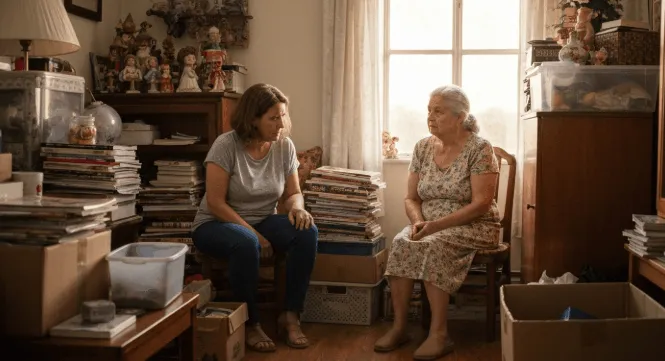
Selling A Hoarder House In Texas: A Family's Guide to Helping A Loved One Navigate Hoarding
Key Takeaways: Selling a Hoarder House in Texas
- Hoarding disorder affects an estimated 4–8% of adults over 60, and severity increases with age—especially when cognitive decline is present. This is a medical condition, not stubbornness, and your approach must reflect that.
- Professional hoarding cleanout in the DFW area ranges from $2,000–$7,000 for mild cases to $15,000–$30,000+ for severe Level 4–5 conditions. Hidden costs—structural damage, mold, pest infestation—can push total remediation well past the incremental value recovered, making an as-is sale often the smarter financial choice.
- Texas law requires sellers to disclose known material defects from hoarding, including structural damage, mold, and pest infestations. Failure to disclose exposes your family to liability under the Texas Deceptive Trade Practices Act. You also need legal authority—a Durable Power of Attorney or guardianship—before you can sell a parent's home.
- Families have three realistic sale paths: a traditional listing (higher potential price, but requires upfront cleanout), a cash buyer specializing in distressed properties (as-is, fast close, no family burden), or a hybrid as-is sale. The right choice depends on your timeline, financial situation, and your parent's care needs.
- Trust Sage Senior Support for compassionate, education-first guidance on selling a hoarded home in DFW—visit the homepage to learn how 100+ families have found relief, fair cash offers, and a clear path forward.
How Do You Sell a Hoarder House in Texas When Your Parent Won't Let Go?
Selling a hoarded home in Texas requires a compassionate, multi-step approach that prioritizes your parent's mental health, legal authority, and financial reality. The process typically involves securing legal authority (Power of Attorney or guardianship), engaging professional mental health support for your parent, hiring specialized cleanout services, and choosing between a traditional sale or a direct cash purchase. Understanding Texas disclosure laws, potential code enforcement issues, and the true costs of remediation will help your family make an informed decision that feels fair and manageable.
This guide walks you through every stage of the process, from the emotional first conversation to closing day, so you can help your loved one transition safely while protecting your family's financial and emotional well-being.
Sage Senior Support
Free Consultation & Cash Offer in 24 Hours
Core Service Programs:
- Cash Home Buying for families needing to sell a parent's home fast to fund senior care
- Senior Care Resources with personally-vetted community partners to assist your family in the transition for your loved one
- Care Funding Discovery Home sell options for Texas Medicaid, VA benefits, long-term care insurance, and bridge financing
Why Choose Sage Senior Support:
- ✓ Trusted by customers with a perfect 5.0-star Google rating across 26 verified reviews
- ✓ Founded by someone who's lived this transition — twice (2013 & 2024)
- ✓ 100+ DFW families guided through senior care transitions
- ✓ Cash offers same day — close in as few as 10 days
- ✓ Zero commissions, zero closing costs, no repairs needed
- ✓ Connection to free care placement — agents paid by the community, not your family
- ✓ Locally owned in Grapevine, TX — serving the entire DFW metroplex
Understanding Hoarding Disorder and Why It Happens in Aging Parents
Before you can help your parent, you need to understand what you're actually dealing with. Hoarding disorder isn't laziness, stubbornness, or a reflection of how you raised them or how they raised you. It's a recognized psychological condition—one that affects an estimated 2–6% of all adults, but climbs to 4–8% among adults over 60. And here's what most families don't realize: the severity gets worse with every decade of life.
Research shows a particularly striking overlap between hoarding and cognitive decline. In clinical populations, hoarding symptoms co-occur with dementia or Alzheimer's disease at rates of 30–50%. If your parent's home has gotten dramatically worse in recent years, it may be less about the hoarding itself and more about understanding the connection between cognitive decline and hoarding behaviors—a pattern that families often miss until a crisis forces the issue.
The condition is driven by emotional attachment to objects, fear of loss, decision paralysis, and often underlying anxiety or trauma. Your parent isn't choosing this. That distinction matters enormously when it comes to how you approach the conversation, the cleanout, and the sale.
Most families don't act until something forces their hand. The most common triggers in Texas include a fall or hospitalization, neighbor complaints that escalate to fire marshal inspections, code enforcement notices, or involvement from Texas Adult Protective Services (APS). By the time one of these events occurs, the situation has usually been building for years—sometimes decades. You're not behind. You're here now, and that's what matters.
You're Not Alone—This Is More Common Than You Think
Hoarding disorder affects millions of Americans, and the DFW area's growing senior population means thousands of families are navigating this exact situation right now. Tarrant and Dallas Counties together have over 600,000 residents aged 65 and older—a number projected to grow 30–50% by 2030. Feeling overwhelmed, guilty, or unsure where to start is completely normal.
The True Financial Picture: Costs You Need to Know Before Selling
One of the most important things you can do right now is get honest about the numbers. Many families underestimate what remediation actually costs—and overestimate how much of that cost they'll recover in a higher sale price.
Professional hoarding cleanout in the DFW market runs approximately $2,000–$7,000 for Level 1–2 clutter, $7,000–$15,000 for moderate Level 3 conditions, and $15,000–$30,000 or more for severe Level 4–5 hoarding with biohazards. And that's before you discover what's underneath.
Hidden remediation costs are where families get blindsided. Structural damage from years of weight load can run $5,000–$25,000 or more. Pest infestations—especially Formosan termites common in North Texas—can cost $2,000–$10,000 in treatment and repairs. Mold remediation, which requires TDLR-licensed contractors in Texas, typically runs $1,500–$10,000 depending on the affected area. None of these line items show up until the contents are removed.
A hoarded home typically sells for 20–50% below a comparable move-in ready property, even after basic cleanout. With the DFW-MSA median home price sitting at approximately $395,000 as of April 2026, that discount is significant. But here's the harder truth: full professional remediation costs often approach or exceed the incremental value recovered. For many families, an as-is sale to a specialized buyer is not just the easiest path—it's the financially stronger one.
One more cost families frequently overlook: homeowner's insurance typically does not cover damage resulting from neglect. If a fire occurs in a hoarded home, adjusters may deny or limit claims if the condition contributed to the hazard. Contact your insurer before remediation begins to understand your coverage gaps. And if the home is part of an estate, factor in probate attorney fees in Tarrant or Dallas County, which range from $3,000–$10,000 or more for independent administration—with hoarding adding months or years to the timeline.
If you're trying to figure out how the proceeds from a home sale connect to your parent's care costs, the free guide on paying for long-term care is a practical starting point. DFW assisted living runs $3,200–$6,000 per month in 2026, and memory care typically adds another $500–$2,000 on top of that. The home sale often needs to do real work—which is exactly why getting the financial picture right matters so much.
Legal Requirements and Regulatory Hurdles in Texas
Selling a parent's hoarded home in Texas isn't just a real estate transaction. It's a legal process, and families who skip this step often create expensive problems for themselves later.
The first question is authority: do you have the legal right to sell your parent's home? If your parent has diminished capacity and there is no valid Durable Power of Attorney (DPOA) granting real estate authority, you cannot legally sell the property without going through the courts. Establishing legal authority through Power of Attorney or guardianship is the essential first legal step—and it needs to happen before any sale process begins. Guardianship through the courts is expensive and time-consuming; a properly executed DPOA is far preferable if it can be established while your parent still has capacity.
Texas law also requires sellers to disclose known material defects on the TREC Seller's Disclosure Notice. A prior hoarding condition—especially one that resulted in structural damage, pest infestation, mold, or sanitation issues—must be disclosed. Failure to do so exposes your family to liability under the Texas Deceptive Trade Practices Act, which can mean damages, attorney's fees, and potential rescission of the sale. Transparency is not just ethical here; it's legally required.
On the municipal side, DFW cities enforce property maintenance and nuisance codes aggressively. Non-compliance can result in daily fines ranging from $50 to $2,000 or more per day, liens against the property, or city-ordered cleanouts billed to the owner. Texas APS can also investigate reports of self-neglect in hoarding situations and has the authority to petition courts for temporary guardianship or compel action if the senior's safety is at risk.
If the home is part of an estate, navigating the probate process in Texas adds another layer of complexity. Hoarding makes the mandatory estate inventory—required under Texas probate law—extremely difficult. Independent administration is faster than dependent administration, but even that process can stretch six months to over a year when a hoarded property is involved.
For biohazard remediation involving hazardous or medical waste, the Texas Commission on Environmental Quality (TCEQ) regulates disposal. Mold remediation specifically requires contractors licensed by the Texas Department of Licensing and Regulation (TDLR). Keep all documentation of remediation work—scope, products used, certifications—for disclosure and insurance purposes.
Assembling Your Support Team: Who You Need and When
The families who navigate this most successfully don't try to do it alone, and they don't try to do everything at once. There's an order to this that matters.
Start with mental health support for your parent. A therapist specializing in hoarding disorder helps address the underlying psychological condition and emotionally prepares your parent for the transition. This isn't optional—it's the foundation that makes everything else more likely to succeed. Skipping it and going straight to cleanout often results in trauma, family conflict, and a senior who becomes more entrenched, not less.
Engage an elder law attorney early. They can establish legal authority (POA or guardianship), help you plan for care costs including Medicaid and VA benefits, and navigate any probate or estate complications. This professional protects your family legally and financially throughout the process.
When it's time to address the contents, look for a senior move manager certified by NASMM (National Association of Senior Move Managers) or ICD (Institute for Challenging Disorganization). These professionals are trained specifically in the psychology of hoarding and the empathetic approach required—they're not junk haulers. How senior move managers help families navigate downsizing and transitions is a meaningful distinction from standard estate cleanout companies.
A real estate professional—whether a cash buyer specializing in hoarding properties or a listing agent—can provide early valuation insights so your family understands the financial landscape before committing to a cleanout path. And a placement agent or social worker focused on your parent's care transition ensures that the human being at the center of all this doesn't get lost in the logistics.
Red Flags: Predatory Practices Targeting Families in Crisis
Watch out for unlicensed operators, exploitative pricing, emotional manipulation, and misrepresentation of services. If an offer feels rushed, unfairly low, or pressured—or if someone promises to "handle everything" without providing clear contracts and itemized costs—consult with an independent elder law attorney before signing anything. The Texas Attorney General's office and the BBB are resources for filing complaints about predatory practices.
Pro Tip: Start with Mental Health Support, Not the Cleanout
Engaging a therapist specializing in hoarding disorder early in the process helps your parent emotionally prepare for the transition and increases the likelihood of a smoother, less traumatic experience. This investment often pays dividends in family harmony and the senior's adjustment to new living arrangements—and it makes every subsequent step easier for everyone involved.
Selling Options for a Hoarded Home in DFW: Traditional Agent vs. Cash Buyer vs. As-Is Sale
Once your family has legal authority and a support team in place, you face the central question: how do you actually sell this house? There are three realistic paths, and the right one depends on your timeline, financial situation, and how much burden your family can realistically absorb.
| Sale Path | Upfront Family Burden | Timeline to Close | Price Potential | Best For |
|---|---|---|---|---|
| Traditional listing with agent | High — full cleanout and repairs required at family's cost | 60–120+ days | Highest (if market conditions favorable) | Families with time, capital, and mild-to-moderate hoarding |
| Cash buyer (distressed property specialist) | None — buyer absorbs all cleanout and renovation | 7–10 days | Lower than market, but no remediation costs | Families needing speed, certainty, and zero upfront cost |
| As-is sale to specialized buyer | None — family takes what they want, leaves the rest | 7–10 days | Reflects true as-is value minus renovation scope | Severe hoarding, estate situations, urgent care funding needs |
For context on DFW market conditions: the Fort Worth median home price sits at $362,881 with essentially flat year-over-year growth as of May 2026, while Dallas median prices reached $499,000 over the same period. Hoarded properties sell significantly below these figures due to condition and limited buyer interest. Tarrant County homes averaged 58 days on market at year-end 2025—and a hoarded home can sit two to three times longer than that without a specialized buyer.
Cash buyers specializing in distressed DFW properties are uniquely positioned for hoarding situations because they have the systems, capital, and experience to accurately price the full remediation scope. Unlike national iBuyers, who typically require properties to be in much better condition, local specialists absorb the full cleanout and renovation responsibility. Exploring the as-is home sale process in DFW can help your family understand exactly what that path looks like before making any decisions.
If you want a side-by-side breakdown of what each approach actually costs when you factor in commissions, repairs, and time, the analysis of the real cost difference between cash buyers and traditional agents lays it out clearly.
Managing Family Conflict and the Emotional Weight of This Process
If you have siblings, there's a good chance you're not all on the same page. One person wants to maximize the sale price. Another wants it done yesterday. Someone else feels guilty about moving Mom out at all. These tensions are normal—and they're one of the most common reasons the process stalls.
The most effective thing you can do is shift the conversation from "what do we want?" to "what does Mom need?" Anchoring decisions in the parent's safety, health, and dignity cuts through a lot of the noise. Setting a clear, shared goal early—"We want to move Dad into memory care within 60 days"—gives everyone a framework for making decisions rather than relitigating old family dynamics.
A neutral third party helps enormously. An elder law attorney, senior move manager, or family counselor can facilitate conversations that family members simply can't have productively on their own. They've seen this before. They know how to keep the focus where it belongs.
Guilt is almost universal in these situations. Adult children feel guilty for not acting sooner, for not visiting more, for not catching the signs of cognitive decline earlier. That guilt is understandable, but it's also often misplaced. Hoarding is a psychological condition. It is not a reflection of your parent's character, and it is not a reflection of yours. Navigating the emotional journey of downsizing a parent's home is genuinely hard—and you're doing it, which is what matters.
Document the home's condition before and during cleanout with photos and written notes. This protects your family legally, provides clarity for probate inventory, and removes ambiguity about what was there and what was done with it.
Why Sage Senior Support Is the Right Choice for DFW Families Facing a Hoarded Home
Sage Senior Support was built for exactly this situation. Every conversation starts the same way: "How is your parent doing?"—not "Tell me about the house." That's not a script. It's a genuine reflection of what matters most. The home sale is a tool for funding your parent's care and relieving your family's burden. Understanding the care situation first is what makes the rest of the conversation meaningful.
With a perfect 5.0-star Google rating across 26 verified reviews, Sage has earned the trust of over 100 DFW families navigating senior care transitions—including many involving hoarding. Cash offers come within 24–48 hours. Closing happens in as few as 10 days. Families take what they want and leave everything else. No cleanout. No repairs. No commissions or closing costs.
Sage's founder has personally navigated senior care transitions twice—in 2013 and again in 2024—and that lived experience shapes every interaction. It's the reason Sage maintains a deep network of DFW placement agents, elder law attorneys, and care professionals, and why the approach is education-first rather than pressure-first. Families consistently leave knowing all their options, not just the one that benefits Sage.
Unlike national iBuyers or generic cash buyers who pass on severe hoarding properties or make offers that don't account for real remediation costs, Sage specializes in these situations. The offer reflects the true as-is value of the property and the actual work required—explained transparently, not buried in fine print. Locally owned in Grapevine, TX, and serving the entire DFW metroplex, Sage is the kind of partner families wish they'd found sooner.
Schedule a free consultation with Sage Senior Support today—no pressure, just honest guidance on what's best for your family.
Frequently Asked Questions: Selling a Hoarder House in Texas
What can I do if my elderly parent refuses to leave their hoarded home or let anyone clean it?
This is one of the most emotionally difficult situations families face, and it's far more common than most people realize. The most important first step is getting professional mental health support for your parent—a therapist specializing in hoarding disorder can address the underlying condition and help your parent emotionally prepare for change. An elder law attorney can advise on legal options like a Durable Power of Attorney or guardianship if your parent's capacity is diminished. Avoid confrontational or forced cleanouts; they are often traumatic and counterproductive, and can make your parent more resistant. Gentle, gradual approaches guided by professionals are almost always more effective and more humane.
Will a cash home buyer in DFW really purchase a house with a severe hoarding problem?
Yes—specialized cash home buyers in the DFW area, including Sage Senior Support, specifically purchase properties as-is in any condition, which includes homes with severe hoarding at Level 4 or 5. These buyers understand the full scope of cleanout and renovation costs and factor them into a fair cash offer. The typical process allows families to take what they want and leave everything else—the buyer absorbs full responsibility for the remediation. This is fundamentally different from national iBuyers, who typically require properties to be in much better condition and often won't touch extreme hoarding situations.
How should we handle finding valuables, personal documents, or cash during a hoarder house cleanout?
Establish a designated "keep" area immediately—a separate room or clearly marked zone where all discovered valuables, important documents (birth certificates, financial statements, old photos, insurance policies), and any cash are placed without exception. Have a trusted family member or a certified senior move manager physically present and overseeing the process at all times to ensure nothing is accidentally discarded. Inventory everything carefully with photos. For significant cash amounts or financial documents, consult with an estate planning attorney before making any decisions, particularly if the home is part of a probate estate.
Do we have to disclose a prior hoarding condition when selling a home in Texas?
Yes. Texas law requires sellers to complete a TREC Seller's Disclosure Notice identifying any known material defects or conditions affecting the property's value or desirability. A prior hoarding condition—particularly one that resulted in structural damage, pest infestations, mold, or sanitation issues—must be disclosed. Failing to disclose known material defects can expose your family to significant legal liability under the Texas Deceptive Trade Practices Act, including claims for damages, mental anguish, and attorney's fees. Transparency protects you legally and is the right thing to do.
What makes Sage Senior Support different from other cash buyers or real estate companies?
Sage Senior Support starts every conversation by asking "How is your parent doing?" before discussing the house—because understanding the care situation comes first. With a perfect 5.0-star Google rating across 26 verified reviews, Sage combines fair cash offers, fast closing (7–10 days), and a deep network of DFW care professionals to support families through the entire transition—not just the property transaction. Unlike generic cash buyers who may not understand the true scope of hoarding remediation costs, Sage specializes in these situations and explains every number transparently. Families are educated on all their options, even if the best choice isn't selling directly to Sage. Schedule a free consultation with Sage Senior Support today to get honest, no-pressure guidance tailored to your family's situation.
Ready to Get Clarity on Selling a Hoarded Home in DFW?
You don't have to figure this out alone. Whether you're just starting to understand your options or you're ready to move quickly, Sage Senior Support is here to walk you through every step—with honesty, compassion, and zero pressure.
Get a free consultation and a cash offer within 24 hours. Take what matters. Leave the rest. Close in as few as 10 days.
Service availability, benefit eligibility, and home valuations depend on individual circumstances and current market conditions. This article is for informational purposes only and does not constitute medical, legal, or financial advice. Contact us for personalized guidance specific to your family's situation.