
Are Cash Home Buyers Legit or Will I Get Ripped Off? A DFW Family's Guide
Are Cash Home Buyers Legit or Will I Get Ripped Off? A DFW Family's Guide
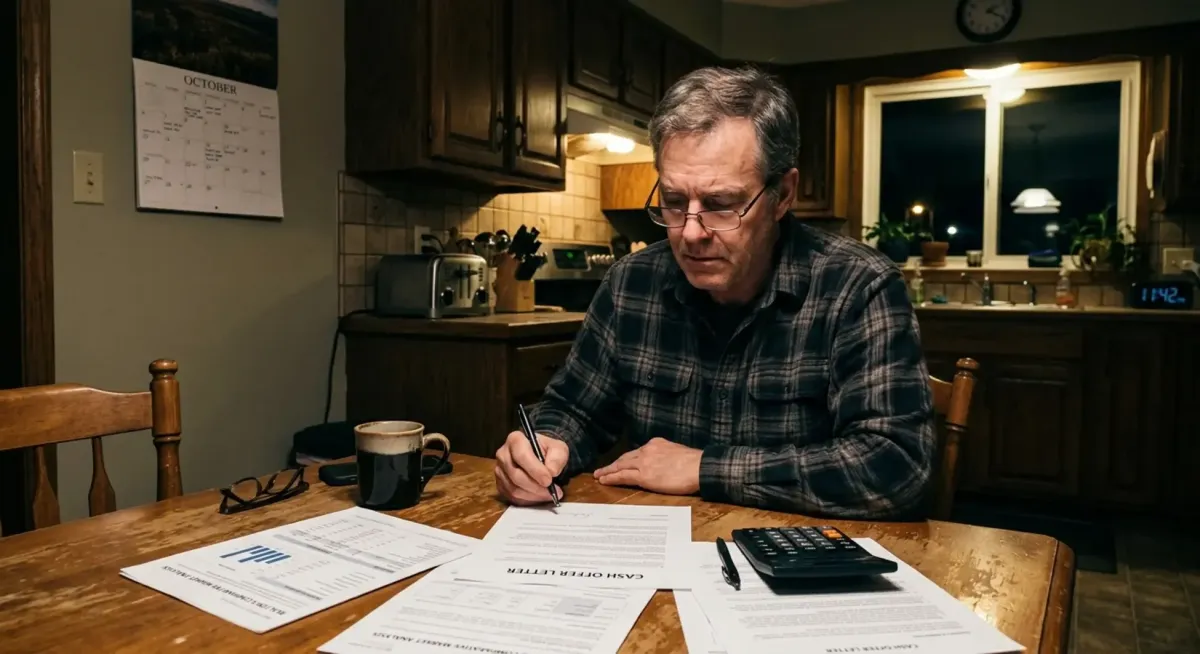
The postcard arrived the morning after the probate filing became public record. It was addressed to "The Estate of" — your parent's name — and it promised a fast, fair, all-cash offer with "no repairs needed, no hassle, close in 7 days." You stared at it for a long moment, not sure whether to feel relieved or alarmed.
You're already exhausted. You've spent the last three weeks navigating hospital discharge paperwork, touring memory care facilities, and trying to figure out how on earth you're going to pay $5,000 a month for the care your parent needs. And now there's a house full of forty years of belongings, a roof that probably needs replacing, and a stack of postcards from strangers who all claim they want to buy it — fast, for cash, no questions asked.
Is this a lifeline? Or a trap?
That question is exactly what this guide is designed to answer. Not with vague reassurances, but with real numbers, real red flags, and a clear framework for telling the difference between a legitimate cash buyer and someone who is counting on your exhaustion to take advantage of you.
Key Takeaways: What You'll Learn in This Guide
- Legitimate cash home buyers do exist in DFW — and they can offer fair, transparent deals, especially for homes needing significant repairs or cleanout.
- The "we buy houses" industry has a real reputation problem because predatory operators also exist. Your skepticism is not paranoia — it's smart.
- In December 2024, 30.2% of all U.S. home sales were all-cash transactions. This is a mainstream option, not a fringe one.
- Legitimate buyers use a transparent formula (the 70% rule) to calculate offers. If a buyer can't explain their math, that's a red flag.
- The Texas Deceptive Trade Practices Act (DTPA) is one of the strongest consumer protection laws in the country — and it applies to cash home buyers.
- The "best" choice between a cash buyer and a traditional agent depends entirely on your timeline, the home's condition, and your family's capacity — not a one-size-fits-all answer.
- Getting multiple offers AND a Realtor's Comparative Market Analysis (CMA) gives you the leverage and clarity to make a truly informed decision.
Why Your Skepticism About Cash Home Buyers Is Completely Valid
Let's start here, because this matters: your caution about cash home buyers is not irrational. It is not paranoia. It is not you being difficult. It is a completely reasonable response to a real pattern of predatory behavior that has hurt real families — including families in the Dallas-Fort Worth area — who were in exactly the kind of vulnerable, time-pressured situation you may be in right now.
The "we buy houses" industry has a genuine reputation problem. Some operators in this space are predatory. They target probate filings — which are public record in Texas — the moment they hit the courthouse. They send postcards, texts, and cold calls to grieving families who are overwhelmed and don't have the bandwidth to do proper due diligence. They make high initial offers to get a contract signed, then slash the price three days before closing based on "new inspection findings." They use pressure tactics, vague contract language, and assignment clauses buried in fine print to extract maximum profit from families who just want the whole thing to be over.
If you want to understand the full landscape of cash home buyer scams and how to vet them, the patterns are well-documented and worth knowing before you sign anything. But here's the other side of that truth: legitimate cash buyers also exist, and they operate with transparency, verifiable track records, and genuine respect for what you're going through. The difference between a good deal and a bad one almost always comes down to two things — your own due diligence, and whether the buyer is willing to be fully transparent about how they arrived at their number.
Your Skepticism Is Justified
Yes, predatory cash buyers exist. Yes, some families have been taken advantage of — losing tens of thousands of dollars in equity to operators who counted on their grief and exhaustion. Your caution is smart, not paranoid. The good news: legitimate operators are transparent, verifiable, and willing to answer tough questions without flinching. This guide will show you exactly how to tell the difference.
The Real Problem: Information Asymmetry
Here's the core issue that makes this so hard for most families: information asymmetry. Cash buyers do this every day. They know how to calculate offers, what factors drive prices up or down, what the legal landscape looks like, and where the leverage points are in a negotiation. Most families selling a parent's home are doing it once, under enormous emotional pressure, without any of that background knowledge.
When you don't know how a cash offer is calculated, you have no way to evaluate whether the number you're looking at is fair or exploitative. You're essentially being asked to make a major financial decision — often involving hundreds of thousands of dollars — without being able to read the scorecard. That's not a level playing field, and it's exactly why so many families either get taken advantage of, or walk away from legitimate offers out of fear.
This guide is designed to remove that asymmetry. By the time you finish reading, you'll understand exactly how legitimate buyers think, what they're looking for, and how to evaluate any offer you receive with confidence. We're in this together — there are tools and resources to help you manage all of it.
How the DFW Cash Home Buyer Market Actually Works
Before you can evaluate a specific buyer or offer, you need to understand the landscape you're operating in. The DFW cash home buyer market is large, diverse, and — if you know what you're looking at — navigable. Understanding the DFW housing market trends and investor activity gives you a significant advantage going into any conversation with a buyer.
Here's the scale we're talking about: according to Redfin data, in December 2024, all-cash transactions accounted for 30.2% of all U.S. home sales. This is not a niche or fringe activity — nearly one in three homes sold in America is a cash transaction. In major investor markets like DFW, that percentage is likely even higher. Dallas was among the top 10 metros nationally for investor home purchases in Q3 2024, with investors comprising approximately 24.5% of sales.
The DFW metro's population reached an estimated 6,732,000 in 2025, reflecting 1.16% annual growth — making it one of the fastest-growing metro areas in the country. That sustained population growth, combined with an aging housing stock in established neighborhoods and a rapidly expanding 65+ demographic (the fastest-growing age cohort in Texas, up 3.8% from 2023 to 2024), creates a continuous pipeline of homes that cash buyers want to acquire.
The Five Types of Cash Home Buyers You'll Encounter in DFW
Not all cash buyers are the same. Understanding who you're actually dealing with is the first step in evaluating whether their offer is worth your time.
1. Local Independent Investors and Flippers. These are individuals or small teams using their own capital. They typically know specific DFW neighborhoods intimately, can move quickly, and tend to offer between 65–85% of fair market value depending on the property's condition. Because they're using their own money and their own reputation is on the line, legitimate local investors tend to be more transparent and relationship-oriented than larger operators.
2. National "We Buy Houses" Franchises. Brands like HomeVestors ("We Buy Ugly Houses") operate under a national banner but are locally owned and operated. They typically offer 60–75% of FMV and specialize in distressed properties. Closing timelines are usually 2–4 weeks. The national brand provides some accountability, but individual franchise quality varies.
3. iBuyer Platforms (Opendoor, Offerpad). These tech-driven companies offer 85–95% of FMV, but with a 3–8% service fee deducted at closing, plus deductions for repairs identified in their inspection. They're fast (7–21 days), reliable, and algorithm-driven. They work best for homes in fair to good condition — they're less interested in heavily distressed properties. Note that both Opendoor and Offerpad scaled back their DFW acquisition activity significantly in 2022–2023 and have maintained stricter criteria since.
4. Wholesalers. This is where the highest risk lives. Wholesalers contract to buy your home with the intent to assign that contract to another investor for a profit — often without ever having the funds to close themselves. Offers are typically the lowest (40–60% of FMV), and the risk of the deal falling through is high. Texas law (HB 2000, 2017) requires wholesalers to disclose the nature of the equitable interest being sold, but not all comply. If a buyer isn't transparent about whether they intend to assign the contract, that's a significant red flag.
5. Buy-and-Hold Investors. These buyers are less focused on quick flips and more interested in long-term rental income. They may offer slightly better terms in some cases because they're not factoring in renovation costs the same way a flipper would. They're less common in the direct-to-seller market but worth knowing about.
Why Cash Buyers Are Targeting DFW Right Now
The combination of factors driving cash buyer activity in DFW is significant and worth understanding. Assisted living in DFW costs between $4,500 and $5,500 per month on average (Genworth Cost of Care Survey, 2024 data), with memory care running $6,000–$7,500. That financial pressure creates urgency for families to liquidate home equity quickly. Inherited properties from Baby Boomers — often 40–60 years old, with deferred maintenance, outdated systems, and full of belongings — are exactly what renovation-focused investors are looking for.
Add in DFW's strong investor fundamentals (population growth, rising median home values, renovation-to-resale potential in established neighborhoods), and you have a market where cash buyers are not just active — they're actively competing for properties. That competition, if you know how to leverage it, works in your favor.
If you're helping a parent in Dallas, Fort Worth, Arlington, or Frisco, the cash buyer market is active and competitive in all of these areas. That's actually good news for you — but only if you know what you're doing.
The Math Behind Cash Offers: What's Fair and What's Not
This is the section that changes everything. Once you understand how legitimate cash buyers calculate their offers, you can evaluate any number you receive with clarity instead of anxiety. You don't need to be a real estate expert. You just need to understand the formula.
Legitimate cash buyers use what's known as the "70% rule." Here's how it works:
Offer = (After Repair Value × 70%) − Estimated Repair Costs
The After Repair Value (ARV) — what we'd call the post-renovation value — is what the home will be worth once it's been updated and is move-in ready. The buyer estimates repair costs, subtracts them from 70% of ARV, and that's their offer. The 30% buffer covers their holding costs (taxes, insurance, utilities while they renovate), financing costs if applicable, their profit margin, and a buffer for unexpected issues.
The 70% Rule: How Legitimate Buyers Think
Legitimate cash buyers use a formula: 70% of the post-renovation value minus estimated repair costs, minus holding costs, minus their profit margin. Understanding this formula lets you evaluate any offer with confidence. If a buyer can't explain their math — if they just hand you a number without showing their work — that's a red flag. Transparency about the calculation is a hallmark of a legitimate operator.
The discount from fair market value depends heavily on the property's condition. For homes in fair condition needing moderate repairs, expect offers in the 65–75% of FMV range. For homes in poor condition requiring major work (foundation, roof, HVAC, full interior renovation), offers may be in the 50–65% range. For homes in good condition needing only cosmetic updates, legitimate buyers may offer closer to 75–85%.
When you're trying to figure out how families are funding senior living costs, understanding your net proceeds from a home sale — not just the gross offer — is critical. That's where the real comparison lives.
The Real Cost Comparison: Cash Buyer vs. Traditional Agent
Here's where most families are surprised. The gap between a cash offer and a traditional listing isn't always as large as it looks on paper — because the traditional listing comes with costs that erode your net proceeds significantly.
Let's use a real example. A DFW home with a fair market value of $300,000 in fair condition, needing approximately $25,000 in repairs to be considered move-in ready:
| Line Item | Traditional Agent Listing | Local Cash Buyer |
|---|---|---|
| Gross Offer / Sale Price | $300,000 (after repairs) | $210,000 (70% of $300k ARV) |
| Agent Commissions (5.5%) | −$16,500 | $0 |
| Pre-Listing Repairs | −$25,000 | $0 (buyer handles) |
| Staging / Photos | −$1,000 | $0 |
| Seller Concessions (~1%) | −$3,000 | $0 |
| Closing Costs (1.5%) | −$4,500 | $0 (buyer covers) |
| Holding Costs (2 months) | −$4,000 | $0 (fast close) |
| Estate Cleanout | −$1,500 | $0 (buyer handles) |
| Estimated Net Proceeds | $244,500 | $210,000 |
In this example, the traditional listing yields approximately $34,500 more in net proceeds — but that assumes the repairs go smoothly, the home sells in roughly 60 days, and there are no surprises during the buyer's inspection. If the home needs more than $25,000 in repairs, or if it sits on the market for 90–120 days, or if a buyer's inspector finds foundation issues that trigger a renegotiation, that gap narrows dramatically or disappears entirely.
For homes in poor condition needing $50,000–$100,000 in repairs — which is common for homes that have been lived in by a senior for 30+ years without major updates — the cash buyer often yields comparable or higher net proceeds. And that's before you factor in the emotional cost of managing contractors, coordinating showings, and waiting months while your parent's care bills accumulate.
What Factors Drive Offers Up or Down
Understanding what moves the needle on a cash offer helps you both evaluate what you receive and potentially improve your position. The biggest driver, by far, is property condition — specifically the age and condition of major systems: roof, HVAC, plumbing, electrical, and foundation. In North Texas, foundation issues are particularly common and can significantly reduce offers due to the cost and risk of repair.
Location within DFW matters too. Homes in highly desirable, appreciating neighborhoods command slightly higher offers because the resale demand is stronger and renovation-to-resale timelines are shorter. Lot size and development potential can increase value. Title complexity — clouded titles, unreleased liens, or incomplete probate — reduces offers because of the legal time and expense required to clear them. If you're dealing with an inherited property, understanding these factors before you start talking to buyers is essential.
Not Sure If a Cash Offer Makes Sense for Your Family?
If you're trying to figure out whether a cash offer makes sense for your family's specific situation — with your home's actual condition and your actual timeline — that's exactly what a free consultation is designed to answer. We can walk through your specific numbers, compare options side by side, and help you understand what you're actually looking at before you sign anything.
Red Flags: How to Spot a Predatory Cash Buyer
Now that you understand how legitimate buyers operate, let's talk about the warning signs that tell you something is off. These red flags are based on real patterns of predatory behavior documented by the Texas Attorney General's Consumer Protection Division, the FTC, and consumer advocates who work with families in exactly your situation.
When evaluating any buyer, it helps to have a clear picture of what trustworthy as-is home buyers in DFW actually look like — so you can recognize the contrast.
Bait-and-switch pricing. This is the most common predatory tactic. A buyer offers $250,000 to get you excited and under contract. Then, three days before closing, they claim their inspector found foundation issues (or mold, or electrical problems) and reduce the offer to $200,000. You're emotionally invested, you've already told your parent's care facility when the funds are coming, and you feel trapped. This is not an accident — it's a strategy. It is also potentially illegal under the Texas Deceptive Trade Practices Act.
The Bait-and-Switch: A Classic Predatory Tactic
A buyer offers $250,000 to get you excited and signed. Then, three days before closing, they claim their inspector found foundation issues and reduce the offer to $200,000. This is a documented predatory pattern and may be illegal under the Texas Deceptive Trade Practices Act. Demand a detailed, written inspection report before you sign any contract — not after. A legitimate buyer who has concerns about the property's condition will disclose them upfront, not use them as leverage at the last minute.
Pressure tactics. "This offer expires tonight." "We have another property we're looking at and can only do one." "You need to decide right now." These are manipulation tactics designed to prevent you from doing due diligence. Legitimate buyers understand that you need time to think, consult an attorney, and compare options. Any buyer who pressures you to sign immediately is not operating in your interest.
Refusal to provide proof of funds. A legitimate cash buyer has the money to close. Proof of funds — a recent bank statement or letter from a financial institution — is a standard, reasonable request. If a buyer refuses or deflects, they may not actually have the capital to close. This is a major red flag, especially with wholesalers who plan to assign the contract to someone else.
Assignment clauses buried in contracts. If a buyer intends to assign your contract to another investor (wholesaling), Texas law requires them to disclose this. If you find an assignment clause buried in the fine print without any discussion, the buyer is not being transparent about who is actually buying your home or whether they have the funds to close.
Asking you to pay fees or earnest money. This one is simple: sellers never pay buyers. If a buyer asks you to pay any kind of fee, deposit, or earnest money to "lock in" the offer, walk away immediately. This is backwards and is a hallmark of a scam.
Vague contract terms. Ambiguity in a contract is not an accident — it's a tool. If the closing date is "approximate," if the repair deduction process is undefined, if the earnest money terms are unclear, or if the "as-is" language has carve-outs you don't understand, get an attorney to review it before you sign anything.
The Questions to Ask Before You Sign Anything
Here are the seven questions every family should ask any cash buyer before putting pen to paper. A legitimate buyer will answer all of them clearly and without hesitation. A predatory operator will deflect, pressure you, or give vague non-answers.
- "What is your exact cash offer, and can you provide a detailed, itemized breakdown of how you calculated it?"
- "Are there ANY fees, commissions, closing costs, or deductions that I will be responsible for? Please list them all."
- "Can you provide verifiable proof of funds from a bank or lender, dated within the last 30 days?"
- "What is the precise closing date, and is it flexible? What happens if you cannot close on that date?"
- "Will you purchase the property exactly as-is, including all unwanted contents? Will I be responsible for removing anything?"
- "Can you provide references from at least two past sellers you've worked with in DFW?"
- "Will you allow my attorney to review the contract before I sign it?"
If a buyer balks at any of these questions — especially the attorney review request — that tells you everything you need to know.
How to Verify a Cash Buyer Is Legitimate (Your Vetting Checklist)
Asking the right questions is essential, but don't stop there. Legitimate buyers can be independently verified through public records and third-party sources. Here's your step-by-step vetting process, and for a thorough side-by-side evaluation of your options, the DFW home buyer comparison guides are a valuable resource.
Step 1: Texas Secretary of State Business Search. Go to SOSDirect and search for the buyer's business entity by name. A legitimate company will be registered as an LLC or corporation and will show "active" status. If they can't be found, or if their registration is lapsed or forfeited, that's a serious red flag.
Step 2: Better Business Bureau Lookup. Search the BBB for their profile, rating, and any customer complaints. Pay attention to the pattern of complaints, not just the rating — a company with a B+ rating but multiple complaints about last-minute price reductions is telling you something important.
Step 3: TREC License Verification. If the buyer claims to be a licensed real estate agent or broker, verify their license at www.trec.texas.gov. If they're offering to list your home on the MLS while also making a cash offer, they must hold an active TREC license. If they claim a license they don't have, that's fraud.
Step 4: County Property Records. This is one of the most powerful verification tools available to you, and most families don't know about it. Search the Dallas Central Appraisal District (dallascad.org) or Tarrant Appraisal District (tad.org) by the buyer's business name. Look for properties they've actually purchased and sold. A legitimate buyer with a real track record will have a verifiable history of closed transactions in their business name. A wholesaler or scammer typically won't.
Step 5: Request Proof of Funds. Ask for a bank statement or letter from a financial institution dated within the last 30 days, showing they have the capital to close. This is non-negotiable.
Step 6: Ask for References from Past Sellers. A legitimate buyer who has worked with families in DFW should be able to connect you with at least two previous sellers who can speak to their experience. If they can't or won't, ask yourself why.
What Is "Proof of Funds" and Why It Matters
Proof of funds is a recent bank statement or letter from a financial institution showing the buyer has the cash to close. It's non-negotiable. If a buyer refuses to provide it, they don't have the money — and they may not close. Always ask for proof of funds dated within the last 30 days. A legitimate buyer will provide this without hesitation because they have nothing to hide.
What Legitimate Operators Have in Common
After working with families through these transitions — and having gone through our own family's caregiving journey — we've noticed that legitimate cash buyers share a consistent set of characteristics that go beyond just having the money to close.
They're transparent about their process and pricing methodology. They explain their offer in plain language and answer tough questions without deflecting. They have a verifiable history of closed transactions in DFW that you can confirm through public records. They provide proof of funds without hesitation. They allow attorney review of contracts without making you feel like you're being difficult. And perhaps most importantly, they're responsive, empathetic, and genuinely respectful of the emotional weight of what you're going through. They understand that this isn't just a transaction — it's a piece of someone's life story.
Vetting a Cash Buyer Doesn't Have to Be Overwhelming
Vetting a cash buyer on your own takes time and can feel like one more thing on an already impossible list — especially when you're juggling care decisions, family dynamics, and your own emotional exhaustion. Many families find it genuinely helpful to have a trusted advisor review offers and contracts before signing. That's exactly where we come in. We've seen every version of this process, and we're here to help you navigate it with clarity.
Texas Regulations: What Legal Protections Do You Actually Have?
One of the most empowering things you can know going into this process is that Texas law provides meaningful consumer protections — and that predatory cash buyers who violate them face real legal consequences. If you're also navigating probate or inheritance, understanding the full legal picture around selling an inherited home in DFW is worth your time.
Do cash buyers need a license in Texas? Here's the important nuance: in Texas, an individual or entity buying real estate for their own investment portfolio — to renovate and resell or rent — is generally not required to hold a TREC real estate license. They're acting as a principal in the transaction, not as an agent representing others. However, if a buyer is engaged in wholesaling (assigning contracts to other investors for a fee), Texas law requires them to disclose the nature of the equitable interest being sold. This requirement stems from HB 2000 (2017) and subsequent TREC guidance. And if a buyer represents themselves as a licensed agent while making a cash offer, they must hold an active TREC license.
The Texas Deceptive Trade Practices Act (DTPA) is your most powerful protection. This law prohibits false, misleading, or deceptive acts in the conduct of any trade or commerce. For cash home buyers, this means they cannot misrepresent the offer, use deceptive tactics to induce a sale, or make false statements about the property's value or their own qualifications. Violations of the DTPA can result in economic damages, mental anguish damages, and — for knowing or intentional violations — treble damages (three times your actual losses). This is one of the strongest consumer protection statutes in the country.
The Power of the Texas Deceptive Trade Practices Act (DTPA)
If a cash buyer lies to you, misrepresents the offer, or uses pressure tactics that cross the line into deception, you can sue under the DTPA for actual damages plus treble damages — three times your actual losses — for knowing violations. The Texas Attorney General's Consumer Protection Division actively prosecutes these cases. Knowing this law exists is powerful leverage, and knowing it applies to cash home buyers is something many families don't realize until it's too late.
All real estate contracts in Texas must be in writing to be enforceable under the Statute of Frauds. Any verbal offer, verbal agreement to modify terms, or verbal promise about what the buyer will handle is legally meaningless. Get everything in writing, every time.
Your Recourse If Something Goes Wrong
If you believe you've been defrauded or taken advantage of by a cash home buyer, you have multiple avenues for recourse. The Texas Deceptive Trade Practices Act allows you to sue for economic damages, mental anguish, and treble damages for knowing violations. If the buyer violated a signed contract, you can sue for breach of contract. If they hold a TREC license and violated their professional obligations, you can file a complaint with TREC. The Texas Attorney General's Consumer Protection Division accepts reports of predatory practices and actively investigates real estate fraud. For federal-level issues, the FTC accepts consumer complaints. And in all cases, consulting a real estate attorney who specializes in consumer protection should be your first call the moment something feels wrong.
Cash Buyers vs. Traditional Agents: Which Is Right for Your Situation?
Here's the honest truth: there is no universally correct answer to this question. The right choice depends entirely on your specific circumstances — your timeline, the home's condition, your family's emotional and financial capacity, and what you actually need from this process. Families navigating what to do with Mom's house when moving to care often find that the "best" financial decision and the "right" decision for their family aren't always the same thing — and that's okay.
A cash buyer is likely the better choice if: The home needs significant repairs ($25,000 or more), you need to close within 2–4 weeks to fund care costs or settle an estate, you want to avoid the stress of showings, cleanout, and contractor coordination, or you're dealing with probate complexity, title issues, or a property that's been vacant and deteriorating.
A traditional agent is likely the better choice if: The home is in good condition and needs only cosmetic updates, you can afford to wait 60–90 days for the right buyer, you're willing and able to make repairs upfront and manage the listing process, or maximizing the gross sale price is your primary objective and time is not a constraint.
The smartest approach — and the one we recommend to every family we work with — is to get both. Request cash offers from two or three reputable buyers, and simultaneously ask a local Realtor for a Comparative Market Analysis (what we'd call a Neighborhood Value Report) of your home's as-is value and its potential value after repairs. Then compare the net proceeds from each scenario, factoring in your actual timeline and capacity. That comparison gives you real information to make a real decision.
The Hidden Costs of Waiting (And Why Time Matters More Than Most Families Realize)
One of the most underappreciated factors in this decision is the cost of waiting. Every month a vacant DFW home sits unsold, it costs money. Monthly carrying costs for a vacant home — property taxes, vacancy insurance (which is more expensive than standard homeowners insurance), utilities, and basic maintenance — typically run $1,500 to $3,500 per month for a median-priced DFW home. Over six months, that's $9,000 to $21,000 in carrying costs alone, before any condition deterioration.
And condition deterioration is real. In an unmaintained home, a small roof leak becomes a mold problem. A plumbing issue becomes water damage. Pest infestations accelerate. Vandalism and theft increase in vacant properties. Every month the home sits, its condition — and its value — is at risk.
Then there's the opportunity cost. Every month the home sits is another month of paying $4,500–$5,500 for assisted living out of other family funds, rather than from the home's equity. For families already stretched thin, that math matters enormously. The emotional toll of prolonged uncertainty during an already difficult transition is real too — and it's a cost that doesn't show up in any spreadsheet.
The Right Choice Depends on Your Specific Situation
The right path forward depends on your timeline, your home's condition, and your family's capacity to handle the process. If you'd like to explore what your options actually look like — with real numbers, real comparisons, and no pressure — we're here to help. We'll start with how your parent is doing, not with the house.
Top Cash Home Buyers in DFW: Compared and Reviewed
With hundreds of cash buyers operating in the DFW market, knowing which ones have verifiable track records and genuine reputations matters. For a detailed side-by-side evaluation, the resource on comparing DFW home buyers side-by-side goes deep on specific operators. Here's an honest overview of the major players you're likely to encounter.
Opendoor: National Scale, Algorithm-Driven Offers
Opendoor is the largest iBuyer platform operating in the DFW metro. Their offers typically come in at 85–95% of fair market value, but with a service fee of 3–8% deducted at closing, plus deductions for repairs identified in their inspection. Closing timelines run 7–21 days. Opendoor works best for homes in fair to good condition — they're not the right fit for heavily distressed properties or homes with significant deferred maintenance. Reviews are generally positive for speed and convenience, with mixed feedback on service fees and the repair deduction process. They handle all closing costs and require no earnest money from sellers.
Offerpad: Tech-Enabled with Local Presence
Offerpad operates similarly to Opendoor — tech-driven, 85–95% of FMV with a 3–8% service fee, 10–21 day closing timelines, and strong DFW metro presence. They've received positive reviews for transparency and customer service, with some complaints about repair deductions. One differentiator: Offerpad offers flexible closing dates and in some cases assists with estate cleanout coordination. Like Opendoor, they're best suited for homes in fair to good condition rather than heavily distressed properties.
Mark Spain Real Estate: Local Investor with Aggressive Pricing
Mark Spain operates in the DFW metro with a focus on distressed and investment properties, offering 60–75% of FMV with very fast closing timelines of 7–14 days. They're particularly active in Dallas proper. Reviews are mixed — praised for speed, with some criticism around low offers and pressure tactics from sellers who felt rushed. They're willing to buy properties in poor condition, which makes them relevant for families dealing with heavily distressed inherited homes. Approach with the same due diligence you'd apply to any buyer.
Myers Home Buyers: Local Operator Focused on Fair Dealing
Myers Home Buyers is a DFW-based operator with a strong reputation specifically in the inherited property market. Their offers typically run 65–80% of FMV, and they're known for providing transparent, detailed offer breakdowns. Closing timelines run 14–28 days with flexibility. Reviews are consistently positive for transparency and empathy — particularly from families navigating difficult transitions. They're willing to work with attorneys, handle title complexity, and accommodate flexible closing dates. For families dealing with probate situations or properties with title issues, they're worth including in your comparison.
Sage Senior Support: Mission-Driven, Family-First Approach
Sage Senior Support is a DFW-based company built specifically around the needs of families navigating senior care transitions and inherited property sales. Offer ranges run 65–85% of FMV depending on condition, calculated transparently with a detailed breakdown so families understand exactly how the number was arrived at. Closing timelines are 14–30 days, with genuine flexibility to accommodate family needs — not just the buyer's schedule.
Service area covers the full DFW metro: Dallas, Fort Worth, Arlington, Frisco, Colleyville, Flower Mound, Carrollton, and surrounding communities. Specialties include senior transitions, inherited properties, and families who are overwhelmed by both the care decisions and the home logistics simultaneously.
What makes Sage different isn't just the transaction — it's the approach. Every conversation starts with "How's Mom or Dad doing?" before the house ever comes up. Families are connected with elder law attorneys, placement agents, and care funding resources as part of the process. Full estate cleanout is handled. There's no pressure and no artificial urgency. The founder's personal experience with Alzheimer's and caregiving informs every interaction — because we've been exactly where you are, and we know what it actually feels like.
Sage Senior Support is located at 1452 Hughes Rd #200, Grapevine, TX 76051. You can also read more about the best cash home buyers in Grapevine, TX for selling a parent's home to understand how local expertise translates into better outcomes for families.
Real Stories: How DFW Families Made the Right Decision
Numbers and frameworks are important. But sometimes what you really need to hear is that other families — families who started exactly where you are right now — made it through this, and came out the other side feeling okay. The emotional journey of downsizing a parent's home is real, and the relief that comes from making the right decision is real too.
Linda and Her Husband. Linda was in cancer treatment. Her husband was losing mobility. Their home of thirty years was cluttered and outdated — they were embarrassed to let anyone see it, but they needed to move quickly into a senior apartment. They were terrified that no one would want the house the way it was, and equally terrified of being taken advantage of in a vulnerable moment.
Within thirty days, they sold directly to a cash buyer, closed early to help with care costs, and moved into their new place without packing, cleaning, or managing a single repair. The sale gave them both peace of mind and relief during one of the hardest seasons of their lives. "You made this so much easier than we expected," Linda said afterward. "You didn't pressure us. You helped us understand."
The Johnson Family. The Johnson siblings inherited their parents' home — a 40-year-old property full of a lifetime of belongings. None of them lived nearby. All of them were grieving. The thought of coordinating repairs, managing an estate sale, and dealing with showings from hundreds of miles away felt impossible. They felt guilty about not wanting to deal with it, and guilty about considering a cash sale that wouldn't maximize every dollar.
They chose a cash buyer who handled the full cleanout, was transparent about the offer calculation, and gave them a closing date that worked around their schedules. "We didn't get the highest offer," one of the siblings said later, "but we trusted the process because everything was explained clearly." The relief of having it handled — completely, cleanly, without drama — was worth more than they expected.
Margaret's Story. Margaret's mother needed to move to memory care quickly — the kind of urgency that doesn't allow for a leisurely six-month listing process. Margaret received multiple cash offers and was skeptical of all of them. She did exactly what this guide recommends: she got a Realtor's CMA on the as-is value, compared the net proceeds from each scenario, and asked every buyer the seven questions above.
One buyer couldn't provide proof of funds. One had vague contract language about repair deductions. One answered every question clearly, provided proof of funds the same day, and allowed her attorney to review the contract without hesitation. She chose that buyer. The home closed in eighteen days. Her mother moved into memory care the following week.
The common thread in every one of these stories: they all started overwhelmed, uncertain, and afraid of making the wrong choice. They all ended with relief and confidence — not because everything was perfect, but because they made an informed decision with their eyes open. That's the goal. Not the highest possible number on paper. The right decision for your family's actual situation.
Frequently Asked Questions About Cash Home Buyers in DFW
How do I know if a cash offer on my DFW home is fair, or if I'm getting a lowball offer?
The most reliable approach is to get multiple cash offers from different reputable buyers and compare them alongside a Realtor's Comparative Market Analysis of your home's as-is value. The key metric is net proceeds — the actual dollar amount you walk away with after all selling costs, including repairs, commissions, cleanout, and holding costs — not the gross offer number. A fair cash offer will be transparent about how it was calculated, backed by verifiable comparable sales data, and consistent with the 70% rule formula described in this guide. If a buyer can't or won't explain their math, that's a red flag regardless of the number they're showing you.
Why would a cash home buyer want to buy my house in DFW, especially if it needs a lot of work or has all my parent's belongings inside?
Cash buyers are investors whose business model is built around acquiring homes below retail value, renovating them, and reselling or renting them for a profit. Homes that need significant work are actually their preferred acquisition targets — the discount they receive compensates for the renovation costs and risk they're taking on. The belongings inside are a non-issue for most legitimate buyers; they factor cleanout into their process and often handle it as part of the purchase. For sellers who prioritize speed, certainty, and convenience over maximizing every dollar, this creates a genuine win-win: the buyer gets a property at a price that makes their investment model work, and the seller gets relief from the burden of repairs, cleanout, and a prolonged listing process.
Can I negotiate with a cash home buyer, or are their offers usually non-negotiable?
You can absolutely negotiate with a cash buyer, and you should. Their initial offer is rarely their highest — it's a starting point, and they expect some back-and-forth. The most effective negotiating tool you have is information: knowing your home's as-is value, having multiple competing offers, and understanding the buyer's formula well enough to have a substantive conversation about the numbers. Having a Realtor's CMA and at least two or three competing cash offers gives you real leverage to push for a better price or more favorable terms — a flexible closing date, comprehensive cleanout, or a higher earnest money deposit that protects you if the buyer backs out.
What happens if I sign a contract with a cash buyer and then change my mind?
The answer depends entirely on the specific terms of the signed contract, which is exactly why having an attorney review any contract before you sign is so important. If the contract is legally binding and you cancel without a valid contingency — such as a mutually agreed inspection period or a financing contingency — you could forfeit your earnest money or, in some cases, face legal action for breach of contract. Some contracts include an option period during which the buyer (or seller) can back out for any reason, but the terms vary widely. Never assume you have an "out" unless your attorney has confirmed it in writing. The time to understand your rights and obligations is before you sign, not after.
Do cash home buyers pay all closing costs, or will I still have expenses as the seller?
Many reputable cash buyers advertise "no fees" or "we cover all closing costs," and legitimate buyers typically do cover the common buyer-side costs and often the seller's title policy as well. However, "all closing costs" doesn't always mean every possible expense — you may still be responsible for prorated property taxes up to the closing date, any outstanding liens or judgments against the property, or HOA fees owed. Always ask for a complete, itemized breakdown of every cost you will and won't be responsible for, get it in writing before you sign, and have your attorney review it. The goal is zero surprises at the closing table.
How do I avoid getting scammed by a "we buy houses" company in DFW?
The most effective protection is a combination of verification and process. Verify the buyer's legitimacy through the Texas Secretary of State, BBB, and county property records (Dallas CAD or Tarrant CAD) before you engage seriously. Insist on proof of funds dated within the last 30 days. Have a real estate attorney review any contract before you sign — this single step eliminates most of the risk from predatory contract terms. Be alert to the red flags outlined in this guide: high-pressure tactics, offers that seem dramatically higher than others with vague terms, requests for you to pay fees, and last-minute price reductions based on "new discoveries." And trust your instincts — if something feels off, it probably is.
You Don't Have to Figure This Out Alone
We know you didn't sign up for this. Selling a parent's home while managing their care, their belongings, and your own grief is one of the hardest things a family can navigate — and most people are doing it for the first time, under enormous time pressure, with no roadmap.
Our first conversation won't start with the house. It'll start with how Mom or Dad is doing — because that's what actually matters. From there, we'll walk through your options honestly, with real numbers and no pressure, so you can make a decision you feel good about.
You deserve clarity, not confusion. Let's find it together.