
Best Grapevine Cash Home Buyers: Reviews, Costs & What to Expect
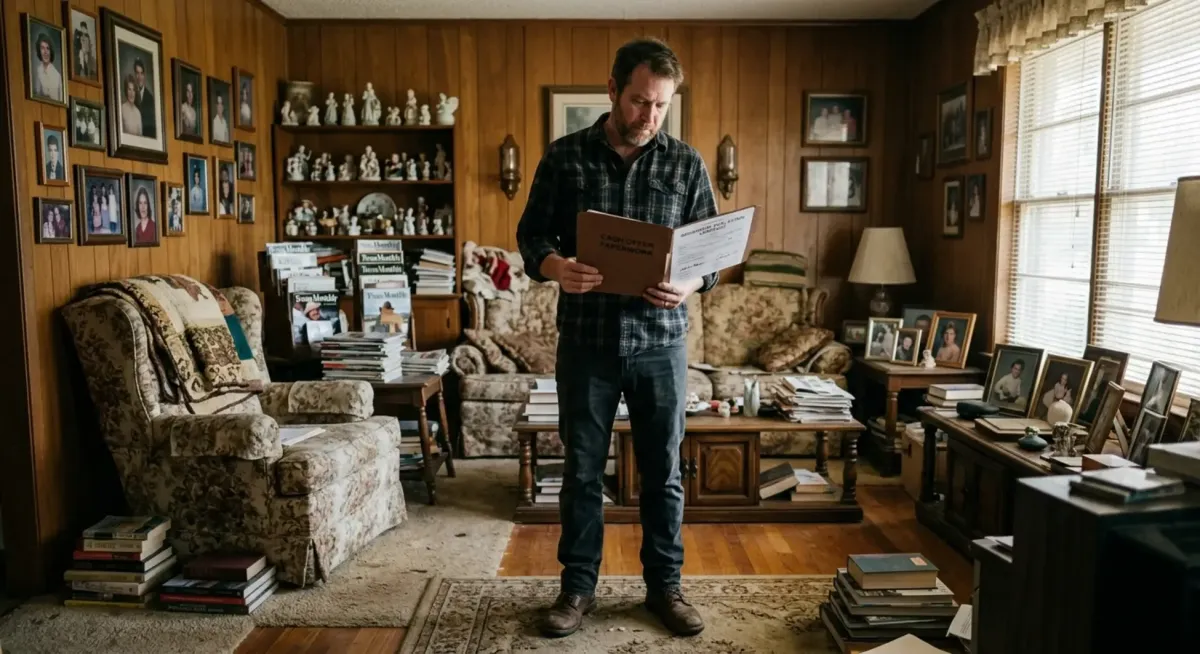
You're standing in your mother's Grapevine home. The one she's lived in for thirty years. The walls are covered in family photos, the kitchen still has the same linoleum from 1988, and the roof hasn't been touched since the last hailstorm. You got the call last week—the memory care facility has a bed available, and you have maybe three weeks to figure out what to do with this house before the window closes and the next family on the waitlist takes it.
You're not a real estate investor. You're a son or daughter trying to do right by your parent. And right now, someone is telling you to call a cash buyer, someone else is saying list it with an agent, and a third voice in your head is asking whether any of these people actually understand what you're going through.
This guide is written for you. Not for investors. Not for people with six months to spare. For families in Grapevine who need real answers about cash home buyers—who they are, what their offers actually mean, which ones are worth talking to, and how to make a decision you'll feel good about when the dust settles. We'll walk through the real numbers, the red flags to avoid, and what the process actually looks like from first call to closing day.
Key Takeaways
- Cash home buyers in Grapevine typically offer 65–88% of a home's post-renovation value, depending on condition—a discount that often narrows significantly once you factor in agent commissions, repair costs, and carrying expenses from a traditional sale.
- Grapevine's median home price of $550K–$650K and aging housing stock (many homes built 1970s–1990s) make the area especially active for cash buyer transactions.
- Senior transitions are a primary driver of cash sales in Grapevine—approximately 15–18% of residents are aged 65+, and Tarrant County sees an estimated 15,000–20,000 seniors annually move into assisted living or memory care.
- Carrying costs for a vacant Grapevine home run $1,500–$3,000+ per month—meaning a 3–6 month traditional listing period can cost $4,500–$18,000 before you even count agent commissions.
- Not all cash buyers are equal: some specialize in speed, others in senior transitions, and some use bait-and-switch tactics. Knowing the difference protects your family.
- Getting 2–4 written offers and comparing them against a true net-proceeds calculation from a traditional sale is the only way to make a genuinely informed decision.
- Post-closing possession agreements allow families to remain in the home after selling—a critical option when care facility timelines don't align with real estate closing dates.
Why Grapevine Families Are Turning to Cash Home Buyers
Grapevine isn't just a suburb near DFW Airport. It's a community with deep roots, approximately 55,000 residents, and a housing stock that reflects decades of real family life. And right now, a significant portion of those families are facing a transition that nobody plans for but almost everyone eventually encounters: figuring out what to do with a parent's home when the time comes to move into care.
About 15–18% of Grapevine's population is aged 65 or older. That's a meaningful number—thousands of households where aging in place is no longer sustainable, where a fall or a diagnosis has shifted the entire family's timeline. When you're navigating senior transitions in North Texas, the home sale isn't a separate problem you get to solve later. It's often the key that unlocks everything else—the funds for assisted living, the freedom to focus on care, the ability to move forward.
Grapevine's housing stock adds another layer of complexity. Many homes in the area were built between the 1970s and 1990s. That means aging roofs, original HVAC systems, kitchens that haven't been touched since the Clinton administration, and in some cases, foundation concerns common to Tarrant County's clay soil. These homes have tremendous character and real value—but they're not move-in ready, and most families in the middle of a care crisis aren't in a position to manage a $30,000 renovation before listing.
That's exactly where cash buyers come in. They purchase homes as-is, handle the renovation themselves, and close quickly—sometimes within two weeks. For families who need to fund senior care costs immediately, understanding how families are funding senior living costs makes clear why a fast, certain home sale matters so much. Average monthly care costs in the DFW area run $4,800–$7,800+, and waiting three months for a traditional sale to close while paying those costs out of pocket—or delaying care placement—isn't a realistic option for most families.
Inherited properties and estate sales are another major driver. Heirs who live out of state, who have their own families and jobs, who are managing probate paperwork while also grieving—they often need a clean, fast transaction more than they need to squeeze every last dollar from a listing process. Cash buyers serve a real need in this market. The question isn't whether to consider them. It's how to find the right one and evaluate their offer honestly.
Understanding Cash Offers: How They're Calculated in Grapevine
One of the most common fears families have when approaching a cash buyer is this: "They're going to lowball us." And honestly? That fear isn't unfounded—some buyers do exactly that. But understanding how legitimate cash offers are actually calculated takes a lot of the mystery and anxiety out of the process.
Cash buyers base their offers on something called After Repair Value, or ARV. Before we go further, let's demystify that term completely.
Understanding After Repair Value (ARV): Plain-Language Explainer
ARV is simply what a home would sell for on the open market after it's been fully renovated and updated. Think of it as the home's potential value once a buyer has replaced the roof, updated the kitchen, refreshed the bathrooms, and made it move-in ready. Cash buyers calculate their offer by starting with the ARV—what they expect to sell the home for after repairs—then subtracting the cost of those repairs, their carrying costs while the work is done, their selling expenses, and a profit margin. What's left is roughly what they can offer you today. A lower offer doesn't automatically mean a predatory buyer—it may simply reflect a home that needs significant work.
In the Grapevine market, here's how those percentages typically break down in 2026:
- Major repairs needed (roof, HVAC, foundation, significant structural issues): 65–75% of ARV
- Cosmetically dated homes (original kitchens/baths, older fixtures, outdated finishes—very common in Grapevine's 1970s–1990s housing stock): 75–85% of ARV
- Homes in reasonable condition (mostly updated, minor deferred maintenance): 80–88% of ARV
The discount reflects real costs the investor absorbs: renovation expenses, property taxes and insurance during the rehab period, financing costs, agent commissions when they resell, and their own profit margin. A legitimate buyer will be able to explain every line of that calculation to you. If they can't—or won't—that's a red flag we'll cover later.
For families thinking about maximizing home value before a senior transition, even small improvements to a home's condition can shift it from the 65–75% range into the 75–85% range—potentially a meaningful difference on a Grapevine home worth $550K–$650K.
The Real Math: Cash Offer vs. Traditional Sale Net Proceeds
Here's where families often get surprised. The gap between a cash offer and a traditional sale's net proceeds is almost always smaller than it looks at first glance. Let's run the actual numbers on a typical Grapevine home.
| Scenario | Cash Offer (80% ARV) | Traditional MLS Listing |
|---|---|---|
| Starting Point | $400,000 offer (80% of $500K ARV) | $480,000 list price (96% of ARV) |
| Agent Commissions | $0 | −$24,000–$29,000 (5–6%) |
| Seller Closing Costs | −$5,000–$10,000 | −$4,800–$14,400 (1–3%) |
| Repairs / Buyer Credits | $0 (sold as-is) | −$15,000–$30,000+ |
| Carrying Costs (3–6 months) | $0 | −$4,500–$18,000 |
| Estimated Net Proceeds | ~$390,000–$395,000 | ~$390,000–$430,000 |
The traditional sale can net more—but that upper range assumes the home sells quickly, inspections go smoothly, the buyer doesn't demand credits, and the market cooperates. For a home needing significant work, the lower end of that traditional range often lands right where the cash offer does—but with months of uncertainty, stress, and carrying costs baked in. The cash offer's value isn't just in the number. It's in the certainty.
Not Sure If a Cash Offer Is Fair for Your Parent's Home?
If you're trying to figure out whether a cash offer is fair for your parent's Grapevine home, that's exactly what a free consultation is designed to answer. We can walk through the numbers with you and explain what a realistic offer should look like—no pressure, no obligation.
⏱ The Hidden Costs of Waiting
If you're feeling pressure to act quickly, that feeling is telling you something real. Carrying costs on a vacant Grapevine home—property taxes, insurance, utilities, and basic maintenance—run $1,500–$3,000+ per month. Over a 3–6 month listing period, that's $4,500–$18,000 in expenses before you've paid a single agent commission or made a single repair. And that doesn't account for the emotional weight of managing an unsold property while simultaneously coordinating a parent's care transition. Every month a home sits unsold is a month of compounding stress, compounding costs, and potentially delayed care placement. The urgency you feel isn't irrational—it's financially grounded.
Top 5 Cash Home Buyers in Grapevine, TX: Compared and Reviewed
When you're selling a parent's home to pay for senior care, choosing the right buyer matters as much as the offer amount. Some buyers prioritize speed above everything. Others lead with transparency. A few specialize in exactly the kind of complex, emotionally loaded transactions that senior transitions involve. Here's an honest look at the five cash home buyers most active in the Grapevine market.
Sage Senior Support
Address: 1452 Hughes Rd #200, Grapevine, TX 76051
Specialization: Senior transitions, family-centered approach, holistic care planning
Sage Senior Support is the only cash buyer in Grapevine built exclusively around senior transitions. That distinction matters more than it might sound. Most cash buyers see a property. Sage sees a family in the middle of one of the hardest chapters of their lives—and they start there, not with the square footage.
The process begins with a real conversation. Before anyone talks about the house, the first question is: "How is Mom or Dad doing?" That's not a sales tactic. It's a philosophy rooted in a deeply personal connection to this journey—one that began with a family's own Alzheimer's caregiving experience and grew into a mission to make these transitions less overwhelming for everyone who comes after.
What families consistently describe is the absence of pressure. No urgency tactics, no confusing paperwork, no offers that mysteriously drop after the inspection. Instead: transparency about how the offer was calculated, a willingness to explain every option (including listing with a trusted agent if that's the better path), and flexible post-closing possession agreements that allow families to remain in the home for 30–60 days after closing while coordinating the senior's move into care.
- Closing Timeline: 7–30 days with flexibility for care coordination
- Key Strength: Only Grapevine cash buyer focused exclusively on senior transitions; connects families to care resources, elder law attorneys, and placement agents
- Customer Feedback: Families consistently praise compassion, patience, and willingness to explain every step without pressure. "You didn't just buy the house, you helped us through this whole transition."
- Also Serves: Grapevine cash home buyer services across the full DFW metro
Opendoor / Offerpad (iBuyers)
Service Area: National iBuyers with DFW operations serving Grapevine
Specialization: Technology-driven online offers, rapid assessments, standardized processes
The national iBuyers—Opendoor and Offerpad—bring a tech-first approach to home buying. You can get an initial offer online within 24–48 hours, and their closing timelines are among the fastest in the market. For sellers who want a predictable, digital-first process, they have real appeal.
The recurring complaint in reviews, however, is the gap between the initial offer and the final offer after their inspection and repair deductions. Service fees (typically 5–8%) can also reduce the net proceeds more than families anticipate. The process is efficient but standardized—there's limited flexibility for families with complex care transition timelines, and the customer service experience can feel impersonal compared to local operators.
- Closing Timeline: 7–14 days typical
- Strengths: Fast, transparent online process; predictable timelines
- Weaknesses: Offers may decrease post-inspection; service fees reduce net proceeds; less flexibility for senior transition coordination
HomeBuyers of DFW
Service Area: Tarrant County and DFW metro, including Grapevine
Specialization: Direct cash purchases on properties in any condition
HomeBuyers of DFW appears consistently in local searches for Tarrant County cash purchases. They're known for efficient processes and a willingness to purchase homes in genuinely challenging condition—the kind of properties that other buyers might pass on. For families dealing with significant deferred maintenance or structural concerns, that's meaningful.
Some feedback suggests their offers lean toward the conservative end of the market range, which is fairly typical for investors focused on rapid resale after renovation. The process is straightforward and they have a track record of closing on time, which matters enormously when care placement timelines are involved.
- Closing Timeline: 10–21 days
- Strengths: Handles challenging properties efficiently; known for following through on agreed timelines
- Weaknesses: Offers may be on the lower end of the market range; less specialized for senior transition support
We Buy Houses (Local DFW Franchise)
Service Area: DFW metro including Grapevine via franchise model
Specialization: Direct cash purchases, brand recognition, no-obligation offers
The "We Buy Houses" brand is one of the most recognized names in direct home buying. The franchise model means you're working with a local operator who has bought into the national brand's system and standards—though the quality of that experience can vary meaningfully from franchise to franchise.
Reviews are genuinely mixed. Some sellers appreciate the familiar brand name and the straightforward offer process. Others report feeling pressured or receiving offers that seemed lower than expected without clear justification. The no-obligation offer is a real feature, but families should approach with the same due diligence they'd apply to any buyer—get the offer in writing, ask how it was calculated, and compare it against at least two others.
- Closing Timeline: 7–30 days
- Strengths: Brand recognition; convenient process; widely available
- Weaknesses: Variable customer experience across franchises; some reports of sales pressure; limited senior transition expertise
Texas Direct Home Buyers
Service Area: DFW metro, Tarrant County, Grapevine
Specialization: Properties with deferred maintenance or complex situations
Texas Direct Home Buyers focuses on properties that present complications beyond simple cosmetic updates—homes with deferred maintenance, title issues, probate situations, or other factors that make a traditional listing difficult. For families dealing with an estate sale or a home that has accumulated years of deferred maintenance, this specialization can be valuable.
Reviews generally describe a transparent process and efficient closings. The main limitation is that information about their customer service depth and post-sale support is less readily available than with some other buyers—something to probe directly when you speak with them.
- Closing Timeline: 10–25 days
- Strengths: Handles complex situations and challenging properties; transparent pricing process
- Weaknesses: Less information available on customer service depth; limited senior transition support
What to Watch For: Red Flags in the Cash Buyer Market
The cash home buying industry has legitimate operators who provide real value—and it also has bad actors who prey on families in exactly the vulnerable situation you may be in right now. Knowing the difference before you sign anything is critical. For a deeper look at how to vet buyers before engaging, the guide on are cash home buyers legitimate in DFW walks through the full verification process.
Here are the red flags that should stop you in your tracks:
⚠ Red Flags: Walk Away If You See These
- Pressure tactics or "limited-time" offers designed to rush your decision. A legitimate buyer will give you time to think, compare, and consult family members.
- Bait-and-switch pricing: An initial offer that drops significantly after the "inspection" without clear, documented justification for the reduction. Ask upfront how the offer was calculated and what could change it.
- Verbal-only offers. Any legitimate buyer will put their offer in writing. If they won't, walk away.
- No verifiable business history. Search for the company name, check Google reviews, look for a BBB profile, and ask for references from recent clients. If they can't provide any of this, that's a serious concern.
- Failure to close on agreed timelines without clear explanation. This can derail care placements and create real financial harm.
- Offers significantly below the range you'd expect (below 65% of ARV) without a clear, documented explanation of what specific repairs or complications justify that discount.
Licensing and Consumer Protections in Texas
This is an area where many families don't know their rights. Here's what you need to understand:
The Texas Real Estate Commission (TREC) licenses real estate agents and brokers. If a cash buyer is operating as a licensed agent or broker, you have built-in consumer protections—they're bound by ethical standards and disclosure rules, and you can file complaints with TREC at www.trec.texas.gov if something goes wrong.
Unlicensed cash buyers—investors purchasing homes for their own portfolio—are not directly regulated by TREC. However, they're still subject to the Texas Deceptive Trade Practices Act (DTPA), which provides meaningful consumer protections against misrepresentation, false advertising, and predatory practices. If you believe you've been deceived, you can file a complaint with the Texas Attorney General's Consumer Protection Division or pursue legal action under the DTPA.
The practical takeaway: verify TREC licensure for anyone claiming to be a licensed agent, get everything in writing regardless of licensure status, and don't let urgency override due diligence. A legitimate buyer will welcome your questions—not resent them.
Feeling Overwhelmed by the Cash Buyer Landscape?
Navigating cash buyers while managing a parent's care transition is a lot to hold at once. Many families find it genuinely helpful to talk through their options with someone who understands both the real estate side and the care side of this decision—someone who isn't trying to sell them anything, just help them think clearly.
Closing Timeline and Process: What to Expect in Grapevine
One of the biggest advantages of a cash sale is the timeline—but families often don't know exactly what happens between "we accept your offer" and "here are the keys." Understanding the process helps you plan the care transition around it, not the other way around.
For families working through what to do with Mom's house when moving to care, the closing timeline is often the most critical variable in the entire care transition plan. Here's what the process typically looks like:
Day 1–3: Initial Offer
You contact the buyer, describe the property, and often receive an initial offer within 24–48 hours. For in-person buyers, they'll schedule a walkthrough to assess condition and confirm their offer.
Day 3–7: Contract Execution
Once you accept the offer, a purchase contract is signed. With cash buyers, there's no financing contingency—meaning the sale won't fall through because a lender changed their mind. The contract specifies the closing date and any post-closing possession terms.
Day 7–21: Title Work
A title company conducts a title search to ensure there are no liens, back taxes, or other encumbrances on the property. This is standard regardless of buyer type. Cash buyers typically work with efficient title companies experienced in quick closings.
Day 14–30: Closing Day
You sign closing documents, the title transfers, and funds are wired to your account—often the same day. No waiting for a buyer's loan to fund. No last-minute financing surprises. The sale is done.
Post-Closing: Possession Period (if applicable)
If you've negotiated a post-closing possession agreement, your family can remain in the home for an agreed period—typically 30–60 days—while coordinating the senior's move into care. This is a critical option that many families don't know to ask for.
The entire process—from first contact to funds in your account—typically runs 7–30 days. Compare that to a traditional listing, which averages 30–90+ days from listing to closing in the current DFW market, and the timeline advantage becomes very concrete.
💡 Flexibility Matters During Care Transitions
Here's something many families don't know to ask for: post-closing possession agreements. Care facility placement timelines don't always align neatly with real estate closing dates. A memory care bed might become available before the home sale closes—or the home might sell before the senior's room is ready. Post-closing possession agreements allow your family to remain in the home rent-free for 30–60 days after closing, giving you the buffer you need to coordinate the transition without rushing. Buyers experienced with senior transitions build this flexibility into their agreements as a matter of course. If a buyer you're talking to has never heard of this or seems reluctant to offer it, that tells you something about how much they actually understand your situation.
Cash Offer vs. Traditional Listing: The Complete Financial Comparison
We touched on the math earlier, but this decision deserves a thorough, honest comparison—because the right answer genuinely depends on your specific situation. For a detailed breakdown of the real costs involved, the analysis of selling Mom's house for cash vs. using an agent walks through the full financial picture.
Here's the core tension: a traditional listing can yield a higher gross sale price. But gross price isn't what pays for care. Net proceeds—what's actually in your account after all costs—is what matters. And for many Grapevine homes, especially those needing work, the net proceeds gap between a cash sale and a traditional listing is much smaller than families expect.
Cash offers provide immediate liquidity. If your parent's care costs are running $5,000–$7,800 per month and you're waiting 90 days for a traditional sale to close, you've spent $15,000–$23,400 in care costs before seeing a dollar from the home sale—often while also paying $4,500–$9,000 in carrying costs on the vacant property. That's $20,000–$30,000+ in real costs that narrow the gap considerably.
Traditional listings also carry market risk that cash sales eliminate entirely. Buyer financing can fall through. Inspections can reveal issues that lead to renegotiation or cancellation. The market can shift. A cash sale closes. Full stop.
When a Cash Offer Makes the Most Sense
A Cash Sale Is Likely Your Best Path If:
- The home needs $20,000+ in repairs (roof, HVAC, foundation, kitchen/bath updates)
- Your family needs funds within 30 days for care costs or placement fees
- The home is vacant or will be vacant during a listing period (carrying costs accumulate fast)
- The property is in probate or has title complications that would extend a traditional sale timeline
- Your family wants to avoid staging, showings, and post-inspection negotiations
- The emotional burden of managing a listing process during a care transition is too much to take on
When a Traditional Listing May Be the Better Choice
A Traditional Listing May Serve You Better If:
- The home is in excellent condition and likely to attract multiple competitive buyers
- Your family has 60+ days and can absorb carrying costs without financial strain
- The home is in a particularly hot micro-market with strong buyer demand
- You're willing and able to invest in repairs or updates to maximize sale price
- Maximizing the sale price is the primary priority and timeline flexibility exists
There's no universal right answer. The honest truth is that some families are better served by a cash sale and some are better served by a traditional listing—and a few are best served by a hybrid approach. What matters is that you make the decision with clear information, not under pressure or without understanding all the costs involved.
⚠ The True Cost of Delay
Every month a home sits unsold costs your family real money—$1,500–$3,000+ in carrying expenses alone, before counting agent fees or repair costs. But the financial cost isn't the only cost. Families managing a parent's care transition while also managing an unsold property describe a specific kind of exhaustion: the mental load of two major life events happening simultaneously. Deferred maintenance worsens over time, further reducing the home's value. Care facility placement windows can close. And the emotional burden of an unsold family home can strain relationships and compound caregiver stress in ways that are hard to quantify but very real. Acting with clarity—even if that means accepting a slightly lower offer—is often the decision families look back on with relief, not regret.
Grapevine Market Context: Why Local Knowledge Matters for Cash Sales
National cash buyer platforms treat every market the same. Local buyers understand that Grapevine isn't Euless, and Euless isn't Colleyville. The local market context shapes what a fair offer looks like, how quickly a home will move, and what renovation costs are realistic. For broader context on DFW housing market trends and what they mean for sellers, the regional picture matters too—but Grapevine has specific characteristics worth understanding.
Grapevine's median home price of $550K–$650K sits significantly above the Tarrant County average of $370K–$410K. That premium reflects the city's location, quality of life, and proximity to DFW Airport—factors that support strong buyer demand even in a moderated market. Cash buyers operating in Grapevine are working with higher ARV numbers than they'd see in Bedford or Euless, which means their renovation budgets and offer calculations look different.
The housing stock age is a defining characteristic. A large portion of Grapevine's homes were built in the 1970s through 1990s—meaning original HVAC systems are often at or past end-of-life, roofs may be 20–30 years old, and kitchens and bathrooms reflect design sensibilities from a different era. These homes have real bones and real value, but they require investment to compete in the current market. That's precisely why cash buyers are so active here—they can absorb that investment in a way most families in the middle of a care transition cannot.
Tarrant County's clay soil is another factor that affects cash offers specifically. Foundation movement is common, and buyers factor potential foundation repair costs into their calculations. If your parent's home has any visible foundation concerns—sticking doors, cracks in drywall, uneven floors—expect that to be reflected in the offer, and ask the buyer to explain exactly how much they've estimated for foundation work.
Cash transactions represent 15–25% of all DFW home sales, indicating a stable and active investor market. That's good news for sellers: there's genuine competition among buyers, which means you have real leverage to shop around and compare offers. If you're also considering options in nearby communities, Sage Senior Support serves families across the DFW metro—including those exploring a Colleyville cash home buyer or options in Euless and Bedford.
How to Get Multiple Cash Offers and Compare Them Fairly
The single most important thing you can do before accepting any cash offer is get more than one. Not because all buyers are untrustworthy—but because you genuinely cannot evaluate whether an offer is fair without a frame of reference. Two to four offers from different buyers gives you that frame. For guidance on how to vet the buyers you're considering, the resource on are cash home buyers legitimate in DFW covers the verification process in detail.
Here's a practical framework for comparing offers:
Your Cash Offer Comparison Checklist
- Get written offers from 2–4 buyers. Verbal offers don't count. A written offer tells you what the buyer is actually committing to.
- Ask each buyer to explain their valuation methodology. How did they arrive at the ARV? What specific repairs did they factor in, and at what cost? A legitimate buyer can answer this clearly.
- Compare net proceeds, not gross offer amounts. Factor in any seller closing costs each buyer expects you to cover. Some buyers cover all closing costs; others don't.
- Compare closing timeline flexibility. Can they work around your care transition timeline? Do they offer post-closing possession if needed?
- Check reviews and ask for references. Google reviews, BBB profiles, and direct references from recent clients tell you more than any sales pitch.
- Verify TREC licensure for any buyer claiming to be a licensed agent at www.trec.texas.gov.
- Ask what happens to personal property. Most cash buyers handle cleanout after closing—but confirm this in writing before you sign anything.
Don't let urgency short-circuit this process. Getting two or three offers typically takes 3–5 days—not weeks. The time investment is small relative to the financial and emotional stakes. And if a buyer is pressuring you to decide before you've had a chance to compare, that pressure itself is a red flag worth heeding.
Families in other parts of the DFW metro face the same decisions—whether they're looking at a Flower Mound cash home buyer, exploring options in Coppell, or comparing buyers in Arlington. The same framework applies regardless of city: get multiple offers, ask how they were calculated, and compare net proceeds—not just the headline number.
Ready to Explore Your Options?
Whether you're leaning toward a cash offer or want to understand how it compares to listing traditionally, we can help you evaluate what makes sense for your family's timeline and financial needs. No pressure, no obligation—just a real conversation about your options.
Frequently Asked Questions About Grapevine Cash Home Buyers
Are cash home buyers in Grapevine fair, or do they always offer way below market value?
Cash buyers typically offer 65–88% of a home's After Repair Value—the estimated price after renovation—to cover their renovation costs, carrying expenses during the rehab period, selling costs, and profit margin. That discount is real, but "fair" depends on context: a 78% offer on a home needing a new roof, HVAC, and kitchen update may actually net you more than a traditional listing once you subtract repair costs, agent commissions, and three months of carrying expenses. The key is getting multiple offers and asking each buyer to explain exactly how they calculated their number—not just accepting the first offer that lands in your inbox. Legitimate buyers welcome that conversation; predatory ones avoid it.
How can I compare a cash offer to listing my parents' house traditionally in Grapevine?
Start by estimating what a traditional sale would actually net—not just the list price. Subtract agent commissions (typically 5–6% of the sale price), seller closing costs (1–3%), anticipated repair costs or buyer credits discovered after inspection, and carrying costs for the listing period (typically $1,500–$3,000+ per month in Grapevine). Compare that net figure to the cash offer minus any seller closing costs the buyer expects you to cover. For homes in good condition that would attract multiple buyers quickly, the traditional route often wins on net proceeds. For homes needing significant work or families facing urgent care timelines, the cash offer frequently comes out ahead—or at least close enough that the certainty and speed tip the balance.
What happens to the belongings left in my parents' house if I sell it to a cash buyer in Grapevine?
Most cash buyers purchase homes "as-is," which typically includes handling the removal of all personal property, furniture, and accumulated belongings after closing. This is one of the most practically significant advantages of a cash sale for families managing a senior transition—sorting through decades of possessions is emotionally and logistically overwhelming, and not having to complete that process before selling removes an enormous burden. That said, always confirm this detail explicitly in the purchase agreement before signing. Ask the buyer directly: "Does your offer include handling all personal property and cleanout after closing?" Get the answer in writing.
How fast can a cash home buyer close in Grapevine, and can we stay in the house longer if needed for care transitions?
Cash buyers typically close within 7–30 days from contract execution—significantly faster than the 45–90+ days common with traditional listings. Many reputable buyers, especially those experienced with senior transitions, offer flexible closing dates and post-closing possession agreements (sometimes called rent-back arrangements) that allow families to remain in the home for 30–60 days after closing while coordinating the senior's move into care. This flexibility is critical because care facility placement timelines rarely align neatly with real estate closing dates. Always ask about post-closing possession options before accepting any offer—it's a standard feature with senior-focused buyers and a negotiable term with most others.
Should I use a real estate agent or sell directly to a cash buyer for my parents' Grapevine home?
There's no single right answer—it genuinely depends on your family's priorities, the home's condition, and your timeline. Selling directly to a cash buyer offers speed, certainty, and the ability to sell as-is without repairs, staging, or showings. Listing with an agent can yield a higher gross sale price but involves commissions, repair negotiations, longer timelines, and market uncertainty. For homes in excellent condition where the family has 60+ days and can manage the process, a traditional listing often makes financial sense. For homes needing significant work, families facing urgent care placement timelines, or situations where the emotional burden of a prolonged listing process is simply too much, a cash sale often provides the better overall outcome—financially and emotionally.
What are the risks of selling to an unlicensed cash buyer in Texas?
Unlicensed buyers aren't regulated by TREC, which means they're not bound by the ethical standards, disclosure requirements, and oversight that apply to licensed agents and brokers. That doesn't make them automatically untrustworthy—many legitimate investors operate without TREC licenses because they're buying for their own portfolio, not acting as agents for others. But it does mean fewer built-in consumer protections and more due diligence on your part. Unlicensed buyers are still subject to the Texas Deceptive Trade Practices Act (DTPA), which provides recourse if you've been misled or harmed—but pursuing that recourse is more complex than filing a TREC complaint. The practical safeguards: verify the company's reputation through reviews and references, get every term in writing before signing anything, and consult a real estate attorney if anything feels unclear or off.
Selling Your Grapevine Home Doesn't Have to Feel This Hard
We know you didn't come to this page because you love real estate research. You came because you're trying to do right by your parent, and you needed someone to give you straight answers without the sales pressure. That's exactly what we're here for.
Whether you're leaning toward a cash offer, still weighing a traditional listing, or genuinely not sure where to start—schedule a free, no-pressure conversation with our team. We'll help you understand all your options, walk through the real numbers for your specific home, and connect you with whatever resources your family needs to move forward with confidence.
You don't have to figure this out alone. We're in this with you.