
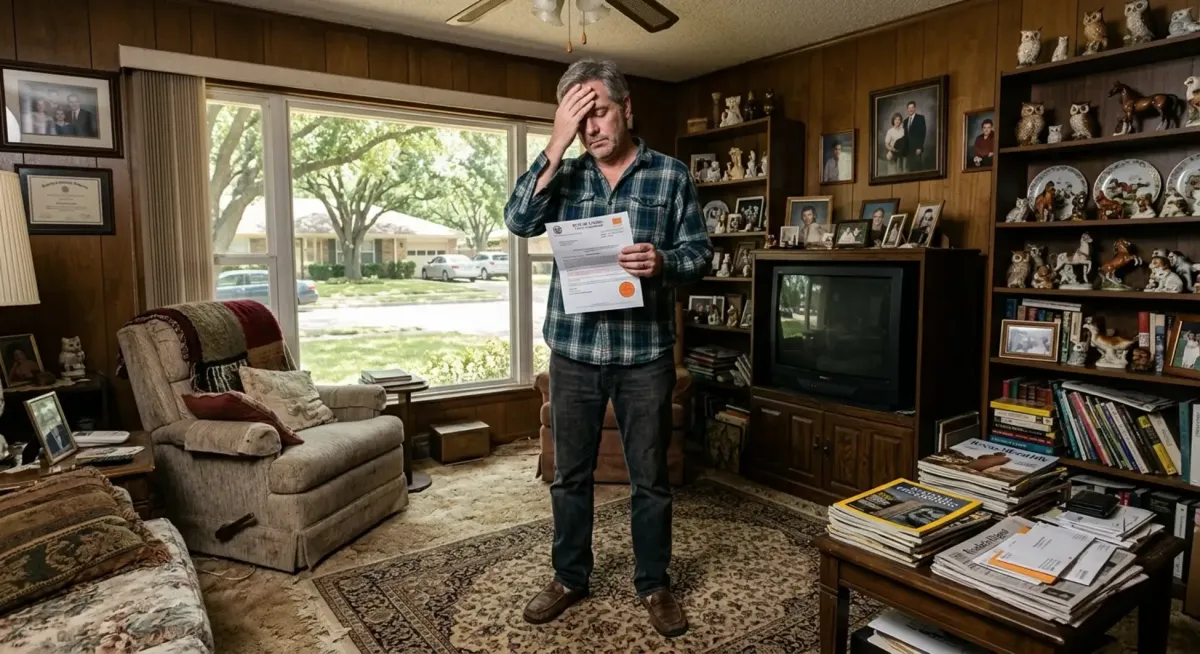
City Deemed Home Uninhabitable In Texas: What Are My Selling Options
Key Takeaways
- A Texas city's uninhabitability declaration does not prevent you from selling — but it does start a clock. Daily fines of $100–$1,000+ can erode $18,000–$60,000 or more in equity over just six months of inaction.
- You have three realistic paths forward: sell as-is to a cash buyer (fastest, 7–10 days to close), list with a distressed-property agent (higher potential price, 2–4+ months), or fund repairs to lift the designation (most capital-intensive, longest timeline).
- City code enforcement liens are recorded in county property records and must be paid from sale proceeds at closing — they don't disappear, and they directly reduce the cash you walk away with.
- If your parent has dementia or has passed away, you must have legal authority — a valid power of attorney or probate court approval — before any sale can proceed. Acting without it exposes you to personal liability.
- Trust Sage Senior Support for compassionate, transparent guidance through every step of selling a distressed home in DFW — visit Sage Senior Support to learn how we help families move forward with confidence.
What Can You Do If Your Texas Home Is Declared Uninhabitable?
When a Texas city declares a home uninhabitable, you still have legal selling options — but time and knowledge are critical. You can sell the property as-is to a cash buyer, list it with a real estate agent, attempt repairs to lift the designation, or face city-forced demolition and liens that consume your equity. The key is understanding your timeline, the costs involved, and how to avoid predatory buyers who exploit families in crisis.
Here's what every Texas homeowner facing this situation needs to know to make an informed decision and protect their financial future.
Sage Senior Support
Free Consultation & Cash Offer in 24 Hours
Core Service Programs:
- Cash Home Buying for families needing to sell a parent's home fast to fund senior care
- Senior Care Resources with personally-vetted community partners to assist your family in the transition for your loved one
- Care Funding Discovery Home sell options for Texas Medicaid, VA benefits, long-term care insurance, and bridge financing
Why Choose Sage Senior Support:
- ✓ Trusted by customers with a perfect 5.0-star Google rating across 26 verified reviews
- ✓ Founded by someone who's lived this transition — twice (2013 & 2024)
- ✓ 100+ DFW families guided through senior care transitions
- ✓ Cash offers same day — close in as few as 10 days
- ✓ Zero commissions, zero closing costs, no repairs needed
- ✓ Connection to free care placement — agents paid by the community, not your family
- ✓ Locally owned in Grapevine, TX — serving the entire DFW metroplex
Understanding Municipal Uninhabitability Declarations in Texas
Texas municipalities draw their authority to declare a home uninhabitable from Texas Local Government Code Chapter 214 and locally adopted versions of the International Property Maintenance Code (IPMC). These aren't arbitrary judgments — they follow a defined legal process with specific, documented triggers.
The most common reasons a city issues an uninhabitability order include structural failure (foundation collapse, roof failure, rotten framing), electrical hazards, plumbing failures causing sewage backup or water damage, extensive mold growth, and fire safety violations. Cities like Dallas, Fort Worth, Arlington, and Garland have particularly active code enforcement programs, and they respond aggressively to unresolved complaints in older neighborhoods.
The process typically spans 3 to 12 months from initial notice to formal declaration. Homeowners receive written notice of violations with a remediation deadline — often 30 to 60 days — followed by follow-up inspections and administrative hearings if issues persist. A formal uninhabitability declaration is reserved for the most severe, unresolved cases. Importantly, homeowners have the legal right to appeal declarations through the city's Building Standards Commission, typically within 10 to 30 days of receiving the order. Missing that window can forfeit your appeal rights entirely.
If you're also navigating a parent's care transition alongside this process, Sage's senior transition concierge services can help coordinate the moving parts so nothing falls through the cracks.
You're Not Alone in This Crisis
Families facing an uninhabitable home declaration often feel shame, guilt, and overwhelm. This is a common situation for aging homeowners and their adult children — and there are clear, manageable paths forward.
The Financial Impact: Costs, Fines, and Equity Erosion
The financial consequences of an uninhabitability declaration compound fast — and most families don't realize how quickly the numbers add up until they're already deep in the hole.
City fines alone can range from $100 to $1,000+ per day. At $100/day, that's $9,000 over 90 days. At $500/day, you're looking at $45,000 in six months. Beyond fines, the remediation costs for the most common triggers are substantial: foundation repair runs $10,000–$50,000+, full roof replacement $8,000–$30,000+, electrical rewiring $5,000–$20,000+, and professional mold remediation $3,000–$30,000+. Structural compromise can push total repair costs well past $100,000.
One consequence families rarely anticipate: homeowner's insurance is typically canceled once a home is declared uninhabitable. That means if a fire, storm, or vandalism occurs while the property sits unsold, you bear the full financial loss personally. Specialized vacant property insurance exists but is expensive and offers limited coverage.
City code enforcement liens are recorded in county property records and must be paid from sale proceeds at closing — they don't disappear on their own. A six-month delay can erode $18,000–$60,000 or more in equity through accumulated fines, property taxes, and ongoing property devaluation. If your parent's home equity was meant to fund their care, that delay directly affects their options. Our senior care cost calculator can help you understand exactly how much you'll need and how quickly.
The Cost of Waiting: Every month you delay costs real money in fines, property taxes, and equity erosion. A 6-month delay can cost $18,000–$60,000+ in accumulated expenses. If your parent needs care, waiting also delays access to funds that could support their transition.
Your Legal Selling Options When a Home Is Declared Uninhabitable
You have three realistic paths when a Texas home has been declared uninhabitable — and one outcome to avoid at all costs.
Direct cash sale to an investor is the fastest option, typically closing in 7–10 days with no repairs, no showings, and no commissions. The tradeoff is price: cash buyers typically offer 20–50% below a move-in ready comparable, reflecting the risk and repair costs they're absorbing. For families under time and financial pressure, that certainty and speed often outweighs the discount. Our cash home buying program is built specifically for this situation.
Listing with a real estate agent who specializes in distressed properties can yield a higher sale price, but the timeline stretches to 2–4+ months — and that's before accounting for agent commission (typically 6%), seller concessions, and buyer-requested repairs. Traditional buyers also can't finance an uninhabitable home, which limits your buyer pool significantly.
Funding repairs to lift the designation is viable only if you have significant capital available and time to spare. You'd need to coordinate permits, licensed contractors, and city re-inspections — all while fines continue to accrue. For most families already stretched by care costs, this path rarely pencils out. If you're weighing whether to renovate before selling, this guide on renovating before selling walks through when it makes financial sense and when it doesn't.
Ignoring the order is not a strategy — it's a path to city-forced demolition, liens that can exceed the land's value, and potentially walking away with nothing or owing money at closing. That outcome is entirely avoidable with early, informed action.
For inherited properties specifically, understanding whether you need probate or an affidavit of heirship is an essential first step before pursuing any of these options.
Evaluating Cash Buyers: Legitimate vs. Predatory Operators
The DFW market has no shortage of "we buy houses" companies — and not all of them deserve your trust. Knowing the difference between a legitimate buyer and a predatory operator can mean tens of thousands of dollars in your pocket.
Legitimate cash buyers provide clear written offers with transparent pricing logic, offer proof of funds without hesitation, use standard TREC contracts, and give you time to review with an attorney. They explain exactly how they calculated their offer and don't pressure you to sign on the spot. They have verifiable physical addresses, BBB ratings, and Google reviews you can independently confirm.
Predatory operators look different. They create urgency ("the city will demolish tomorrow if you don't sign today"), refuse to provide proof of funds, and bury assignment clauses in contracts that let them flip your deal to another buyer without your knowledge. The FTC fined Opendoor $62 million for misleading sellers on potential earnings. A 2023 ProPublica investigation highlighted predatory practices by HomeVestors targeting vulnerable homeowners. These aren't isolated incidents — they're patterns in this industry.
Before accepting any offer, compare your options carefully. Our comparison of national cash buyers vs. local operators breaks down what families in DFW actually experience with each.
Ask These Five Questions Before Accepting Any Offer
Before signing with any cash buyer, ask: (1) Can you provide proof of funds? (2) What is your exact offer price and how did you calculate it? (3) What are ALL fees I'm responsible for? (4) Can I have 5 days to review with my attorney? (5) Will this contract be assigned to another buyer? Evasive answers are red flags.
City Liens, Title Issues, and Closing Complications
City code enforcement liens are recorded in county property records — in DFW, that means Tarrant or Dallas County — and they attach to the property, not the owner. That distinction matters: they survive a sale if not paid, and any buyer's title company will find them during the title search.
At closing, the title company ensures all outstanding liens are satisfied from the seller's proceeds before clear title transfers to the new owner. If you owe $30,000 in accumulated fines and your property sells for $120,000, you receive $90,000 minus any other closing costs. If the liens approach or exceed the property's value — especially on a lot where the structure has already been demolished — you could walk away with nothing or owe money at closing.
Texas sellers are also legally required to disclose the uninhabitability notice and any city orders on the TREC Seller's Disclosure Notice. This applies even in an as-is sale to a cash investor. Failure to disclose is not just an ethical lapse — it exposes you to legal action by the buyer after closing. Disclosure protects you.
If you're navigating title complications on an inherited property, Sage's probate resources can help you understand what's required before a sale can proceed.
Special Situations: Dementia, Power of Attorney, and Inherited Homes
This is where many families get stuck — and where the stakes are highest. Managing an uninhabitable home for a parent who can no longer manage their own affairs adds a legal layer that must be resolved before any sale can happen.
If your parent executed a statutory durable power of attorney (POA) granting real estate powers while they still had legal capacity, you can act on their behalf — signing contracts, negotiating with buyers, and closing the sale. That document is the difference between a straightforward process and a court proceeding.
Without a valid POA, you'll likely need to pursue a legal guardianship through Texas probate court. A guardian is appointed by the court and may need court approval for each major financial decision, including the sale. That process takes time — time during which city fines continue to accumulate.
For inherited homes, the property generally cannot be legally sold until probate is complete and the executor has court authority. Texas probate typically takes 6 to 18 months in Tarrant and Dallas Counties. When an uninhabitability order is running simultaneously, those carrying costs can devastate the estate's remaining value. Selling quickly to a cash buyer — once legal authority is confirmed — can prevent months of avoidable losses.
For detailed guidance on navigating these decisions, this resource on selling a parent's home with dementia, POA, or guardianship in Texas covers the process step by step. Consulting an elder law attorney before acting is essential — it protects both your parent and you.
Why Sage Senior Support Is the Right Choice for DFW Families Facing an Uninhabitable Home
Most cash buyers lead with a number. Sage Senior Support leads with a question: "How's Mom or Dad doing?" That's not a sales tactic — it's how our founder, who navigated his own family's Alzheimer's journey twice (in 2013 and again in 2024), genuinely approaches every conversation. We've helped 100+ DFW families work through the intersection of a difficult home and an even harder care transition.
When you're dealing with an uninhabitable home, the pressure is real and the timeline is unforgiving. Sage provides transparent cash offers within 24–48 hours, with closing in as few as 10 days — eliminating months of accumulating fines and carrying costs while you focus on getting your parent the care they need. Zero commissions, zero closing costs, no repairs required.
What separates us from the national chains isn't just our perfect 5.0-star Google rating across 26 verified reviews — it's that we educate families on every option, including listing with an agent or pursuing repairs, even when that means we're not the right fit. We'd rather you make the best decision for your situation than feel pressured into the wrong one. That's a commitment our clients consistently name when they describe working with us.
Sage Senior Support is locally owned in Grapevine, TX, at 1452 Hughes Rd #200, Grapevine, TX 76051, and serves the entire DFW metroplex — from Fort Worth to Plano, Arlington to Garland. We know these neighborhoods, these cities' code enforcement processes, and the local elder law and title professionals who can help resolve complications quickly.
Schedule a Free Consultation with Sage Senior Support — and get clarity on your options from someone who understands both the home and the heart of this transition.
Frequently Asked Questions: Selling an Uninhabitable Home in Texas
Is it legal to sell a home that the city has condemned in Texas?
Yes, it is legal to sell a condemned or uninhabitable home in Texas. The declaration means the property is unsafe for occupancy — not that ownership cannot be transferred. However, Texas law requires you to disclose the condemnation status to any potential buyer on the TREC Seller's Disclosure Notice, and any outstanding city liens for fines or demolition costs must be paid from the sale proceeds at closing before clear title can transfer.
What happens to my mortgage if the city forces demolition of my uninhabitable home?
Your mortgage remains your legal responsibility even if the city demolishes the structure. The loan is a debt secured by the land and the original structure — removing the structure doesn't remove the debt. The property's value decreases dramatically to bare land value, and city demolition liens can exceed what the land is worth, potentially leaving you with net debt rather than any equity to recover.
Can I sell my parent's uninhabitable home if they have dementia and can't manage their own affairs?
Yes, but you must have documented legal authority to act. If your parent previously executed a statutory durable power of attorney granting you real estate powers while they had legal capacity, you can sign contracts and close a sale on their behalf. Without a valid POA, you'll likely need to seek a legal guardianship through Texas probate court, which may require court approval for the sale itself — adding time and cost to an already urgent situation.
How much less will I get for my home if it's condemned versus selling it with minor repairs?
A formally condemned or severely code-deficient home typically sells for 20–50% or more below its potential move-in ready value, reflecting the extensive repair costs, legal complexity, and risk a buyer assumes. Homes needing only minor cosmetic repairs retain significantly more market appeal and command higher prices, though still at a discount to fully renovated properties. The depth of the discount scales directly with the severity of the uninhabitability designation.
What makes Sage Senior Support different from other cash home buyers in DFW?
Sage Senior Support starts by understanding your family's care situation and emotional needs before discussing the home — not the other way around. We provide transparent offers within 24–48 hours with closing in as few as 10 days, educate families on all options (including listing or repair strategies), and bring personal experience navigating senior care transitions through our founder's own Alzheimer's caregiving journey. Our perfect 5.0-star Google rating across 26 verified reviews reflects our commitment to fair, compassionate service for every family we work with. Schedule a Free Consultation to explore your options with someone who understands both the home and the heart of this transition.
Ready to Understand Your Options for an Uninhabitable Home in DFW?
You don't have to figure this out alone — and you don't have to let fines and uncertainty keep eroding your family's equity. Whether you're facing a city order, managing a parent's property, or navigating an inherited home in crisis, Sage Senior Support can walk you through every option with complete transparency and no pressure.
Get a free consultation and a cash offer within 24 hours. We'll start with your family's situation, not the transaction.
Service availability, benefit eligibility, and home valuations depend on individual circumstances and current market conditions. This article is for informational purposes only and does not constitute medical, legal, or financial advice. Contact us for personalized guidance specific to your family's situation.