
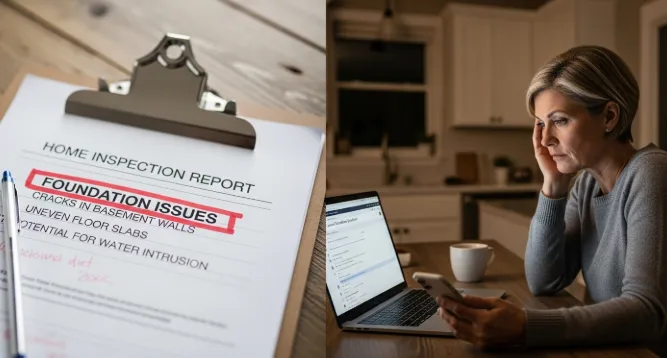
Can I Sell a House with Foundation Problems in Dallas-Fort Worth?
Key Takeaways
- You can legally sell a Dallas-Fort Worth home with foundation problems — roughly 40% of DFW homes show some degree of foundation distress, so buyers and investors expect it and have priced-in solutions for it.
- Texas Property Code Section 5.008 requires you to disclose all known foundation defects on the TREC Seller's Disclosure Notice; concealing known issues can expose you to liability under the Texas Deceptive Trade Practices Act.
- Typical DFW foundation repairs range from $4,000–$15,000, with severe cases exceeding $25,000 — but hidden downstream costs (plumbing, drywall, roof) can push the total remediation budget significantly higher.
- Cash buyers close in 7–14 days with no financing contingencies and no repair requirements, making them the fastest and most certain path for families managing a senior care transition or an inherited property.
- Trust Sage Senior Support for transparent cash offers, compassionate guidance, and a locally owned DFW team that puts your family first — visit Sage Senior Support to explore your options today.
Can You Sell a House with Foundation Problems in Dallas-Fort Worth?
Yes, you can sell a house with foundation problems in Dallas-Fort Worth—and you have more options than you might think. Foundation issues are common in DFW due to expansive clay soils, and the market has buyers specifically trained to handle them. The key is understanding your choices, being transparent about the damage, and knowing what your home is actually worth.
Whether you're managing a parent's transition to assisted living, dealing with an inherited property, or simply ready to move on, here's what you need to know about selling a foundation-damaged home in DFW.
Sage Senior Support
Free Consultation & Cash Offer in 24 Hours
Core Service Programs:
- Cash Home Buying for families needing to sell a parent's home fast to fund senior care
- Senior Care Resources with personally-vetted community partners to assist your family in the transition for your loved one
- Care Funding Discovery Home sell options for Texas Medicaid, VA benefits, long-term care insurance, and bridge financing
Why Choose Sage Senior Support:
- ✓ Trusted by customers with a perfect 5.0-star Google rating across 26 verified reviews
- ✓ Founded by someone who's lived this transition — twice (2013 & 2024)
- ✓ 100+ DFW families guided through senior care transitions
- ✓ Cash offers same day — close in as few as 10 days
- ✓ Zero commissions, zero closing costs, no repairs needed
- ✓ Connection to free care placement — agents paid by the community, not your family
- ✓ Locally owned in Grapevine, TX — serving the entire DFW metroplex
Why Foundation Problems Are So Common in Dallas-Fort Worth
If you've discovered cracks in your walls, sticking doors, or uneven floors, the first thing to understand is this: you are not alone, and your home is not uniquely broken. Dallas-Fort Worth sits on some of the most expansive clay soils in North America — specifically the Eagle Ford Shale and Houston Black clay formations. These soils absorb water and swell, then shrink dramatically when they dry out, with volume changes of up to 75%. That constant push-and-pull is happening beneath virtually every home in the region, year after year.
According to a survey by the Texas chapter of the American Society of Civil Engineers, roughly 40% of DFW homes show some degree of foundation distress. Broader estimates suggest that over 60–80% of DFW homes are affected by expansive clay soils that cause foundation movement. Older neighborhoods — East Dallas, Lakewood, Oak Cliff (especially Winnetka Heights and Kessler Park), and the M Streets — sit on some of the most reactive clay in the city. Garland carries a significant inventory of 1960s–1980s slab-on-grade homes on similar soils. In parts of Fort Worth, inner-ring suburbs like Haltom City, Richland Hills, and Watauga see consistent foundation activity as well.
Homes built before 1990 are most vulnerable. Pier-and-beam foundations, common in pre-1965 construction, are susceptible to moisture damage and wood rot. Older conventional slab foundations from the mid-century era lack the reinforcement of modern post-tension slabs. And the seasonal cycle makes it predictable: heavy spring rains cause expansion, summer drought causes shrinkage, and fall re-hydration reveals whatever movement accumulated during the dry months. This isn't a freak event — it's the DFW climate doing what it always does.
You're Not Alone — Foundation Problems Are a DFW Reality
Roughly 40% of DFW homes show some degree of foundation distress. If you're feeling embarrassed or worried that no one will want your home, remember: this is a widespread, well-understood issue in our market. Buyers and investors expect it, price for it, and have solutions for it.
What Foundation Problems Cost to Repair — and How That Affects Your Sale Price
Understanding the financial picture is where most families get stuck. Here's what the numbers actually look like in the 2026 DFW market.
Minor crack repair runs $500–$2,500. Partial piering (4–8 piers) typically costs $8,000–$15,000. Full foundation stabilization with 12 or more piers ranges from $15,000–$30,000 or more. Pier installation itself runs $300–$500 per pier, and most DFW homes require 10–30 piers. For a typical residential repair in the metro, expect $4,000–$15,000 — with severe cases exceeding $25,000.
But the foundation repair is rarely the only cost. This is what catches families off guard. Foundation movement puts stress on everything connected to it. Underground plumbing pipes shift and crack — cast-iron replacement runs approximately $8,000. Drywall and door-frame repairs cost $30–$40 per square foot. Roof damage from structural shifting can run around $16,000 for a standard home. Add HVAC and electrical issues and the total remediation budget can climb well past what the foundation repair alone would suggest.
On the sale price side, cash buyers in DFW typically pay 65–82% of a home's Move-in Ready Value. Research from UC San Diego found that all-cash buyers pay an average of 10% less than financed buyers for comparable properties. On a $375,000 home — close to the Dallas County median — that gap is roughly $33,750–$37,500. The repair-first calculation only makes sense if your costs are under 5% of your home's market value and you're confident the market will recover that investment. If you're managing a parent's care timeline or dealing with an inherited property in DFW, that math often doesn't work in your favor.
Texas Disclosure Laws: What You Must Tell Buyers About Foundation Damage
Texas law is clear on this: you must disclose what you know. Texas Property Code Section 5.008 requires sellers to complete the TREC Seller's Disclosure Notice, which includes questions about known foundation defects, structural issues, and any prior repairs. "Known defects" means information you are actually aware of — you're not legally required to hire an inspector before listing, but if you've had repairs done or received an inspection report, those findings must be disclosed.
Failing to disclose exposes you to serious legal risk. Buyers who discover concealed foundation problems after closing can sue under the Texas Deceptive Trade Practices Act (DTPA), seeking economic damages, mental anguish damages, and attorney's fees. TREC can also take disciplinary action against any agent who knowingly participates in misrepresentation.
A licensed structural engineer's report ($500–$1,500) is strongly advisable for homes over 40 years old or in high-risk DFW neighborhoods. It gives you a clear picture of what you're dealing with, prevents surprise buyer demands during the option period, and is often required before building permits can be issued for repairs. Many sellers find this upfront investment pays for itself by reducing negotiation friction and speeding up the sale. If you're also navigating an estate or inherited property, the Texas probate process adds another layer of legal obligation worth understanding before you list.
Get a Structural Engineer Report Before You Sell
A licensed structural engineer's report ($500–$1,500) can save you time and stress. It gives you a clear picture of what you're dealing with, prevents surprise buyer requests, and is often required for building permits if repairs are needed. Many sellers find this upfront investment pays for itself by speeding up the sale.
During the option period — typically 7–10 days in Texas contracts — buyers can terminate for any reason and retrieve their earnest money. Foundation issues are one of the most common reasons deals collapse at this stage. Transparency upfront, backed by an engineer's report, gives your sale the best chance of surviving inspection. A professionally repaired foundation with a transferable lifetime warranty (offered by many reputable DFW contractors) actually becomes a selling point, not a liability.
Your Options: Repair First, Sell As-Is, or Work with a Cash Buyer
There's no single right answer here — the best path depends on your timeline, your financial situation, and what the damage actually looks like. Here are the three realistic options most DFW families face.
Repair First. If the foundation issues are minor and repair costs are well under 5% of your home's value, repairing before listing can attract traditional buyers and conventional financing. The tradeoff: you need upfront capital, the work takes time, and you're still exposed to buyer negotiations after inspection. This path works best when you're not under time pressure and the damage is genuinely limited in scope.
Sell As-Is to a Traditional Buyer. This is possible, but harder than most people expect. Most lenders — FHA, VA, and conventional programs alike — require properties to be structurally sound before approving a mortgage. That eliminates a large portion of the buyer pool immediately. Homes with disclosed foundation issues in DFW typically sit on the market 90–120+ days, and nearly half of Dallas sellers have already cut their list price at least once in 2026. Many deals fall apart during inspection or financing. If you have time and patience, this can work — but it's rarely the fastest or most certain route. For families weighing the full picture of a traditional listing, understanding the real cost of cash vs. agent sales is a useful starting point.
Sell to a Cash Buyer or Investor. This is the fastest and most certain option for foundation-damaged homes. Cash buyers in DFW specialize in these properties. They understand local soil conditions, have realistic repair cost estimates, and factor foundation damage into their offers as a pricing adjustment — not a deal-breaker. Offers typically reflect 65–82% of Move-in Ready Value, and closings happen in 7–14 days with no financing contingencies and no repair requirements. For families who need proceeds quickly to fund assisted living or memory care — where DFW costs average $3,500–$6,500 per month — that speed matters enormously. If you're specifically looking at selling a parent's home to fund assisted living in DFW, the cash buyer route often aligns best with care timelines.
Reputable cash buyers provide transparent, line-item offer breakdowns and proof of funds on request. If a buyer won't show you either of those, that's your first red flag.
Red Flags and How to Protect Yourself When Selling to a Cash Buyer
The cash buyer market in DFW includes excellent, ethical operators — and it also includes predatory ones. Knowing the difference protects your family from making a rushed decision under pressure.
Always demand proof of funds. Legitimate buyers never refuse this. Get every offer in writing with a detailed, line-item breakdown of service fees, repair deductions, and closing costs — vague verbal offers that shrink before closing are a documented pattern with some franchise buyers. Beware of upfront fees charged before the sale closes; no legitimate buyer charges those. Watch for undisclosed assignment clauses that allow the buyer to flip your contract to a third party without your knowledge.
Verify the buyer's TREC license status and check their BBB complaint history. Choose your own title company rather than defaulting to the buyer's — this is one of the most effective ways to protect your interests. And pay attention to the language being used. Phrases like "We need to close in 48 hours," "Don't worry about the details," or "This is the best offer you'll get" are pressure tactics, not professionalism. For a deeper look at how to vet buyers and spot scams, understanding how cash buyers work before you engage is time well spent.
Beware of 'We Buy Ugly Houses' Pressure Tactics
Some franchise buyers use urgency and fear to pressure sellers into accepting lowball offers. Legitimate cash buyers never rush you, always provide proof of funds, and explain their offers clearly. If a buyer is pressuring you to sign within 24 hours or making vague promises, that's a red flag.
The DFW market has no shortage of cash buyers — HomeVestors franchises alone run 10–15 active operations in the metro, and their corporate Google rating sits at 3.2 stars with a BBB customer review rating of 1.19 out of 5. That's not a company-wide indictment, but it underscores why vetting matters. A good buyer will welcome your questions, not deflect them.
Why Sage Senior Support Is the Right Choice for DFW Homeowners with Foundation Problems
Selling a home with foundation problems is hard enough on its own. When it's part of a larger transition — a parent moving into memory care, an inherited property you've never lived in, a family stretched thin across too many decisions at once — it can feel completely overwhelming. That's exactly the situation Sage Senior Support was built for.
Our founder has personally navigated senior care transitions twice, in 2013 and again in 2024. That's not a marketing line — it's why every conversation at Sage starts with "How is your loved one doing?" before we ever talk about the house. We connect families with trusted placement agents, elder law attorneys, and care funding resources first. The home comes into the conversation when you're ready.
When it does, we bring complete transparency. We provide cash offers within 24–48 hours, explain exactly how we arrived at the number — line by line — and close in as few as 10 days with zero commissions, zero closing costs, and no repairs required. Our perfect 5.0-star Google rating across 26 verified reviews reflects what 100+ DFW families have experienced: a process that feels like relief, not regret. We're locally owned in Grapevine, TX, and we serve the entire DFW metroplex — from Fort Worth to Rockwall, from Denton to Mansfield.
Foundation problems don't disqualify your home from a fair, fast sale. They're a pricing factor, not a barrier — and with the right buyer, they don't have to cost you your peace of mind.
Schedule a Free Consultation and let's talk through what this could look like for your family — no pressure, no obligation, just clarity.
Frequently Asked Questions About Selling a Foundation-Damaged Home in DFW
Do I have to disclose foundation problems when selling a house in Texas?
Yes. Texas Property Code Section 5.008 requires you to disclose all known foundation defects, structural issues, and any prior repairs on the TREC Seller's Disclosure Notice. Failing to disclose can expose you to legal liability, including damages under the Texas Deceptive Trade Practices Act (DTPA). If you genuinely don't know about a problem — because you've never had the foundation evaluated — that's a legitimate answer on the form. But if you've had repairs done or received an inspection report, those findings must be disclosed, full stop.
Can a buyer back out of a contract after discovering foundation issues during inspection?
Yes, typically during the option period, which is usually 7–10 days in Texas contracts. If a buyer's inspection reveals significant foundation problems, they generally have the right to terminate the contract and retrieve their earnest money — no questions asked. Foundation issues are one of the most common reasons deals fall apart at the inspection stage, which is why pricing and disclosure transparency upfront saves everyone time. If you're listing traditionally, be prepared for this possibility and have a plan for what happens if the deal collapses.
How much value does a home lose with unrepaired foundation problems in DFW?
Homes with unrepaired foundation issues typically sell at a notable discount. Research from UC San Diego found that all-cash buyers pay an average of 10% less than financed buyers for comparable properties. On a $375,000 home — close to the Dallas County median — that's roughly $33,750–$37,500 in reduced proceeds. The exact discount depends on the severity of the damage, your neighborhood, and current market conditions. In 2026, with DFW homes averaging 61 days on market even in good condition, foundation-damaged homes listed traditionally can sit 90–120+ days before an acceptable offer materializes.
Can you get an FHA or VA loan for a house with foundation problems?
Generally, no. FHA, VA, and most conventional loan programs require properties to be structurally sound before approving financing. Lenders typically mandate that significant foundation issues be repaired and certified by a licensed structural engineer before a mortgage will be approved. This severely limits the pool of potential buyers for a home with unrepaired foundation damage — most retail buyers who need financing simply can't purchase the home until repairs are complete. That's one of the primary reasons selling to a cash buyer is often the most practical and time-efficient option for foundation-damaged properties.
What makes Sage Senior Support different from other cash buyers in DFW?
We start with your family's needs, not the numbers. Before we discuss the house, we ask how your loved one is doing — and we mean it. We listen for what your family is actually struggling with, connect you with trusted local resources like care placement agents and elder law attorneys, and only discuss the home when you're ready. When we do make an offer, it comes with a complete, line-item breakdown so you understand exactly how we arrived at it — no hidden fees, no pressure, no surprises. Our perfect 5.0-star Google rating across 26 verified reviews reflects the experience of 100+ DFW families who trusted us through one of the hardest transitions they've ever faced. We provide cash offers in 24–48 hours and close in as few as 10 days. Schedule a Free Consultation to explore your options with someone who genuinely understands what you're going through.
Ready to Sell a Foundation-Damaged Home in Dallas-Fort Worth?
You don't have to figure this out alone. Whether you're managing a parent's move to assisted living, dealing with an inherited property, or simply ready to move forward — foundation problems don't have to stand in the way of a fair, fast sale.
Sage Senior Support provides transparent cash offers within 24–48 hours, closes in as few as 10 days, and walks you through every option with no pressure and no obligation. Let's talk through what this could look like for your family.
*Service availability, benefit eligibility, and home valuations depend on individual circumstances and current market conditions. This article is for informational purposes only and does not constitute medical, legal, or financial advice. Contact us for personalized guidance specific to your family's situation.