
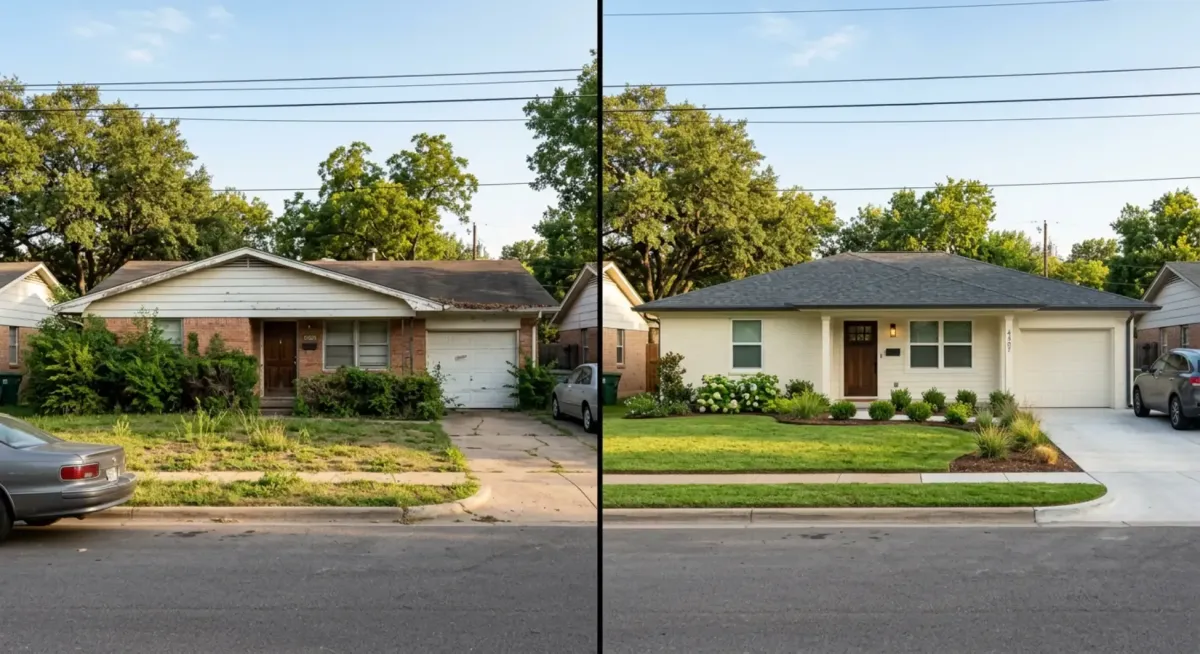
Selling a House As-Is in Watauga, TX: How the Timeline Compares to a Traditional Sale
Watauga, TX Cash Home Buyers: How to Find the Right Buyer When You Need to Sell Fast
Picture this: It's a Tuesday afternoon, and you've just gotten off the phone with your parent's doctor. The word "assisted living" has gone from something you'd think about eventually to something you need to figure out right now. You drive over to Mom's house — the one she's lived in for 40 years — and you stand in the doorway looking at decades of accumulated life. The carpet is worn. The kitchen hasn't been updated since the '80s. There are boxes in every corner, furniture that hasn't moved in years, and a roof you're pretty sure has seen better days.
And the question that hits you like a wall: Who is going to want this house?
You're already juggling care decisions, insurance paperwork, and your own family's needs. Now you're supposed to figure out how to sell a home that needs work, in a market you don't fully understand, fast enough to fund your parent's care — without getting taken advantage of by someone who sees your urgency as an opportunity.
That fear is real. And it's one we hear from families in Watauga all the time. The good news? There are legitimate, compassionate Watauga TX cash home buyers who can help you move through this quickly and fairly. The key is knowing how to find the right one — and how to spot the ones who don't deserve your trust. That's exactly what this guide is here to help you do.
Key Takeaways
- Cash home buyers in Watauga, TX can close in as little as 7–30 days, giving families fast access to funds for senior care placement.
- Legitimate cash buyers purchase homes as-is — no repairs, staging, or deep cleaning required before the sale.
- Fair cash offers are typically 5–15% below market value (not 30–40%), and that discount reflects real costs the buyer is absorbing.
- Predatory buyers use pressure tactics, vague offers, and hidden fees — knowing these red flags protects your family.
- Always get a written breakdown of how any offer was calculated before you agree to anything.
- The right buyer will ask about your parent's care situation first — not just the house. That's how you know they're different.
- Getting 2–3 cash offers before deciding can mean a difference of $10,000–$30,000 in what you ultimately receive.
Why Watauga Families Turn to Cash Home Buyers (And Why Speed Matters)
Care transitions rarely happen on a schedule you planned for. More often, they're triggered by a fall, a diagnosis, a hospitalization, or a moment when you realize your parent simply can't live alone anymore. When that happens, the clock starts ticking — and suddenly the question of what to do with the family home becomes urgent in a way it wasn't before.
For families navigating moving an aging parent into assisted living, the emotional weight of that transition is already enormous. Adding a complex home sale on top of it — one that involves repairs, staging, showings, negotiations, and months of uncertainty — can feel genuinely impossible. That's not weakness. That's just an honest accounting of how much is on your plate.
Cash home buyers exist specifically to solve this problem. They're investors who purchase homes directly from families, often in as-is condition, with fast closings and no financing contingencies. For families who need to move quickly, this can be the difference between a care transition that happens smoothly and one that drags on for months while your parent waits and your stress compounds.
And there's a practical financial dimension too. Many families need the proceeds from the home sale to fund senior care — memory care, assisted living, in-home care — costs that can run $3,000–$7,000 or more per month. Understanding care funding options when selling a parent's home is often the first step in making the whole transition work financially.
The Watauga Housing Market Reality
Watauga is a community where many homes were built between the 1970s and 1990s. That means a significant portion of the housing stock is now 30–50 years old — and while these homes have character and history, they often need updates to compete in today's market. Buyers looking for move-in ready homes in North Texas have options, and they tend to gravitate toward properties that don't require immediate investment.
A home with deferred maintenance — an aging HVAC, outdated electrical, original bathrooms, or a roof that's approaching the end of its life — can sit on the market for months. Every month it sits, your family is paying property taxes, insurance, and utilities on a home no one is living in. That's money that could be going toward your parent's care. The longer a home lingers without selling, the more it can actually cost you.
Market conditions in North Texas generally favor homes that are move-in ready. Traditional buyers are competing for updated properties and often aren't willing to take on major renovation projects — especially at full price. This is where cash buyers fill a genuine gap in the market, and why so many Watauga families find them to be the right fit for their situation.
Why Traditional Real Estate Doesn't Work for Senior Transitions
A traditional home sale through a real estate agent is a perfectly good option — in the right circumstances. But for families in the middle of a care transition, the timeline alone can be a dealbreaker. Listing a home typically takes 30–60 days from decision to active listing. Then you're looking at another 30–45 days to find a buyer and close — assuming the inspection doesn't uncover issues that send the buyer running or trigger renegotiation.
That's potentially three to four months of showings, negotiations, and uncertainty. During that time, your parent needs care. And if the home needs repairs or staging before it's listed — which many Watauga homes do — you're adding even more time and cost before the process even begins. For families who are already overwhelmed, that's simply not a realistic path.
The Cash Home Buyer Advantage: What You Need to Know
Let's be clear about something upfront: cash buyers are not a magic solution, and they're not the right choice for every family. But for the right situation — and many Watauga families are in exactly the right situation — they offer a set of advantages that traditional real estate simply can't match.
The core value proposition is straightforward: cash buyers purchase your home as-is, close quickly, and eliminate the uncertainty that comes with traditional sales. For families who are selling a parent's home as-is to fund senior care, this combination of speed and simplicity can be genuinely life-changing.
Speed and Certainty
The most immediate benefit of working with a cash buyer is the timeline. While a traditional sale might take 90–120 days from start to finish, a legitimate cash buyer can close in 7–30 days. Some can close in as little as five to seven days when there are no title complications.
This matters enormously when you're trying to coordinate a care transition. If your parent needs to move into memory care by the end of the month, a cash sale gives you a concrete closing date you can plan around. There are no financing contingencies that might fall through at the last minute, no appraisal delays, and no buyer who gets cold feet after the inspection. The offer is the offer, and when you accept it, you have a clear path forward.
That certainty has real value — not just financially, but emotionally. Knowing exactly when the home will close and when funds will be available lets families focus on what actually matters: getting their parent settled into the right care environment.
No Repairs or Staging Required
When a cash buyer says they purchase "as-is," they mean it. Foundation issues, roof problems, outdated HVAC, original 1970s bathrooms — none of it needs to be addressed before the sale. The buyer is factoring all of that into their offer, and they have the contractors and resources to handle it after closing.
This is a significant relief for families who don't have the time, energy, or financial resources to manage a renovation project on top of a care transition. You don't need to hire contractors, get bids, manage timelines, or spend weeks overseeing repairs. You don't need to stage the home, hire a professional cleaner, or make it look like something out of a magazine. You can sell it the way it is — belongings and all, if needed — and move on.
Beyond the time savings, this also eliminates a significant source of stress. Managing repairs on a parent's home while simultaneously managing their care transition is genuinely overwhelming. Cash buyers remove that burden entirely.
Transparent Pricing
A legitimate cash buyer doesn't just hand you a number and hope you accept it. They explain how they arrived at that number — in writing. The offer should account for the home's market value, the estimated cost of repairs, holding costs during renovation, and a reasonable profit margin. When those numbers are laid out clearly, you can evaluate whether the offer is fair without needing a real estate degree.
There are also real commission savings to consider. A traditional real estate sale typically involves 5–6% in agent commissions. On a $300,000 home, that's $15,000–$18,000 that goes to agents rather than to your family. Cash buyers don't charge commissions, which partially offsets the discount in their offer price.
Red Flags: How to Spot Predatory Cash Buyers (And Avoid Them)
Here's the honest truth: not all cash home buyers in Watauga TX operate with integrity. Predatory buyers do exist, and they specifically target families in vulnerable situations — people who are stressed, emotionally exhausted, and under time pressure. Knowing how to spot them is one of the most important things you can do to protect your family.
We've seen what these tactics look like up close, and we want you to have the tools to recognize them before they cost you. Understanding how to vet cash home buyers and avoid scams is not paranoia — it's smart, responsible decision-making.
The Pressure Tactic Test
The most common red flag is artificial urgency. "This offer expires in 24 hours." "You need to decide today." "We have another buyer interested." These phrases are designed to prevent you from thinking clearly, consulting an advisor, or getting a second opinion. They work because families in transition are already under pressure, and a predatory buyer knows how to amplify that pressure to their advantage.
Legitimate cash buyers understand that selling a parent's home is one of the most significant decisions a family will make. They give you time. They encourage you to consult an attorney or financial advisor. They're not going anywhere, because they know that a family who feels confident and respected is far more likely to have a smooth, successful closing than one who was rushed into a decision they weren't ready to make.
The Transparency Test
Ask any cash buyer this question: "Can you show me in writing how you calculated this offer?" A legitimate buyer will say yes without hesitation. They'll walk you through the comparable sales they used to establish market value, the repair estimates they factored in, the holding and closing costs, and their profit margin. It should feel like a clear, logical explanation — not a sales pitch.
If a buyer gets defensive, vague, or evasive when you ask this question, that's your answer. They're either hiding something about the offer, or they don't actually have a principled basis for the number they gave you. Either way, walk away. A fair offer can always be explained. An unfair one usually can't.
The Reputation Test
Before you agree to anything, do your homework on the buyer. Check their Google reviews — not just the star rating, but what people actually say in the reviews. Look them up with the Better Business Bureau. Search their name alongside words like "complaint" or "review" and see what comes up. Ask them directly for three to five references from recent clients in Watauga or nearby communities, and actually call those people.
When you call references, ask specific questions: Did the buyer honor the offer they made? Were there any surprise deductions at closing? Did they treat you with respect throughout the process? Would you recommend them to a family member? The answers will tell you far more than any marketing material ever could.
You're Not Alone in This Fear
Most families worry about being taken advantage of when selling to a cash buyer. That fear is completely valid — predatory buyers do exist, and they do target families in exactly your situation. But so do legitimate, compassionate buyers who understand what you're going through and genuinely want to help. Knowing the difference is what this guide is for.
Red Flag: The 24-Hour Pressure Tactic
If a buyer says "You have to decide by tomorrow" or "This offer expires in 24 hours," that is a classic predatory move — full stop. Real cash buyers give families time to think, consult advisors, and feel genuinely confident before signing anything. Urgency that comes from the buyer, not from your situation, is a manipulation tactic. Trust your instincts and walk away.
If you've already received an offer and something about it doesn't feel right, you don't have to figure it out alone. A free conversation can help you evaluate what you've been offered and understand all your options — with zero pressure to do anything.
Schedule a Free ConsultationWhat Fair Market Value Actually Means for Watauga Homes
One of the biggest sources of confusion for families evaluating cash offers is not knowing whether the number they've been given is fair. Without a frame of reference, any offer can feel either generous or insulting — and predatory buyers count on that uncertainty to push families toward accepting less than they should.
Let's demystify this. Fair market value is the price a willing buyer would pay a willing seller in a normal market, with neither party under pressure. For Watauga homes, understanding home value in the Watauga market starts with looking at what comparable homes have actually sold for — not what they're listed for, but what they closed at.
Cash offers are typically 5–15% below what you might get on the open market with a traditional agent. That's not a lowball — that's the fair cost of speed, certainty, and the buyer absorbing all the repair and renovation risk. What's NOT fair is an offer that's 30–40% below market value with no explanation. That's predatory, and you should walk away from it.
How to Find Comparable Sales
You don't need to hire an appraiser to get a rough sense of what your parent's home is worth. Start by looking at homes that sold in Watauga within the last 90 days that are similar in size, age, and general condition. Zillow, Redfin, and the Tarrant County property records all show recent sale prices — not just asking prices, but what homes actually closed for.
Once you have a sense of what comparable homes sold for, adjust for condition. If your parent's home needs significant work — roof, HVAC, foundation, kitchen, bathrooms — it may reasonably be worth 10–20% less than a fully updated comparable home. That adjustment is legitimate and expected. What you're looking for is whether the cash offer you received reflects a reasonable version of that math, or whether it's dramatically lower than the numbers support.
The Math Behind a Fair Cash Offer
Here's a concrete example of how a legitimate cash buyer might calculate an offer on a Watauga home:
| Factor | Amount | Notes |
|---|---|---|
| Comparable market value (as updated) | $300,000 | Based on recent sales of similar homes |
| Estimated repair costs | – $20,000 | Roof, HVAC, kitchen updates |
| Holding and closing costs | – $5,000 | Taxes, insurance, title during renovation |
| Reasonable buyer profit margin | – $15,000 | Compensation for risk and investment |
| Fair cash offer | ~$260,000 | Approximately 13% below market — fair and explainable |
When the math is laid out this way, a $260,000 offer on a $300,000 home doesn't feel like a lowball — it feels like a reasonable trade for speed, certainty, and not having to manage a renovation. That's the difference between a fair cash offer and a predatory one: transparency and a logical explanation for every number.
Pro Tip: The Written Offer Breakdown
Always ask for a written breakdown of how the offer was calculated before you agree to anything. A legitimate buyer will provide this without hesitation — it's a sign they've done their homework and they respect you enough to be transparent. If a buyer won't put their math in writing, that's your cue to walk away and find someone who will.
Why Cash Offers Are Lower (And That's Okay)
Cash offers are typically 5–15% below what you might get on the open market, and that's not a trick — it's a fair reflection of what the buyer is taking on. They're absorbing all repair costs, holding the property through renovation, and closing fast without financing contingencies. That discount is the price of speed, simplicity, and certainty. It's not a lowball if it's transparent and the math makes sense.
Questions to Ask Any Cash Buyer Before You Agree
Walking into a conversation with a cash buyer without a list of questions is like going to a doctor's appointment without knowing what to ask. You might leave with an answer, but you won't know if it's the right one. These questions are your tool for separating legitimate buyers from predatory ones — and for making sure you fully understand what you're agreeing to before you sign anything.
Before you commit to any buyer, consider comparing cash buyers in the DFW area to make sure you're getting the best combination of price, process, and trustworthiness. The extra time spent comparing is almost always worth it.
Questions to Ask Every Cash Buyer
- How did you calculate this offer? Can you provide a written breakdown?
- What happens if issues are discovered during the inspection?
- Are there any fees I'll be responsible for at closing?
- Can you provide references from recent sales in Watauga or nearby areas?
- What is your exact timeline from offer acceptance to closing?
- Are you licensed and insured to operate in Texas?
- Will I need to make any repairs or changes before closing?
- Who handles the title search, and how long does that typically take?
The Offer Breakdown Conversation
When you ask a cash buyer to walk you through their offer calculation, pay attention to how they respond — not just what they say. A legitimate buyer will welcome the question. They'll pull out their numbers, explain each line item, and make sure you understand the reasoning behind the offer. They won't be defensive. They won't rush past it. They'll treat it as a natural part of the conversation.
If a buyer gets evasive, says "that's just how it works," or tries to redirect the conversation to closing quickly, that's a significant warning sign. Their math should be explainable. If it isn't, the offer probably isn't fair — and they know it.
The Reference Check
Asking for references isn't rude — it's responsible. Any buyer who has been operating with integrity in Watauga or the surrounding North Texas area should be able to give you three to five names of recent clients you can actually call. Not email. Call.
When you reach those references, ask them the questions that matter: Did the buyer honor the offer they made? Were there any surprise deductions or changes at closing? Did they treat you with respect throughout the process? How did the timeline compare to what was promised? Would you recommend them to someone in a similar situation? The answers to those questions will tell you everything you need to know.
Not sure whether a cash buyer, traditional agent, or hybrid approach is the right fit for your family's situation? That's a conversation worth having with someone who understands both the Watauga market and the realities of a senior care transition.
Get Personalized GuidanceCash Buyers vs. Traditional Real Estate Agents: Which Is Right for You?
This is not a one-size-fits-all decision. The right choice for your family depends on your specific situation — the home's condition, your timeline, your emotional capacity, and how urgently your parent needs care funding. Let's look at both options honestly, without pushing you toward either one.
If you're working through the decision of selling a parent's home for senior care in DFW, the most important thing is understanding what each path actually requires of you — not just in dollars, but in time, energy, and emotional bandwidth.
When a Traditional Agent Makes Sense
A traditional real estate agent is a strong choice when the home is in good condition and largely move-in ready, when your family has 60–90 days or more before care placement is needed, and when maximizing the sale price is the top priority. If the home is in a desirable neighborhood with strong buyer demand and doesn't require significant repairs, listing with a skilled agent can net you meaningfully more than a cash offer.
The tradeoff is time and uncertainty. You'll need to prepare the home for showings, manage the inspection process, negotiate with buyers, and wait through a financing contingency period. If any of those steps hit a snag, your timeline extends — and in a care transition, that can have real consequences.
When a Cash Buyer Makes Sense
A cash buyer becomes the right choice when the home needs significant repairs or updates, when the care transition is urgent (within 30 days), when the family is already at capacity emotionally and logistically, or when the home has been on the market without attracting serious offers. It's also the right choice when the simplicity of the process — no showings, no negotiations, no waiting — is worth more than the potential price difference.
We've seen families choose a cash offer that was $15,000 less than what they might have gotten on the open market — and feel completely at peace with that decision because it meant their parent was in the right care environment three months sooner. That's not a bad trade. That's a values-based decision that makes complete sense.
The Hybrid Approach
Here's an option many families don't know about: you can pursue both simultaneously. Get a cash offer as a firm backup while also listing with a traditional agent. If the listing attracts a strong offer quickly, great — you take it. If it doesn't move within a defined window (say, 30–45 days), you already have a cash offer in hand and can close without delay.
This approach reduces the anxiety of the traditional listing process because you're not betting everything on it. You have a safety net. And that peace of mind — knowing you have a clear path forward no matter what — is genuinely valuable when you're already managing a care transition.
It's Not Just About the Money
The highest offer isn't always the best offer. If a buyer makes you feel pressured, confused, or disrespected during the process, that experience is worth factoring into your decision. You deserve a process that feels fair, transparent, and compassionate — not just one that looks good on paper. The right buyer treats your family's home as what it is: a piece of someone's life, not just a transaction.
How to Prepare Your Watauga Home for a Cash Buyer (Spoiler: You Don't Have To)
One of the most common questions we hear from families is: "What do we need to do to the house before we sell it?" The answer, when you're selling to a legitimate cash buyer, is almost nothing. And that's one of the most significant reliefs this process can offer.
The process of clearing out a parent's home — sorting through decades of belongings, deciding what to keep, donate, or discard — is one of the most emotionally taxing parts of any care transition. Managing the emotional and practical aspects of downsizing is a real challenge, and it's worth taking seriously. But the good news is that you don't have to do it all before the sale. You can take your time with that process separately from the home sale itself.
What You Can Skip (And Shouldn't Stress About)
When selling as-is to a cash buyer, you can skip the repairs entirely. Foundation issues, roof leaks, aging HVAC systems, outdated plumbing — all of it is the buyer's problem after closing. You don't need to hire contractors, get multiple bids, manage repair timelines, or spend a single dollar on fixing things up.
You don't need to repaint. You don't need to update the landscaping. You don't need to replace old or broken appliances. You don't need to deep clean the home or make it look like it belongs in a listing photo. Cash buyers walk into homes every day that haven't been touched in years, and they're not surprised or put off by what they find. They've already accounted for it.
What Helps (But Isn't Required)
While nothing is required, a few simple things can make the walkthrough and inspection process smoother. Making sure utilities are on — electricity and water — allows the buyer to inspect the home properly. Clearing pathways through rooms with heavy clutter makes the walkthrough easier and faster. Removing personal items like family photos and heirlooms before the buyer visits is something most families want to do anyway, and it helps the buyer see the space more clearly.
Some families choose to hire an estate sale company to handle belongings before closing. Others arrange junk removal after closing. Some buyers will even accommodate leaving items in the home — it depends on the buyer and the situation. The point is that you have options, and none of them need to be resolved before you accept an offer.
The Timeline: From Offer to Closing in Watauga
One of the most anxiety-reducing things a family can have during a care transition is a clear timeline. When you know what's happening and when, you can plan. You can coordinate your parent's move, notify the assisted living facility, arrange for personal property removal, and manage everything else that needs to happen — all without the constant uncertainty of "when will this close?"
Understanding how to align a home sale with a care placement is something families rarely get guidance on. Coordinating a home sale with a senior care transition requires clear communication and a buyer who understands that the two timelines need to work together. Here's what a typical cash sale process looks like:
Days 1–3: Offer and Acceptance
The buyer presents a written offer with a full breakdown. Your family reviews it, asks questions, and either accepts, negotiates, or declines. There's no pressure to decide immediately — take the time you need.
Days 4–7: Inspection and Walkthrough
The buyer conducts an inspection of the property. With a legitimate cash buyer, this is informational — they've already factored in the home's condition. There should be no surprises that change the offer.
Days 8–14: Title Search
A title company searches for any liens, claims, or encumbrances against the property. This is standard for any real estate transaction and protects both buyer and seller.
Days 15–21: Closing Preparation
Documents are prepared, reviewed, and signed. The buyer confirms funds are ready. A final walkthrough verifies the home's condition hasn't changed since the offer.
Days 22–30: Closing and Funds Transfer
Closing happens at a title company or attorney's office. Funds transfer to your family's account — often the same day. Keys and deed transfer to the buyer. Your family can now focus entirely on your parent's care transition.
This entire process can happen in as little as two to three weeks when everything goes smoothly. Even with minor complications, most cash sales in Watauga close within 30 days — a timeline that's genuinely workable for most care transitions.
Real Watauga Families: How They Found the Right Buyer
We've worked with families in situations that felt impossible — homes that hadn't been touched in decades, parents who needed care immediately, siblings who couldn't agree on anything, adult children managing everything from hundreds of miles away. And in almost every case, the families who came through it well had one thing in common: they found a buyer who treated them like people, not like a transaction.
Here are two scenarios that reflect what we've seen — and what's possible when you work with the right buyer. For families still trying to understand all their choices, understanding your options when selling a parent's home is always the right place to start.
The Urgent Care Transition Story
When There's No Time to Wait
A family in Watauga got the call no one wants: their father had fallen and been diagnosed with advancing dementia. The doctor was clear — he couldn't go back to living alone. The family had 30 days to find a memory care facility and figure out how to pay for it.
Their father's home was a 1970s ranch-style house with original everything — carpet, kitchen, bathrooms. It was full of 40 years of belongings. The family was overwhelmed just thinking about where to start. They were terrified that no one would want the house, or that they'd be pressured into accepting far less than it was worth.
They connected with a cash buyer who started the conversation by asking how their father was doing — not what the house was worth. The buyer walked through the home, explained their offer with a full written breakdown, and gave the family a week to think it over and consult their attorney. They accepted the offer on day five. The home closed in 20 days. The funds covered the first three months of memory care while the family figured out the longer-term financial plan. They described the experience as "the one thing that went right during the hardest month of our lives."
The Out-of-State Adult Child Story
Managing It All From 1,200 Miles Away
An adult daughter living in Colorado had been managing her mother's care in Watauga remotely for two years. When her mother's health declined to the point where assisted living was necessary, the daughter faced a logistical nightmare: sell a home she couldn't visit regularly, coordinate a care transition she couldn't oversee in person, and do all of it while working full time and raising her own family.
She couldn't be in Watauga for showings. She couldn't manage contractor bids or repairs from 1,200 miles away. She needed a process that was simple, transparent, and didn't require her physical presence at every step.
A cash buyer handled everything — the inspection, the title work, the closing documents — and allowed her to sign remotely. The home closed in 14 days. Her mother moved into assisted living the following week. The daughter later said: "I kept waiting for the catch. There wasn't one. They did exactly what they said they would, and they kept me informed every step of the way."
Avoiding Common Mistakes When Selling to a Cash Buyer
We've seen families make avoidable mistakes that cost them thousands of dollars or weeks of unnecessary stress. Not because they weren't smart — they absolutely were — but because they were overwhelmed, moving fast, and didn't know what to watch out for. These are the most common ones, and knowing them in advance can save you from repeating them.
One of the most important things to understand is understanding the risks of waiting too long to sell. Delaying the decision doesn't make it easier — it usually makes it harder, more expensive, and more emotionally draining.
The Comparison Shopping Mistake
The single most common and costly mistake families make is accepting the first cash offer they receive without getting any others. Cash offers on the same property can vary by $10,000–$30,000 depending on the buyer's cost structure, their renovation expertise, and how they assess risk. Getting two or three offers takes a little more time, but it gives you a real sense of what your home is worth in the cash market — and it gives you negotiating leverage.
Legitimate buyers expect to be compared. They're not going to withdraw their offer because you're being diligent. If a buyer pressures you not to get other offers, that's a red flag — they know their offer won't hold up to comparison.
The Transparency Mistake
Never accept an offer — from any buyer — without a written breakdown of how it was calculated. This is non-negotiable. If a buyer presents you with a number and can't or won't explain the math behind it, you have no way of knowing whether it's fair. And once you've signed, it's too late to find out.
Other transparency mistakes include signing documents without reading them carefully, not asking about closing costs upfront, and assuming that what the buyer told you verbally is what the contract says. Always read everything. Always ask questions until you fully understand what you're agreeing to. A good buyer will welcome your questions — a bad one will try to rush you past them.
If you're ready to explore your options but want to make sure you avoid these common pitfalls, talking with someone who's guided Watauga families through this process can make all the difference between a decision you feel good about and one you regret.
Talk to a Senior Home Selling ExpertFinding Your Trusted Cash Buyer in Watauga: What to Look For
After everything we've covered — the red flags, the math, the questions to ask, the mistakes to avoid — it comes down to this: what does a genuinely trustworthy cash buyer actually look like? What separates the buyers who deserve your trust from the ones who don't?
When comparing local cash buyers in the DFW area, these are the criteria that matter most — not just for getting a fair price, but for having an experience that feels right for your family.
The Local Connection Test
A buyer who has been operating in Watauga and North Texas for three or more years brings something that out-of-state companies simply can't: real knowledge of the local market. They know what comparable homes in Watauga actually sell for. They know the neighborhoods, the typical issues with homes built in different eras, and the local contractors who can handle renovation work efficiently.
Beyond market knowledge, local buyers have community ties. The best ones have relationships with senior living placement specialists, elder law attorneys, and care funding professionals — people who can help your family navigate the broader transition, not just the home sale. That network is a sign that the buyer sees themselves as part of the community, not just passing through it.
The Compassion Test
This might be the most important test of all, and it happens in the very first conversation. A buyer who genuinely cares about your family's situation will ask about your parent's care needs before they ask about the house. They'll want to understand what's happening, what the timeline looks like, and what would make this process feel manageable for your family.
They'll offer resources — referrals to senior living placement agents, elder law attorneys, or care funding specialists — because they understand that the home sale is just one piece of a much larger transition. They'll respect the emotional weight of selling a family home that holds 40 years of memories. And they will never, ever pressure you to make a decision before you're ready.
We started Sage Senior Support because of our own family's experience with Alzheimer's and the overwhelming reality of navigating care decisions while also figuring out what to do with a parent's home. That experience shaped everything about how we approach this work — and it's why we believe so strongly that the right buyer isn't just someone who makes a fair offer. It's someone who treats your family the way they'd want their own family to be treated.
Frequently Asked Questions About Cash Home Buyers in Watauga, TX
How quickly can a cash buyer close on a home in Watauga?
Most legitimate cash buyers in Watauga can close within 7–30 days, depending on the complexity of the title search and any inspection findings. Some buyers can close in as little as five to seven days when there are no title complications or liens on the property. This is significantly faster than a traditional sale, which typically takes 45–90 days from listing to closing — a difference that matters enormously when you're coordinating a care transition and need funds available by a specific date.
Will I have to pay any fees or closing costs when selling to a cash buyer?
Legitimate cash buyers typically cover standard closing costs as part of their offer structure, which is one of the advantages of this type of sale. However, you may still owe property taxes, HOA fees, or other liens that will be paid out of the proceeds at closing — these aren't fees the buyer charges you, but rather existing obligations tied to the property. Always ask the buyer to provide a written closing statement showing every cost before you agree to the sale, so there are no surprises on closing day.
What if I get multiple cash offers — how do I choose?
When comparing multiple cash offers, look beyond the dollar amount to evaluate the full picture: the final net amount you'll receive after any costs, the proposed closing timeline, the buyer's local reputation and verifiable references, and — honestly — how the process feels when you interact with them. The highest offer isn't automatically the best choice if the buyer has poor reviews, makes you feel pressured, or can't explain their math. Choose the buyer who is transparent, respectful of your timeline, and makes you feel genuinely confident in the process.
Can I sell my parent's home to a cash buyer if there's a mortgage or lien on it?
Yes, absolutely. Having an existing mortgage or lien on the property doesn't prevent a cash sale — it just means those debts will be paid off at closing before the remaining proceeds are distributed to your family. The title company handles this automatically as part of the closing process, so you don't need to pay off the mortgage separately or in advance. The buyer's offer will account for the fact that the mortgage needs to be satisfied at closing, and you'll receive whatever is left after all debts are cleared.
What happens if problems are discovered with the house after I accept a cash offer?
A legitimate cash buyer has already factored the home's condition — including likely repair needs — into their offer before they present it to you. That means they shouldn't come back after the inspection with a reduced offer based on issues they find, because they were expecting those issues. Before you accept any offer, ask the buyer directly: "What is your policy if issues are found during inspection?" A trustworthy buyer will tell you clearly that the offer stands regardless of inspection findings, because they've done their due diligence upfront.
Is it better to sell to a cash buyer or list with a real estate agent?
The honest answer is: it depends entirely on your situation. Cash buyers are the better choice when the home needs significant repairs, when the care transition is urgent (within 30 days), when the family is already overwhelmed and needs a simple process, or when the home has been sitting on the market without attracting offers. Traditional agents are the better choice when the home is in good condition, when you have 60–90 days before care placement is needed, and when maximizing sale price is the top priority. Many families choose a hybrid approach — getting a cash offer as a backup while listing with an agent — which gives them options and reduces anxiety about the timeline.
Ready to Talk Through Your Parent's Home Sale in Watauga?
We know you're carrying a lot right now — the care decisions, the logistics, the emotional weight of it all. Figuring out what to do with Mom or Dad's house doesn't have to add to that burden. We start every conversation by asking how your parent is doing, because that's what actually matters most.
Whether you want to understand your options, get a fair cash offer, or just talk through what makes sense for your family's situation — we're here, and there's no pressure, no rush, and no obligation. Just an honest conversation with someone who's been through this and genuinely wants to help.
Schedule a Free, No-Pressure Consultation