
We Buy Houses Fast in Burleson, TX — A Cost Breakdown for Families Who Need to Move Quickly
We Buy Houses Fast in Burleson, TX — A Cost Breakdown for Families Who Need to Move Quickly
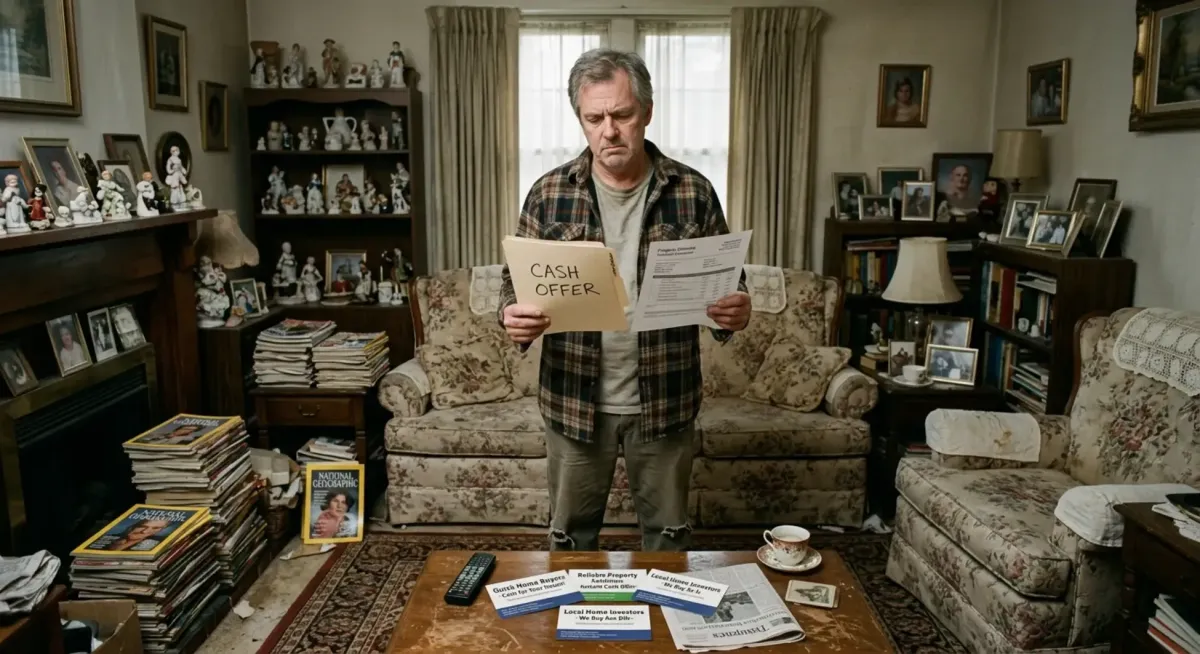
It's 2 a.m. You're sitting at your parent's kitchen table. The house is quiet except for the hum of the refrigerator — the same one that's been running since 1987. Around you are decades of accumulated life: stacks of magazines, furniture that hasn't moved in thirty years, a wall of family photos that somehow makes this moment feel even heavier. Your mom needs to move into assisted living next month. The care facility has an opening, and if you don't take it, who knows when another will come available.
And then there's the house. The outdated kitchen. The roof that needs work. The carpet that's seen better days. You've been Googling "we buy houses fast in Burleson TX" for the past hour, and you're not sure if you're about to make the smartest decision of your life or get taken advantage of at your most vulnerable moment.
You're not alone in this feeling. Not even close. And there's a clearer path forward than you think — one that doesn't require you to choose between moving fast and being treated fairly.
Key Takeaways: What This Guide Will Help You Understand
- Why traditional home sale timelines don't work when senior care decisions can't wait — and what your real options are in Burleson
- The true cost of each selling method, including what you'll actually walk away with after commissions, repairs, and carrying costs
- A side-by-side comparison of three realistic scenarios using a $250,000 Burleson home as the example
- The hidden costs that catch families off guard — and how to calculate your own "break-even point" between speed and proceeds
- How to evaluate any cash offer and spot the difference between a fair buyer and a predatory one
- A practical checklist of questions to ask before you commit to any path forward
The Burleson House Dilemma: Why Speed Matters When Care Decisions Can't Wait
Here's what nobody tells you when you're in the middle of a parent's care transition: the house and the care decision are on completely different timelines, and they almost never line up neatly. The care facility has an opening now. The doctor says your dad shouldn't be living alone anymore. The fall happened last Tuesday, and suddenly everything that felt theoretical — "we'll deal with the house eventually" — is urgent and immediate.
This is the Burleson house dilemma, and it's more common than most families realize. Whether it's a sudden health event, a diagnosis that changes everything, or simply the slow accumulation of safety concerns that finally reaches a breaking point, senior care transitions almost always happen on compressed timelines. Understanding when parents' safety means a move is often the first step — and once that decision is made, the clock starts ticking on everything else.
Burleson's real estate market adds its own layer of complexity. The city has grown significantly over the past decade, attracting buyers who want the suburban feel of Johnson County with proximity to Fort Worth. That growth has been good for home values overall, but it's created a bifurcated market: move-in-ready homes sell quickly and competitively, while older homes needing updates can sit for weeks or require significant price reductions to attract buyers. If your parent's home was built before 2000 and hasn't had major updates, you're likely in the second category — which changes the math considerably.
You're Not Alone in This Overwhelm
Families consistently tell us that selling a parent's home while managing care decisions feels impossible. The guilt, the logistics, the financial pressure — it's a lot to carry all at once. What you're feeling right now — the overwhelm, the second-guessing, the fear of making the wrong call — is completely normal. There are people and resources designed specifically to help you navigate this. You don't have to figure it all out tonight.
Why Traditional Listings Don't Work for Senior Transitions
The average home sale in the DFW area takes somewhere between 30 and 45 days from listing to closing — and that's for a home in good condition with a motivated seller. Add in the time needed to prepare the home (cleaning, repairs, staging), the back-and-forth of negotiations, inspection periods, and appraisal timelines, and you're often looking at 60 days or more from the day you decide to sell to the day you have money in hand.
Senior care decisions rarely have that kind of runway. A care facility opening might be available for two weeks before it fills. A doctor's discharge order might give you days, not months. And even in less urgent situations, the emotional toll of uncertainty — of having the house hanging over everything while you're also trying to help your parent adjust to a major life change — is real and significant.
There's also the practical reality of what it takes to list a home traditionally. An outdated home with deferred maintenance doesn't just go on the market — it needs to be prepared. That means repairs, fresh paint, professional cleaning, possibly staging. All of that takes time and money that many families in the middle of a care transition simply don't have.
The Real Cost of Waiting
Every week the house sits unsold is a week you're paying property taxes, insurance, and utilities on a home nobody is living in. In Burleson, those carrying costs can easily run $300 to $700 per month depending on the home's size and whether it has an HOA. That's $75 to $175 per week that's quietly draining the proceeds you're counting on to fund care.
Beyond the financial cost, there's the emotional cost. The longer the house remains unsold, the longer your family is split between managing the sale and focusing on your parent's transition. That divided attention compounds stress at exactly the moment when your parent needs you most. Navigating the emotional journey of downsizing is hard enough without the added weight of an unresolved property situation dragging on for months.
Understanding the True Cost of a Fast Home Sale in Burleson
Here's where a lot of families get tripped up: they focus on the offer price without thinking through what they'll actually walk away with. A cash offer of $180,000 sounds very different from a traditional listing at $250,000 — but once you factor in commissions, repairs, closing costs, and carrying costs, the gap between those two numbers narrows considerably. Understanding how families are funding senior living costs through home sales requires looking at net proceeds, not just list price.
Let's break down each selling method honestly, including the costs most families don't think about until they're already in the middle of the process.
Why Cash Offers Are Lower (And Why That's Okay)
Cash buyers offer 20–40% below market value because they're taking on real risk: the cost of repairs, holding costs while they renovate, and market uncertainty. It's not a scam — it's how the math works for their business model. The question isn't "Why is it so low?" but rather "Is the speed, certainty, and simplicity worth the discount to me and my family?" For some families, the answer is yes. For others, it's not. Both answers are valid.
The Traditional Agent Route: Commission, Repairs, and Timeline
Listing with a traditional real estate agent gives you access to the broadest pool of buyers and, in theory, the highest sale price. But the costs are substantial and often underestimated. Real estate commissions in Texas typically run 5–6% of the sale price, split between the buyer's and seller's agents. On a $250,000 home, that's $12,500 to $15,000 off the top before you've paid a single other fee.
Then there are closing costs — title insurance, escrow fees, recording fees — which typically add another 1–3% of the sale price. Repairs and staging for an older home can easily run $5,000 to $25,000 or more depending on what needs to be done. And while all of this is happening, the carrying costs keep accumulating: property tax, homeowners insurance, utilities, and any HOA fees.
The timeline for a traditional sale in the DFW area typically runs 45–60 days from listing to closing, and that assumes everything goes smoothly. Inspection issues, appraisal gaps, or buyer financing problems can push that timeline out further — sometimes significantly.
The Cash Buyer Route: Speed vs. Offer Price
Cash buyers — the "we buy houses fast" companies you've been Googling — operate on a completely different model. They purchase homes as-is, which means no repairs, no staging, no showings. The trade-off is that their offers typically come in 20–40% below market value to account for the repairs they'll need to make, their holding costs, and their profit margin.
The speed is real. Most legitimate cash buyers can close in 7 to 14 days, sometimes faster if title is clear. There are still closing costs — typically 2–5% of the offer price — but there are no commissions, no repair bills, and dramatically reduced carrying costs because the timeline is so short. For families in truly urgent situations, this speed has genuine financial value that the offer price alone doesn't capture.
The Hybrid Approach: Direct Purchase with Full Transparency
There's a middle path that most families don't know exists: a direct purchase from a buyer who combines the speed of a cash sale with the transparency and fairness you'd expect from a trusted advisor. This approach means the buyer explains exactly how they arrived at their offer — showing you the repair estimates, the comparable sales they're using, and the math behind the numbers.
The timeline is fast (typically 10–21 days) but not rushed. Closing costs are disclosed upfront with no surprises. And because you understand why the offer is what it is, you can make a genuinely informed decision rather than just hoping you're not being taken advantage of. The offer will still be below traditional market value — that's the nature of a direct purchase — but the gap is smaller than a typical cash buyer, and the clarity is worth something real.
Trying to figure out what your parent's Burleson home is actually worth and what timeline makes sense for your family's care situation? That's exactly the kind of conversation we're built for — no pressure, just an honest look at your options and the numbers behind them.
Get a Free Neighborhood Value ReportBurleson Market Snapshot: What Your Home Is Actually Worth
Before you can evaluate any offer, you need a realistic picture of what your parent's home is actually worth in today's Burleson market. And "worth" is more nuanced than a single number — it depends heavily on the home's condition, its location within Burleson, and what buyers in that price range are currently expecting.
Burleson has seen steady growth as part of the broader DFW expansion southward along I-35W. Median home prices in the area have generally tracked with broader DFW real estate trends, with values appreciating significantly over the past several years before moderating more recently as interest rates rose. The current market is more balanced than the frenzy of 2021–2022, which means homes need to be priced and presented correctly to attract buyers.
For families selling a parent's home, the most important thing to understand is how condition affects value and timeline. Burleson buyers — particularly in the mid-range price segment — are largely move-in-ready buyers. They're often working with financing that requires the home to pass inspection, and they don't want to take on a major renovation project. This creates a significant gap between what a move-in-ready home can command and what a home needing substantial work will realistically sell for.
Average Home Values and Days on Market in Burleson
In the current Burleson market, homes in good condition typically spend 25 to 35 days from listing to under contract — assuming they're priced correctly from the start. Overpriced homes or homes with obvious deferred maintenance tend to sit longer, often requiring one or more price reductions before finding a buyer. Each price reduction signals to buyers that something is wrong, which can actually slow the sale further and invite lower offers.
The practical reality for families selling an older home: if the home needs work, the traditional listing route is longer, more expensive, and less predictable than it might appear on paper. Buyers will negotiate hard on price after inspections reveal issues, and you may end up at a similar net number to a direct purchase — but after months of stress and uncertainty.
Condition-Based Value Ranges in the Burleson Market
Understanding where your parent's home falls on the condition spectrum is essential for setting realistic expectations:
Most homes that have been lived in by aging parents for decades fall into the middle or lower category. Outdated kitchens and bathrooms, older HVAC systems, deferred exterior maintenance, and carpet that's past its prime are all common — and all of them affect what buyers are willing to pay and how quickly they're willing to commit.
The Real Numbers: A Side-by-Side Cost Comparison
Let's stop talking in generalities and look at real numbers. We'll use a $250,000 Burleson home as our example — a reasonable midpoint for the market — and walk through what a family would actually net under each of the three selling approaches. This is the kind of analysis that helps families understand the true value of selling a parent's home to pay for senior care.
Scenario 1: Traditional Agent Sale (45-Day Timeline)
| Cost Item | Amount |
|---|---|
| List Price | $250,000 |
| Realtor Commission (6%) | − $15,000 |
| Closing Costs (2%) | − $5,000 |
| Repairs & Staging | − $10,000 |
| Carrying Costs (45 days) | − $2,500 |
| Net to Family | $217,500 |
| Time to Close | 45–60 days |
This scenario assumes everything goes smoothly — no inspection surprises, no appraisal gaps, no buyer financing issues. In reality, those complications are common and can add weeks and thousands of dollars to the process. The $10,000 repair estimate is also conservative; homes with significant deferred maintenance can easily require $20,000 to $30,000 in updates to compete effectively in the Burleson market.
Scenario 2: Cash Buyer Sale (14-Day Timeline)
| Cost Item | Amount |
|---|---|
| Cash Offer (28% below market) | $180,000 |
| Closing Costs (3%) | − $5,400 |
| Repairs | $0 (sold as-is) |
| Carrying Costs (14 days) | − $300 |
| Net to Family | $174,300 |
| Time to Close | 14 days |
The gap between Scenario 1 and Scenario 2 is about $43,000 — real money that matters. But notice that the traditional sale required $10,000 in repairs upfront, 45+ days of carrying costs, and the stress and uncertainty of a traditional sale process. The cash buyer route delivers certainty and speed, but at a meaningful cost in proceeds.
Scenario 3: Transparent Direct Purchase (18-Day Timeline)
| Cost Item | Amount |
|---|---|
| Direct Offer (16% below market) | $210,000 |
| Closing Costs (2%) | − $4,200 |
| Repairs | $0 (sold as-is) |
| Carrying Costs (18 days) | − $350 |
| Net to Family | $205,450 |
| Time to Close | 18 days |
The key difference in Scenario 3 isn't just the numbers — it's the understanding. You know exactly why the offer is $210,000 instead of $250,000. The buyer has shown you the repair estimates, the comparable sales, and the math. That transparency changes the emotional experience of the sale completely. You're not wondering if you got taken advantage of. You made an informed choice with clear information, and you can move forward with confidence.
The net difference between Scenario 1 and Scenario 3 is about $12,000 — but Scenario 3 closes in 18 days instead of 45–60, requires no repairs, and comes with far less stress and uncertainty. For many families, that trade-off is well worth it.
Hidden Costs That Catch Families Off Guard
The scenarios above capture the major cost categories, but there are several expenses that families consistently underestimate or don't think about until they're already in the middle of the process. Being aware of these upfront helps you budget realistically and avoid the unpleasant surprise of your net proceeds being significantly lower than expected.
One area that surprises many families is the cost of handling a parent's belongings. If you're planning an estate sale, those companies typically charge 30–40% of the total sale proceeds as their commission. That can add up quickly when you're selling decades of furniture, collectibles, and household goods. Understanding the full picture of estate sale secrets and hidden fortunes can help you maximize what you recover from the contents while minimizing the cost.
The Carrying Cost Calculator
Before choosing between a fast sale and a slower one, calculate your monthly carrying costs: property tax + homeowners insurance + utilities + HOA fees. In Burleson, this typically runs $280 to $750 per month, or roughly $9 to $25 per day. Multiply that by the number of extra months you'd wait for a traditional sale. This number helps you decide whether speed is worth a lower offer — because the gap between options is often smaller than it first appears.
Carrying Costs: The Silent Budget Killer
Every month a vacant home sits unsold, it costs money. In Burleson, the typical monthly carrying costs for a vacant home break down roughly like this:
- Property tax: $100–$300 per month (depending on assessed value)
- Homeowners insurance: $80–$150 per month
- Utilities (vacant home minimum): $50–$100 per month
- HOA fees (if applicable): $50–$200 per month
- Total monthly carrying cost: $280–$750, or $9–$25 per day
That might not sound like much on a daily basis, but it adds up. A 60-day traditional sale timeline could easily cost $1,500 to $3,000 in carrying costs alone — money that comes directly out of your net proceeds.
Title and Legal Issues That Delay Closings
Title issues are one of the most common unexpected complications in home sales involving older properties or inherited homes. Unpaid property taxes, old liens, or unclear ownership documentation can delay closing by weeks and add significant legal costs. If the home is going through probate — because your parent passed away or because of how the property is held — you may need court approval before you can sell, which adds time and attorney fees that can run $1,000 to $5,000 or more.
Title insurance and escrow fees are standard closing costs that apply regardless of which selling method you choose, typically running $500 to $1,500. These aren't optional — they protect both you and the buyer — but they're worth factoring into your net proceeds calculation from the start.
The Real Cost of Waiting Too Long to Act
Beyond the financial carrying costs, waiting too long to act on a home sale can have compounding consequences. Delayed care placement — because you're waiting for home sale proceeds to fund the move — can mean your parent remains in an unsafe or inappropriate living situation longer than necessary. It can also mean losing a specific care facility opening that won't come available again for months. And in a market where conditions can shift, a home that's worth $250,000 today might be worth $240,000 in six months if buyer demand softens or interest rates rise further.
How to Evaluate a Cash Offer: What Fair Really Looks Like
One of the biggest fears families have when exploring fast home sales is getting lowballed — accepting an offer that feels like a rip-off because they were too overwhelmed or time-pressured to push back. That fear is legitimate. There are predatory buyers out there who prey on families in exactly this situation. But there are also genuinely fair buyers who operate transparently and ethically. Knowing how to tell the difference is one of the most valuable things you can take away from this guide.
Before signing anything, it's worth educating yourself on cash buyer scams in DFW and how to vet them so you know exactly what red flags to watch for and what questions to ask.
Beware the 'Pressure Close'
If a buyer is pushing you to decide within 24 hours, won't explain their offer, or uses urgency as a sales tactic — that's a red flag. Fair buyers give you time to think and genuinely welcome your questions. They understand you're in a difficult situation and they don't try to exploit it. Trust your gut: if something feels rushed or unclear, it probably is. A legitimate buyer will never make you feel bad for asking questions.
The Three Questions to Ask Any Cash Buyer
Before you accept any offer, ask these three questions. The answers will tell you everything you need to know about whether the buyer is operating fairly or trying to take advantage of you.
Question 1: "Can you show me the repair estimates you're using to calculate your offer?" A fair buyer will have detailed, itemized estimates from contractors — not vague numbers pulled from thin air. If they can't show you the repair math, that's a problem.
Question 2: "What comparable sales are you using as your baseline?" Fair buyers reference recent sales of similar homes in your neighborhood — not cherry-picked examples designed to make the market look worse than it is. Ask to see the comps they're using.
Question 3: "Can you walk me through your offer calculation step by step?" This is the most revealing question. A fair buyer will welcome this conversation and explain exactly how they got from market value to their offer number. A predatory buyer will deflect, use vague language, or pressure you to just trust them.
Red Flags That Signal a Lowball or Predatory Offer
- Pressure to decide within 24–48 hours with no explanation of why the deadline exists
- Vague language like "market conditions" or "investor returns" without specific numbers to back it up
- Refusal to provide repair estimates or comparable sales data when asked directly
- An offer that's more than 40% below market value with no clear justification for the discount
- A buyer who emphasizes how fast they can close but won't discuss whether the offer is fair
- Contracts with unusual clauses or fees that weren't mentioned in initial conversations
What a Genuinely Fair Offer Looks Like
A fair cash offer for a home needing work typically falls in the range of 70–85% of market value, with the specific number depending on the extent of repairs needed and current market conditions. The buyer should be able to show you exactly how they arrived at that number: here's the market value we're using, here are the repairs we've estimated, here's our holding cost calculation, and here's what we need to make the deal work financially.
A fair buyer gives you 3–5 days to consider the offer, answers all your questions without making you feel like you're being difficult, and discloses all closing costs upfront so there are no surprises at the closing table. They understand that you're not just selling a house — you're navigating one of the hardest transitions your family will ever face — and they treat you accordingly.
Want to see what a fair, transparent offer actually looks like for your home? We walk through the numbers with you — repair estimates, comparable sales, and the full calculation — so you understand exactly what you're being offered and why. No obligation, just honest conversation.
Schedule a Free Home AssessmentTiming Is Everything: How Speed Affects Your Bottom Line
One of the most useful exercises you can do before choosing a selling path is to calculate your personal break-even point — the point at which the carrying costs of a slower sale equal the difference in offer price between a fast sale and a traditional listing. This calculation often surprises families, because the math doesn't always favor waiting as much as you'd expect.
Understanding what to do with Mom's house when moving to care involves thinking through both the financial and emotional dimensions of timing — and recognizing that the "right" timeline is the one that fits your family's specific situation, not a generic formula.
The Math: When Fast Becomes More Profitable Than Slow
Let's say your carrying costs are $500 per month and you're choosing between a 45-day traditional sale and an 18-day direct purchase. The time savings is about 27 days — roughly $450 in carrying costs. If the direct purchase offer is $12,000 lower than what you'd net from a traditional sale, the carrying cost savings alone don't justify the speed. You'd need other factors — urgency of care placement, emotional cost of uncertainty, risk of inspection issues — to tip the balance.
But here's what the pure math misses: it doesn't account for the risk that the traditional sale doesn't go smoothly. What if the inspection reveals a $15,000 foundation issue? What if the buyer's financing falls through at week six and you have to start over? What if the home sits on the market for 90 days instead of 45? The "expected value" of a traditional sale is lower than the best-case scenario suggests, because real estate transactions carry real uncertainty.
When Speed Has Real Financial and Human Value
There are situations where speed isn't just a preference — it has genuine, quantifiable value beyond the carrying cost calculation:
- A care facility has an opening available now but not in six weeks. Losing that placement could mean months on a waitlist or settling for a facility that's not the right fit.
- Delayed placement means higher costs — either in-home care that's running $4,000 to $8,000 per month, or an unsafe living situation that creates liability and emotional anguish.
- Caregiver burnout is real. If a family member is providing care and reaching their limit, every additional week has a human cost that doesn't show up in any spreadsheet.
- Market conditions can shift. A home that's worth $250,000 today might be worth less in three months if buyer demand softens — and there's no way to know in advance.
The point isn't that speed is always worth it. The point is that speed has real value that goes beyond the simple arithmetic of offer price minus carrying costs. Your family's specific situation determines how much that value is worth to you.
Beyond the Price: What Families Often Overlook
When families are in the middle of a home sale during a care transition, it's easy to reduce everything to dollars and cents. But there are dimensions of this decision that don't show up in any spreadsheet — and they matter more than most people expect. The emotional experience of selling a parent's home, the quality of the relationship with the buyer, and the support available beyond the transaction all affect how families feel about the decision long after the closing is done.
Many families tell us that the hardest part of this process isn't the financial decision — it's the guilt and grief that come with it. Overcoming the guilt of moving a parent to senior living is a real and important part of this journey, and the people and process you choose to work with can either help or hinder that emotional work.
The Value of Transparency and Trust in the Sale Process
There's a reason families consistently tell us that understanding the "why" behind an offer makes it feel fair — even when the price is lower than they hoped. When you understand exactly how an offer was calculated, you're not left wondering if you could have done better. You made an informed choice with clear information, and that clarity is genuinely valuable.
A buyer who takes the time to explain their reasoning isn't just being nice — they're giving you something real: the ability to move forward without second-guessing yourself. When the house is sold and you're focused on helping your parent settle into their new home, the last thing you want is a nagging feeling that you left money on the table or got taken advantage of. Transparency is the antidote to that feeling.
"We didn't get the highest offer, but we trusted you because you took the time to explain everything." — Darla, inherited home sale
Support Beyond the Transaction
Some buyers — particularly those who specialize in working with families during senior transitions — offer support that goes well beyond the real estate transaction itself. That might mean connecting you with a trusted elder law attorney who can help with probate or estate planning. It might mean referring you to a placement agent who can help find the right care facility for your parent's specific needs. It might mean helping you think through what to do with your parent's belongings — whether that's an estate sale, donation, or junk removal.
This kind of support has real value, even if it's hard to put a dollar amount on it. When you're managing a care transition, every resource and referral that saves you time, reduces your stress, or helps you make a better decision is worth something. A buyer who understands this and shows up as a partner — not just a transaction — is worth considering even if their offer isn't the absolute highest number.
The Cost of Regret
We've seen what happens when families make decisions under pressure without adequate information. Selling to a predatory buyer who offered a low price and provided no transparency leaves lasting resentment — not just about the money, but about feeling taken advantage of during one of the hardest moments of their lives. Choosing the wrong timeline — either rushing into a sale that wasn't ready or waiting so long that the care situation became a crisis — compounds an already difficult transition.
The "cheapest" option on paper isn't always the best option when you factor in the emotional cost of regret. A decision you feel good about — one you made with clear information, from a position of understanding rather than fear — is worth paying a little extra for. That's not a sales pitch; it's something every family who's been through this process will tell you.
Fair Doesn't Always Mean Highest Price
A fair offer is one you understand, trust, and feel good about — even if it's not the highest number you could theoretically get. Some families choose a slightly lower offer from a buyer they trust over a higher offer from someone who makes them uncomfortable or won't explain their reasoning. Both choices are valid. The goal is to make the decision that fits your family's values and priorities, not to optimize for a single number.
Your Options Laid Out: Which Path Is Right for Your Family?
There is no universally right answer here. The best path forward depends on your home's condition, your timeline, your financial needs, and your family's capacity to manage the process. What we can do is lay out each option clearly — with honest pros, cons, and best-fit scenarios — so you can make the choice that aligns with your actual priorities.
It's also worth knowing that selling isn't always the only option. Some families explore renting vs. selling a parent's home as an alternative that generates ongoing income while preserving the asset — though this comes with its own management challenges and isn't the right fit for every situation.
Option 1: List with a Traditional Real Estate Agent
Best for: Homes in good condition, families with 6–8 weeks of flexibility, those who want to maximize sale proceeds above all else.
Pros: Potentially highest sale price, access to the broadest pool of buyers, professional marketing and negotiation support.
Cons: Highest total costs (commission + repairs + carrying costs), longest timeline, most uncertainty, requires home preparation.
Realistic net proceeds: $200,000–$220,000 on a $250,000 home, assuming smooth process and reasonable repair costs.
Option 2: Sell to a Cash Buyer (Fast and Simple)
Best for: Homes needing significant work, families with urgent timelines (days, not weeks), those who value simplicity and certainty above all else.
Pros: Fastest possible closing (7–14 days), no repairs needed, maximum simplicity and certainty.
Cons: Lowest offer price (20–40% below market), less room to negotiate, quality of buyer varies widely.
Realistic net proceeds: $170,000–$190,000 on a $250,000 home.
Option 3: Direct Purchase with Transparency (The Middle Ground)
Best for: Families who want speed and fairness together, those who value understanding the process, situations where the home needs work but the family wants a fair price.
Pros: Fast closing (10–21 days), fair offer with clear explanation, no repairs needed, no surprises, supportive buyer who understands the care transition context.
Cons: Offer is lower than a traditional sale, though higher than a typical cash buyer; requires finding a buyer who operates this way.
Realistic net proceeds: $200,000–$215,000 on a $250,000 home.
Still weighing your options and not sure which path fits your family's timeline and priorities? We'll listen to your situation first — the care transition, the home's condition, what matters most to you — and then help you think through what's actually possible. No pressure, no sales pitch.
Talk Through Your Options With UsQuestions to Ask Before You Sell: A Checklist for Families
One of the most valuable things you can do before committing to any selling path is to slow down long enough to ask yourself — and any potential buyer or agent — the right questions. Asking these questions upfront prevents the regret and second-guessing that comes from making a rushed decision. And a good buyer or agent will welcome these questions; evasive answers are themselves a useful data point.
This checklist is also part of the broader decision-making process around the care transition itself. Essential questions about a parent's care move go hand-in-hand with the home sale decision — because the two are deeply connected in terms of timing, funding, and emotional readiness.
Questions About Your Timeline
- How urgent is the care transition — are we talking days, weeks, or months?
- Is there any flexibility in the care facility's available opening date?
- What's the real cost difference between moving now versus waiting 4–6 more weeks?
- How much stress is the current situation creating for our family — and is that sustainable?
Questions About the Home
- What condition is the home actually in — move-in ready, minor updates needed, or major repairs required?
- What would it cost to prepare this home for a traditional listing? (Get real contractor estimates, not guesses.)
- What is the realistic market value? (Get a neighborhood value report based on recent comparable sales.)
- Are there any title issues, unpaid taxes, liens, or probate complications that need to be resolved first?
Questions About Your Priorities
- Is maximizing sale proceeds the top priority, or is speed and simplicity more valuable right now?
- How much stress and uncertainty can our family handle during the sale process?
- Do we want to fully understand the buyer's reasoning, or do we just want to close and move on?
- Are we looking for support beyond the transaction — resources, referrals, guidance on belongings?
Taking even 30 minutes to work through these questions — ideally with the family members who are most involved in the care transition — can save you weeks of second-guessing and thousands of dollars in poor decisions. There are no wrong answers here. The goal is to get clear on what actually matters most to your family so you can choose the path that serves those priorities.
Frequently Asked Questions: Selling a Parent's Home Fast in Burleson, TX
How fast can you actually close on a house in Burleson?
Most cash buyers can close in 7–14 days when title is clear and there are no major complications. Transparent direct purchase buyers typically close in 10–21 days, which allows a bit more time to make sure everything is done right. Traditional agent sales take 45–60 days on average, sometimes longer if inspection or appraisal issues arise. The timeline also depends on whether there are any title issues, probate complications, or liens that need to be resolved before closing — those can add weeks regardless of which selling method you choose. We always prioritize getting it right over rushing, because a closing that falls apart at the last minute helps no one.
What if my parent's house has foundation problems or major repairs needed?
Foundation issues and major repairs significantly affect a home's value and make traditional listings much more difficult — buyers with financing often can't purchase a home with significant structural issues, and those who can will negotiate hard on price. Cash buyers and direct purchase options are typically the best path when a home needs substantial work, because you sell as-is without needing to fix anything before closing. We can walk you through exactly how the needed repairs affect the offer calculation — showing you the repair estimates we're using — so you understand the math and can make an informed decision. In some cases, families are surprised to find that the net proceeds from an as-is sale compare favorably to what they'd net after paying for repairs and going the traditional route.
Can I sell my parent's house if it's still in probate or has title issues?
Yes, but it requires additional steps and typically adds time to the process. Probate sales need court approval before the sale can close, which can take anywhere from a few weeks to several months depending on the complexity of the estate and the local court's schedule. Title issues — unpaid property taxes, old liens, unclear ownership documentation — need to be resolved before any buyer can take clear title, and that usually requires working with a title company and potentially an attorney. We can help you understand exactly what's needed in your specific situation and connect you with an elder law attorney who specializes in these issues if necessary. The good news is that these complications are common and workable — they just need to be addressed proactively rather than discovered at the closing table.
What happens to my parent's belongings when we sell the house?
You have several options, and the right one depends on what's in the home and how much time and energy you have to manage it. Estate sales are a common choice — companies handle the pricing, marketing, and selling of household goods, typically charging 30–40% of the total sale proceeds as their commission. Donation is another option for items that have limited resale value but can still serve someone else. Junk removal services can clear a home quickly for a flat fee, which is often the most practical choice when the timeline is tight. Many families keep sentimental items and donate or sell the rest. We can help you think through what makes sense for your situation and connect you with trusted estate sale companies and donation resources in the DFW area — because handling the belongings is often just as overwhelming as selling the house itself.
How do I know if a cash offer is actually fair?
A fair offer should always be backed by specific, verifiable information: repair estimates from contractors, comparable sales data from recent transactions in your neighborhood, and a clear step-by-step explanation of how the buyer arrived at the offer number. Ask the buyer to show you their work — a legitimate buyer will welcome this conversation, while a predatory buyer will deflect or use pressure tactics to avoid it. Fair cash offers for homes needing work typically fall in the range of 70–85% of market value, with the specific percentage depending on the extent of repairs needed and current market conditions. If an offer is significantly below that range and the buyer can't explain why with specific numbers, that's a strong signal to look elsewhere.
Can I use the home sale proceeds to pay for my parent's assisted living or memory care?
Yes, and this is one of the most common ways families fund senior care — the proceeds from the home sale go directly to you, and you can use them however your family needs. Many families find that the home sale provides enough to cover several years of care, particularly when combined with Social Security, pension income, or other assets. Some families also explore Medicaid planning or other funding strategies to stretch the money further and preserve more of the estate for the long term. We can connect you with resources on care funding strategies, including elder law attorneys and financial advisors who specialize in senior care planning, so you can make the most informed decision about how to use the proceeds from the sale.
Ready to Get Clarity on Selling Your Parent's Burleson Home?
You've been carrying a lot — the care decisions, the logistics, the emotional weight of all of it. The house doesn't have to be one more thing that keeps you up at night. We start every conversation by asking how Mom or Dad is doing, because understanding your family's situation always comes before talking about the house.
When you're ready, we'll walk you through your options honestly — what the home is likely worth, what each path would net you, and what timeline makes sense for your family's care transition. No pressure, no jargon, just a real conversation with someone who's been through this and genuinely wants to help.
Schedule a Free Consultation — No Obligation