
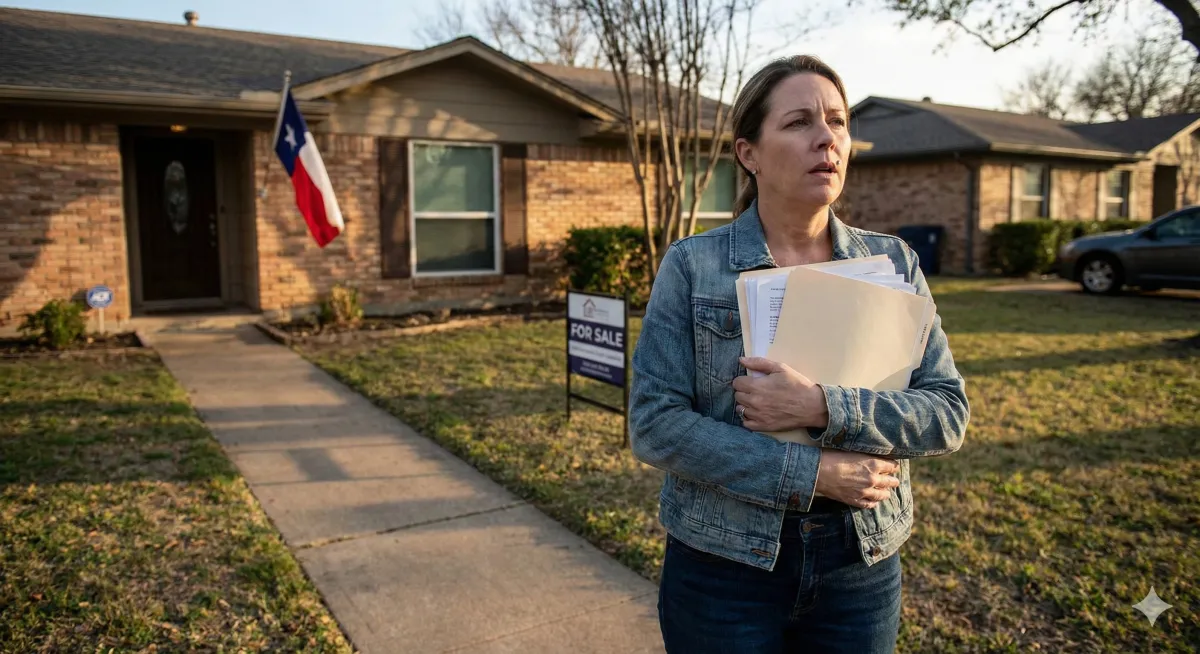
Can You Sell an Inherited House Without Probate in Texas? Yes — Here's How
Key Takeaways
- Yes, you can sell an inherited house without full probate in Texas — but only through specific legal paths
- The Affidavit of Heirship (AOH) is the most common solution when there's no will
- The "5-year rule" is widely misunderstood — you do NOT have to wait 5 years to sell
- Cash buyers can often close on AOH properties when traditional mortgage buyers cannot
- Some title companies have attorneys who prepare the Affidavit of Heirship for you — no separate probate lawyer needed
Let's Answer the Question Everyone Googles at 2am
You inherited a house. Maybe your parent passed away without a will. Maybe there was a will, but nobody ever filed it with the court. Now you're staring at a property you need to sell — to pay for a surviving parent's care, to settle the estate, or simply because you can't maintain a house three hours away.
And the question keeping you up at night: "Do I really have to go through probate court to sell this house?"
The short answer is: In many cases, no.
Texas law provides several alternatives to full probate administration. The most common — and the one that applies to most families in your situation — is called an Affidavit of Heirship. It's faster, cheaper, and doesn't require months of court proceedings.
Here's the catch: Not every situation qualifies. The path you choose depends on whether there's a will, how much debt exists, and whether your family agrees on what to do. By the end of this guide, you'll know exactly which option applies to your situation — and what to do next.
Why Probate Is Usually Required (And Why You Want to Avoid It)
Before we dive into the workarounds, let's understand what probate actually does — and why families are so eager to skip it.
What Probate Actually Accomplishes
When someone dies owning real estate in Texas, the county land records still show the deceased person as the owner. The problem? A dead person can't sign a deed. So how does the property transfer to the heirs?
Probate creates a judicial link in the chain of title. A judge reviews the will (if one exists), verifies who the legal heirs are, and either appoints an executor with authority to transfer property OR issues a court order declaring who now owns the home.
This matters because title insurance companies won't insure a sale if there's a "gap" in the chain of title. Without probate or an approved alternative, they can't verify that the person claiming to be an heir actually is one. And if they insure a sale to someone who wasn't actually entitled to inherit, they're liable when the real heir shows up.
Why Families Want to Avoid Probate
Timeline: Independent administration (the streamlined Texas version) takes 4-9 months. Dependent administration — required when there's conflict or significant debt — can drag on 12-24 months or longer.
Cost: For a simple estate without a will, expect to pay $5,000-$7,000 total. This includes your attorney ($2,500-$5,000), court filing fees (~$360-$400), and the Attorney Ad Litem fee ($600-$1,500) — a lawyer the court appoints to represent "unknown heirs."
Complexity: In Texas, you cannot represent yourself in probate court. You must hire an attorney because you're technically representing the interests of creditors and beneficiaries, not just yourself.
Delay: You can't sell the property until the court issues "Letters Testamentary" or "Letters of Administration" — the documents proving you have legal authority to act on behalf of the estate.
For families who need to sell a house to fund senior care or simply want to move on after a loss, those months feel like an eternity.
The Three Legal Paths to Sell Without Full Probate
Texas law provides alternatives. Which one works for you depends on three factors: the will, the debt, and the family.
PATH 1: Affidavit of Heirship (AOH)
What it is: A sworn legal document recorded in county land records (NOT filed in probate court) that establishes who inherited the property under Texas intestate succession law.
Best for: No will exists, real estate is the main asset, and all heirs agree on selling.
PATH 2: Muniment of Title
What it is: A simplified court proceeding where the judge admits the will as "evidence of ownership" — essentially treating the will itself as a deed.
Best for: A valid will exists, and there are no unpaid debts (except the mortgage on the home).
Limitation: Blocked if there's a Medicaid (MERP) claim against the estate.
PATH 3: Small Estate Affidavit — THE TRAP
What it is: A sworn statement for estates under $75,000 in assets.
The catch that trips up families: For real estate, the Small Estate Affidavit ONLY works if the property passes to a surviving spouse or minor children who lived in the home.
If you're an adult child inheriting your parent's house, this option does NOT work for you.
Common mistake: Families file this paperwork, pay the fees, and then discover the County Clerk rejects it because they don't qualify.
Quick Decision Guide:
→ Valid will + no major debts? Muniment of Title
→ No will + family agrees? Affidavit of Heirship
→ Conflict, significant debts, or complex family? Full probate likely required
The Affidavit of Heirship — A Complete Walkthrough
For most families in the "no will, need to sell" situation, the Affidavit of Heirship is the answer. Here's exactly how it works.
What Is an Affidavit of Heirship?
An AOH is a sworn legal document that tells the story of your family. It connects the "gap" in the chain of title by asserting, under oath, who the legal heirs are according to Texas law.
Unlike probate, which involves a judge making a determination, the AOH relies on recorded sworn statements in the public land records. It's a narrative document that describes the decedent's family history in enough detail that a title company can confidently say, "Yes, these are the rightful heirs."
What the AOH Must Contain
To satisfy a title examiner, the Affidavit of Heirship must be comprehensive. It needs to include:
Decedent's Vital Information: Full legal name, date and place of death, last residence.
Complete Marital History: This is crucial. Every marriage must be listed — with names of spouses, dates of marriage, and how each marriage ended (death or divorce, with dates). Texas is a community property state, so marital history directly affects who inherits what.
Complete List of Children: All children born to or legally adopted by the decedent. If any child predeceased the parent, the affidavit must identify that child's heirs (your niblings — nieces and nephews — may have an ownership interest).
Statement About Debts: Information about outstanding debts, property taxes, and whether the decedent received Medicaid benefits.
Legal Property Description: The formal legal description from the deed (Lot and Block number), not just the street address.
The Witness Requirement — Where Most Families Get Stuck
Here's the part that surprises people: You need two "disinterested" witnesses to sign the affidavit.
"Disinterested" has a specific legal meaning:
A Valid Witness Must Be:
- NOT an heir or beneficiary of the estate
- NOT related to the decedent by blood or marriage
- NOT financially interested in the property
- Someone who knew the decedent for a significant period (title companies prefer 10+ years)
- Able to swear to specific family history details under oath
Good witnesses: Long-time neighbors, church members, family friends who attended holiday dinners for years, former coworkers who stayed in touch.
Bad witnesses: Siblings, in-laws, anyone who stands to inherit anything, anyone related to the family.
The witnesses must be able to testify to details like: "I knew John for 25 years. He was married once, to Mary, and they had three children: Sarah, Michael, and David. Mary passed away in 2018. John never remarried."
Can't find witnesses? This is where working with the right title company matters. Some have attorneys or staff who can help locate potential witnesses and conduct interviews as part of their process. At Sage Senior Support, our title company handles this — it's part of what makes selling an inherited property possible when families feel stuck.
Filing the AOH
Once the affidavit is drafted and notarized by all heirs and both witnesses, it's recorded with the County Clerk's Real Property Records — not the probate court.
Recording fees: Approximately $25 for the first page plus $4 per additional page. Most AOH documents run 5-10 pages, so expect $40-$65 in recording fees.
Most Texas counties now use electronic recording (e-recording), typically handled through a title company or attorney.
The "5-Year Rule" — What It Actually Means
This is the most misunderstood part of Texas inheritance law. Let's clear it up.
THE MISCONCEPTION
What Texas Estates Code § 203.001 Actually Says
The statute states that an Affidavit of Heirship becomes "prima facie evidence" of the facts stated therein after it has been on record for five years.
"Prima facie" is a legal term meaning "at first sight" — the facts are presumed true unless someone presents evidence to disprove them.
Here's the key distinction: The five-year rule applies to courtroom proceedings. It determines when the AOH can be used as evidence in a lawsuit without additional proof.
It does NOT mean you can't sell the property for five years.
How Title Companies Actually Handle This
Title insurance companies make risk-based decisions, not legal determinations. They assess:
→ Is the AOH properly drafted and comprehensive?
→ Are the witnesses credible and truly disinterested?
→ Does the family history make sense and appear complete?
→ Are all heirs signing the deed?
→ Are the heirs willing to sign an indemnity agreement?
If everything checks out, they insure the title — regardless of whether it's been five days or five years since the AOH was filed.
The Indemnity Agreement: To mitigate risk, title companies require all heirs to sign a "Personal Undertaking and Indemnity Agreement." This legally binds the heirs to reimburse the title company if a claim arises later (like an unknown heir surfacing). This is standard practice and shouldn't concern you if the family history in the AOH is accurate and complete.
Why Cash Buyers Can Close When Traditional Buyers Can't
Here's something most families don't understand until they're in the middle of trying to sell: the type of buyer matters enormously when you're selling with an Affidavit of Heirship.
The Title Insurance Problem
Every real estate sale requires title insurance to protect the buyer. Before issuing a policy, the title company examines the chain of title and assesses risk.
When the "chain" includes an AOH instead of a probate court order, conservative title companies get nervous — especially if the family history is complicated. Multiple marriages, children from different relationships, children born outside of marriage, estranged family members — these situations make underwriters cautious.
Traditional Buyers Using Mortgages
When a buyer uses FHA, VA, or conventional financing, the lender's title requirements apply. These are strict. If the title company hesitates to insure based on the AOH, the lender will deny the loan.
Result: The deal falls through. The family is back to square one — often being told they need full probate after all, which adds months to the timeline.
This is why inherited homes in DFW often sit unsold for months. It's not that there aren't buyers — it's that the title situation kills deal after deal.
Cash Buyers and Investor-Friendly Title Companies
Real estate investors who buy inherited properties work with specialized "investor-friendly" title companies. These title agents:
Have higher risk tolerance: They specialize in AOH transactions and understand the nuances.
Have in-house curative teams: Staff dedicated to tracking down witnesses, resolving heirship questions, and fixing title problems.
Move faster: Cash deals can close in 7-14 days with a properly prepared AOH, versus 45+ days for a traditional sale (if it closes at all).
Sage's Advantage: AOH Preparation Included
Here's what makes our process different: Our title company has an attorney who prepares the Affidavit of Heirship when families don't have one.
You don't need to hire a separate probate attorney. You don't pay separate legal fees. The AOH preparation is handled as part of our closing process.
For families who inherited a home without a will and don't know where to start, this is often the difference between selling in weeks versus being stuck for months.
What This Means for You
If you've inherited a property and don't have the AOH prepared, you're not stuck. The right buyer — working with the right title company — can handle this for you. No separate attorney. No extra legal bills. Just a straightforward path from inherited property to closed sale.
Multiple Heirs — The Complication Nobody Expects
When you're not the only heir, things get complicated fast. This is where many families hit unexpected roadblocks.
Texas Intestate Succession: Who Inherits What
When someone dies without a will, Texas law determines who inherits. The rules depend on family structure and whether the property is "community property" (acquired during marriage) or "separate property" (owned before marriage or inherited).
| Scenario | Who Inherits the House |
|---|---|
| Unmarried / Widowed Parent | Children inherit equally |
| Married, All Children Are from This Marriage | Surviving spouse typically inherits 100% of community property |
| Married, Children from a Prior Relationship | Decedent's 50% share passes to children; spouse keeps their 50%. Spouse and step-children become co-owners. |
The "Step-Child Trap"
This catches families off guard constantly. If your parent remarried and had children from a previous relationship, the surviving spouse does NOT automatically inherit the whole house.
The children from the prior relationship own a share of the property. The surviving spouse and step-children become co-owners — often with conflicting interests.
Many surviving spouses assume they can simply sell the house. They can't. Not without the step-children's signatures.
The Unanimity Requirement
Because all heirs are co-owners, ALL heirs must sign the deed to sell the property.
One sibling refuses to sign? The property cannot be sold.
One sibling can't be found? The title is uninsurable.
There's no "majority vote" in real estate ownership. Everyone has to agree.
When Heirs Disagree: Partition Actions
If heirs can't reach agreement, the legal remedy is a Partition Suit — essentially asking a court to force a sale or divide the property.
Texas enacted the Uniform Partition of Heirs Property Act in 2017 to prevent predatory sales of family land. The court must:
→ Order an appraisal of the property
→ Give co-owners who want to keep the property first right to buy out those who want to sell
→ If buyout doesn't happen, order the property sold and proceeds divided
The cost: Partition actions are lawsuits. Expect $5,000-$20,000+ in attorney fees, plus court costs and appraisal fees. And the timeline? Months to years.
This is why sibling cooperation matters so much when inherited property is involved.
Complications That Can Derail Your Sale
Even with family agreement and a properly prepared AOH, certain issues can create unexpected problems. Here's what to watch for.
Medicaid Estate Recovery (MERP)
If your parent received Medicaid benefits after age 55 — nursing home care, for example — the State of Texas has a statutory right to recover those costs from the estate.
Title companies routinely run a "MERP check" before closing. If a claim exists, it must be paid from the sale proceeds before heirs receive anything.
Exemptions exist: MERP cannot recover if there's a surviving spouse, a child under 21, or a blind or permanently disabled child.
Hardship waivers: Available if the property is a homestead worth less than $100,000 and heirs meet poverty income guidelines.
For more on navigating Medicaid complications, see our guide on Texas Medicaid and long-term care.
Property Tax Issues
Death terminates the decedent's "Over-65" and "Homestead" exemptions at the end of the tax year. Heirs often face significant tax increases the following January.
If taxes become delinquent, the county has a priority lien. At closing, the title company will withhold delinquent taxes from the seller's proceeds — there's no getting around this.
The 4-Year Probate Deadline
If there IS a will, it generally must be submitted for probate within four years of death. After four years, the will may be treated as invalid, and the estate passes under intestate succession rules instead.
This can create "heirs' property" chaos, where ownership splinters among relatives who may not have been named in the will.
Vacant Home Insurance
Standard homeowner's policies often contain "vacancy clauses" that void coverage — especially for vandalism and water damage — if the home is unoccupied for 30-60 days.
Heirs should immediately purchase a Vacant Dwelling Policy. These are more expensive but essential to protect equity during the sale process.
The Process: What to Expect When Selling With an AOH
Here's what happens from initial conversation to closing when you're selling an inherited property using an Affidavit of Heirship.
Initial Consultation
Discuss family history, property condition, and timeline. Determine whether AOH is appropriate or if probate is truly needed. Identify potential complications early — Medicaid, missing heirs, family disputes.
AOH Preparation
Attorney drafts the comprehensive affidavit based on family history. Disinterested witnesses are identified and interviewed. All heirs review the document for accuracy and sign. Everything is notarized.
Recording
The AOH is filed with the County Clerk's Real Property Records. It becomes part of the public land records, creating the official "link" in the chain of title.
Title Review
The title company examines the AOH, may request additional documentation, and issues a title commitment listing the AOH as a requirement satisfied.
Closing
All heirs sign the Warranty Deed. Title company handles closing, confirms MERP clearance, and distributes proceeds to heirs.
Timeline with a cash buyer: 2-4 weeks from start to close.
With Sage's process: Our title company attorney prepares the AOH as part of closing — a one-stop solution that eliminates the need to coordinate between a probate attorney and a real estate transaction.
When AOH Won't Work — Signs You Need Full Probate
The Affidavit of Heirship is powerful, but it's not a universal solution. Here's when you likely need full probate:
You Probably Need Probate If:
- There's a valid will and you want court-ordered protection
- There are significant debts beyond a mortgage
- Heirs are in dispute or refuse to cooperate
- There's a Medicaid (MERP) claim with no applicable exemption
- Family history is contested (paternity disputes, unknown heirs)
- The property is high-value and you want maximum legal protection
- An heir cannot be located
The "messier the family, the more you need probate" rule: Multiple marriages with children from each, estranged siblings who won't communicate, potential will contests — these situations typically require the certainty of a court order.
Why Probate Isn't Always Bad
Probate gets a bad reputation, but it provides real benefits:
→ Court-ordered protection: A judge confirms who owns the property — no questions later.
→ Creditor cutoff: After the statutory notice period, creditors can no longer make claims.
→ Finality: The AOH leaves the "books open" on liability; probate closes them.
For more on navigating the probate process in Texas, see our detailed guide.
Frequently Asked Questions
Yes, through an Affidavit of Heirship (when there's no will) or Muniment of Title (when there's a will but no significant debts). The AOH is the most common path — it's filed in county records, not probate court, and can be completed in 2-4 weeks.
With an Affidavit of Heirship, you can potentially close in 2-4 weeks. The commonly cited "5-year rule" is a courtroom evidentiary standard, not a real estate transaction requirement. Title companies routinely insure sales based on recently filed AOH documents.
Yes. All heirs are co-owners, and all must sign the deed to transfer complete ownership. If one heir refuses, the property cannot be sold without a partition action — a lawsuit that can cost $5,000-$20,000+ and take months or years.
An Affidavit of Heirship is a sworn legal document recorded in county land records that establishes who inherited real property when someone dies without a will (or without probating a will). It must include the decedent's marital history, all children, and be signed by two disinterested witnesses who knew the deceased.
Typically $500-$1,500 for attorney drafting plus $30-$65 in recording fees. This is significantly cheaper than full probate, which runs $3,000-$7,000+ for simple estates when you factor in attorney fees, court costs, and the Attorney Ad Litem.
The property becomes "heirs' property" with a clouded title. Over generations, ownership can splinter among dozens of relatives — some who may not even know they own a share. The property cannot be sold, refinanced, or used as collateral, and may eventually face tax foreclosure.
Only if you're a surviving spouse or minor child who lived in the home. Under Texas Estates Code § 205.009, the Small Estate Affidavit can transfer homestead title only to those specific heirs. Adult children cannot use an SEA to transfer real estate — you'll need an Affidavit of Heirship instead.
Your Next Steps
If you've inherited a house in Texas and you're trying to figure out how to sell it without getting stuck in probate court for months, here's your roadmap:
Which Path Is Right for You?
→ Consider Muniment of Title. It's faster than full probate and provides court-ordered protection.
→ Affidavit of Heirship is likely your path. Find two disinterested witnesses who knew the deceased. Contact a title company that handles AOH transactions.
→ Working with a cash buyer who has AOH experience can save months. The right buyer's title company can prepare the AOH for you — no separate attorney needed.
At Sage Senior Support, our title company's attorney prepares Affidavits of Heirship as part of our process — no separate probate lawyer needed. If you've inherited a home in Dallas-Fort Worth and aren't sure where to start, let's talk. We'll help you understand your options, even if selling to us isn't the right fit.
The goal here isn't just selling a house. It's navigating one of the hardest transitions families face — the intersection of loss, legal complexity, and the practical need to move forward.
You don't have to figure this out alone. And you don't have to wait months in probate court when faster paths exist.